Adaptive Drumming: Making Rhythm Accessible for Every Body
Discover how adaptive drumming techniques and tools empower individuals of all abilities to experience the healing power of the beat.
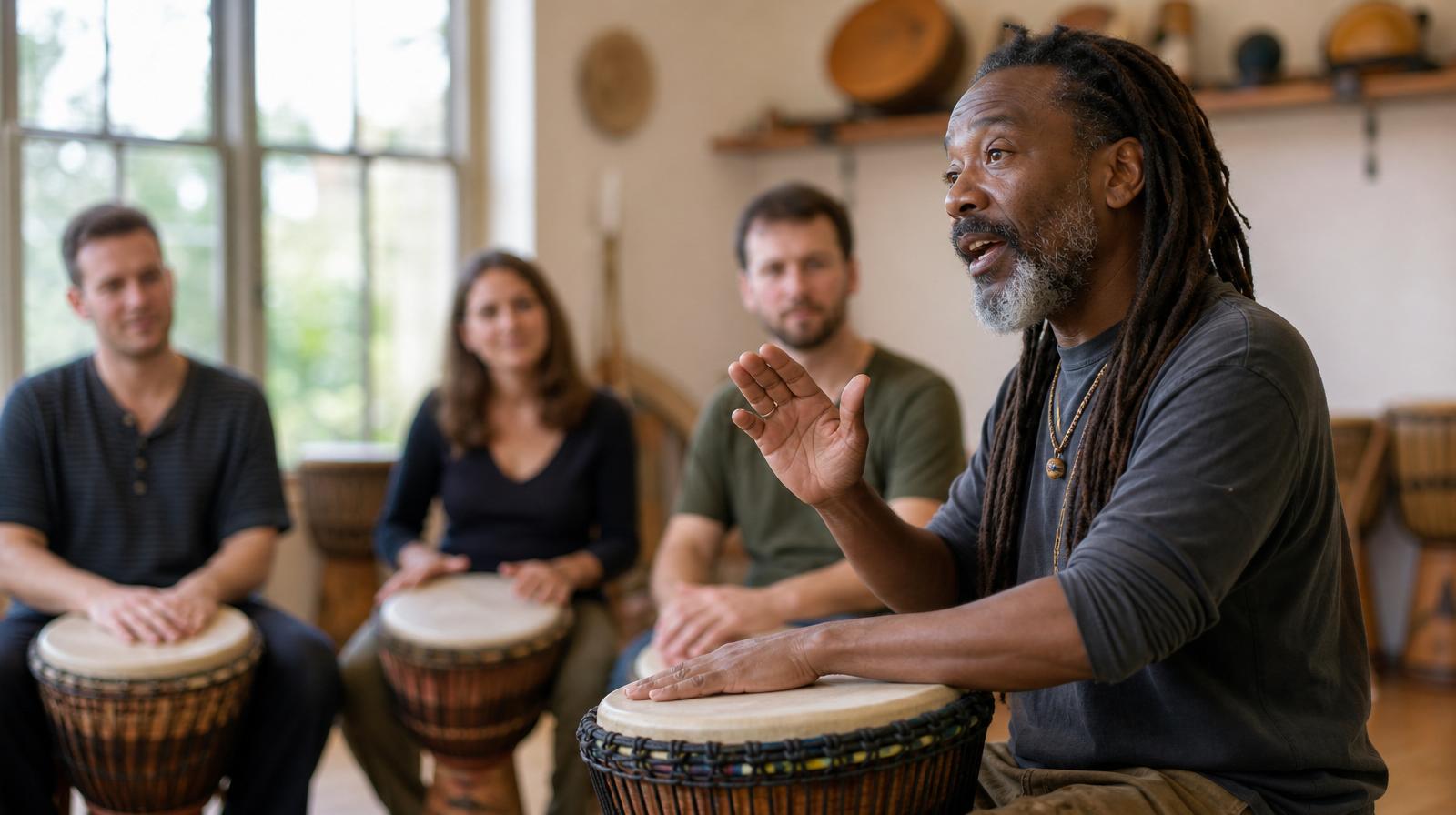
Rhythm is a universal language, a primal heartbeat that exists within every person regardless of physical or cognitive ability. Adaptive drumming is the practice of modifying instruments, techniques, and environments to ensure that everyone—regardless of mobility, limb difference, or sensory processing needs—can participate in the joy of the circle.
At Drum Circle Directory, we believe that the circle is only complete when everyone has a seat. Whether you are a facilitator looking to make your sessions more inclusive or an individual seeking a way to express yourself through sound, adaptive drumming opens doors that were previously closed by traditional pedagogy.
Understanding the Core of Adaptive Drumming
Adaptive drumming isn't just about "fixing" a problem; it is about reimagining the relationship between the player and the instrument. In a traditional setting, a djembe is held between the knees. For someone in a wheelchair, this is physically impossible. Adaptive drumming looks at this scenario and asks: "How can we bring the drum to the person?"
This field intersects heavily with music therapy and occupational therapy. It utilizes specialized stands, mallets, and even electronic triggers to bridge the gap between intent and sound. The goal is always the same: self-expression, community connection, and the physical benefits of vibration.
Essential Tools and Modified Instruments
One of the most exciting aspects of modern drumming is the innovation in hardware. You don't need to be a master woodworker to adapt a drum; many solutions are available off-the-shelf.
- Low-Profile Drum Stands: Brands like Remo and Pearl offer stands that allow djembes, congas, and tubanos to sit low to the ground or tilt at extreme angles, making them accessible for seated players.
- Adaptive Mallets: For those with limited grip strength or fine motor control, foam-grip mallets or T-shaped beaters can be strapped to the hand using Velcro wraps.
- Tabletop Drums: Frame drums and buffalo drums are lightweight and can be placed on a height-adjustable table, allowing the player to use their palms or fingers without supporting the weight of the shell.
- Electronic Percussion: For individuals with very limited range of motion, a sensitive electronic pad can be programmed to trigger the deep bass of a dunun or the sharp slap of a doumbek with the slightest touch.
Techniques for Inclusive Facilitation
If you are leading a community rhythm event, your role is to create a safe container. Inclusivity starts with the invitation. When you find a drum circle near you, you might notice facilitators using specific strategies to welcome diverse populations.
Call-and-Response Simplification Instead of complex 16th-note patterns, focus on the "heartbeat" (the 1 and the 3). This allows players with cognitive delays or motor processing challenges to lock into the groove without feeling overwhelmed.
Visual Cues For participants who are hard of hearing, auditory cues like a whistle or a verbal "Stop!" may not work. Use large, exaggerated physical gestures—raising both arms high to signal an ending or using a "stop" sign hand gesture.
Layered Instrumentation Encourage the use of shakers and bells for those who find the impact of a drum too jarring. A soft maraca provides the same rhythmic pulse as a high-pitched djembe slap but requires much less physical exertion.
The Health and Wellness Benefits
The science behind drumming is profound. For individuals with Parkinson’s, the steady pulse of a drum can help regulate gait and movement. For those with autism, the predictable structure of a drum circle provides a social outlet that feels safe and structured.
Adaptive drumming also provides:
- Fine Motor Development: The act of striking a drum head improves hand-eye coordination.
- Emotional Release: Drumming offers a non-verbal way to process frustration, grief, or joy.
- Social Integration: Being part of a local rhythm event combats the isolation often felt by the disability community.
Creating an Accessible Environment
Physical access is only the first step. To truly practice adaptive drumming, the environment must be considered. Is the venue wheelchair accessible? Are there quiet zones for those who might experience sensory overload?
Many facilitators now offer "sensory-friendly" circles where the volume is kept low and the lighting is natural. If you are a teacher looking to specialize in this, connecting with professional drum schools that offer therapeutic certification is a great way to deepen your practice.
How to Get Started with Adaptive Drumming
If you are an individual with a disability looking to drum, start small. You don't need a custom-built rig on day one. A simple frame drum held in the lap is often the perfect entry point.
For those who want professional guidance, reaching out to specialized drum teachers who have experience in adaptive techniques is invaluable. They can help you find the right ergonomic setup and develop a practice that respects your body’s unique needs.
Remember, in the world of drumming, there is no such thing as a "wrong" way to play. If you are making a sound and feeling the pulse, you are a drummer.
Find a drum circle near you: /drum-circles
Frequently asked
- What is the best drum for someone with limited mobility?
- A frame drum or a tabletop 'tubano' is often best. These drums are lightweight and can be placed on a lap or a height-adjustable table, removing the need for the player to support the instrument's weight with their legs or a strap.
- Can I participate in a drum circle if I have a hearing impairment?
- Absolutely. Drumming is a highly tactile experience; many deaf and hard-of-hearing drummers follow the rhythm by feeling the vibrations through the floor or the drum shell itself. Facilitators can use visual signals to help everyone stay in sync.
- Are there specific tools to help with grip issues?
- Yes, there are adaptive gloves with built-in mallet holders and 'adaptive grips' made of foam or silicone that can be added to any drumstick. Velcro 'active hands' wraps are also popular for securing a beater to the palm without needing a tight grip.
Find a drum circle near you
Browse hundreds of circles, teachers and rhythm community gatherings.
Explore drum circles