
Asheville Street Drum Circle: A Guide to the Friday Night Beat
Experience the rhythmic heart of the Blue Ridge Mountains with our complete guide to the legendary Asheville street drum circle at Pritchard Park.
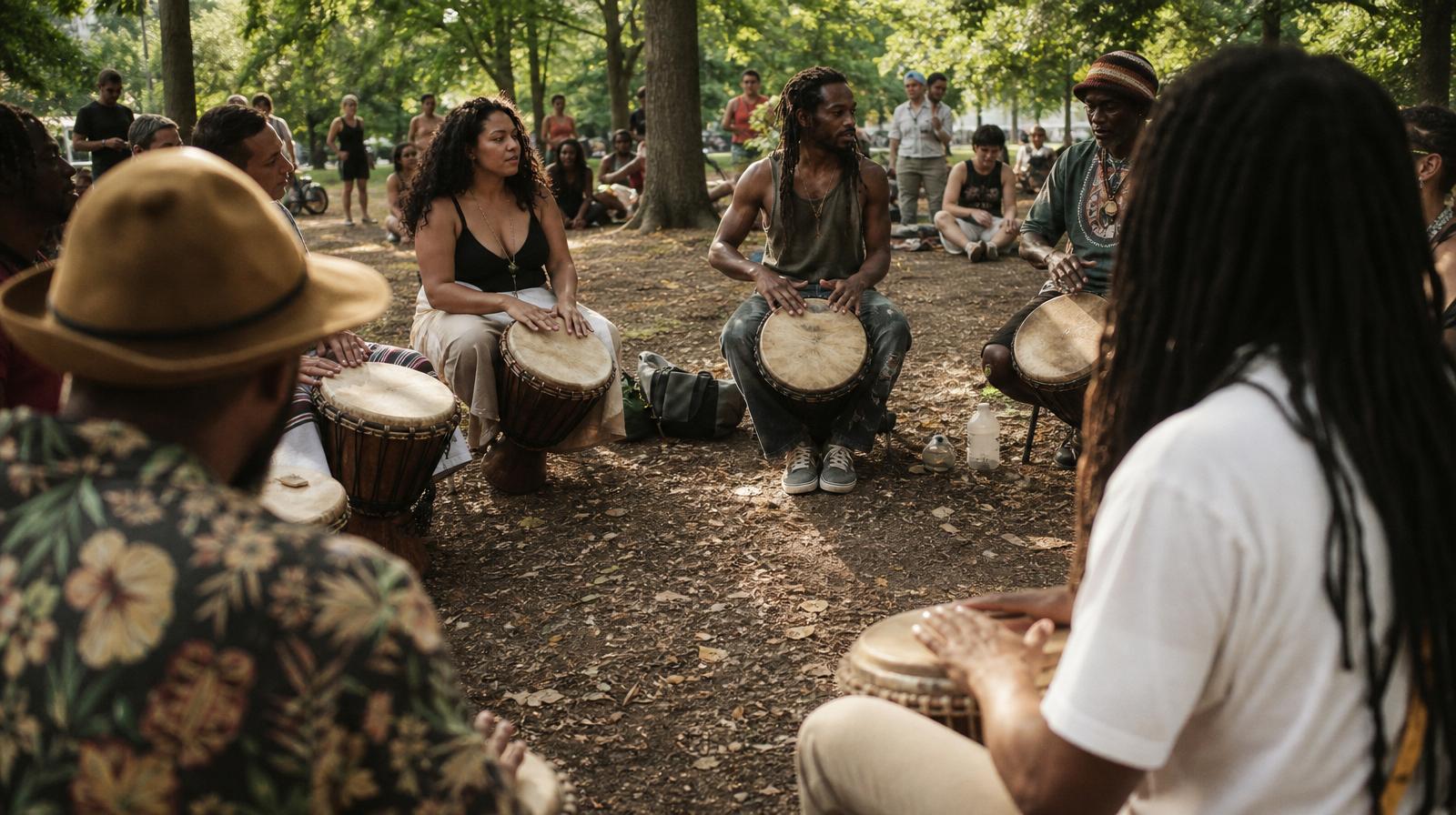
If you find yourself in downtown Asheville, North Carolina, on a Friday evening between April and October, you don’t need a map to find the city’s heartbeat. You simply need to follow your ears. The thunderous, rhythmic pulse of the Asheville street drum circle echoes off the brick facades of Patton Avenue, drawing hundreds of locals and travelers alike to the stone amphitheater of Pritchard Park.
This isn't just a musical performance; it is a living, breathing tradition that has defined the culture of Western North Carolina for decades. Whether you are a seasoned percussionist carrying a professional djembe or a curious traveler hoping to soak in the mountain vibes, the Friday night circle offers a sensory experience unlike any other in the American South.
The History of the Pritchard Park Drum Circle
The Asheville street drum circle began as a small, grassroots gathering in the mid-1990s. What started with a handful of drummers looking for a place to play has evolved into a world-renowned weekly event. It represents the "Keep Asheville Weird" spirit—a blend of Appalachian soul, bohemian creativity, and inclusive community building.
Over the years, the circle has survived urban redevelopment and noise ordinance debates, largely because the community recognizes its value as a safe, family-friendly space for expression. It is one of the few places where you will see business professionals in suits standing shoulder-to-shoulder with nomadic travelers, all moving to the same beat.
What to Expect at the Circle
The energy at Pritchard Park is electric. As the sun begins to set, the "inner circle" fills with drummers. You’ll see a diverse array of instruments, from traditional African djembes and dununs to Middle Eastern doumbeks and even repurposed plastic buckets.
Surrounding the drummers is a swirling mass of dancers, hula-hoopers, and spectators. The music is improvisational, usually led by a few experienced anchors who maintain a steady bass line, allowing others to layer syncopated riffs and solos on top.
- The Sound: Loud, immersive, and polyrhythmic.
- The Crowd: A mix of all ages, from toddlers dancing in the grass to elders nodding along.
- The Vibe: High energy, welcoming, and deeply communal.
Essential Instruments You’ll See and Hear
While anyone is welcome to bring any percussive instrument, certain drums form the backbone of the Asheville street drum circle:
- The Djembe: The most common drum in the circle. Its ability to produce deep bass notes and sharp, cracking slaps makes it perfect for leading the rhythm.
- Dunun (Doundoun): These large, cylindrical drums are played with sticks and provide the melodic heartbeat of West African-inspired rhythms.
- Congas and Bongos: Adding a Latin flair, these drums provide melodic complexity to the mix.
- Frame Drums and Tambourines: Ideal for those who want to contribute to the high-end texture without overpowering the group.
- Bell and Shakers: Never underestimate the power of a cowbell or a shekere to keep the tempo locked in for everyone else.
If you're looking to improve your technique before joining the fray, you might consider connecting with local drum teachers who specialize in hand drumming techniques.
Etiquette for Newcomers and Visitors
The Asheville street drum circle is an open event, but like any community gathering, there are unwritten rules that keep the rhythm flowing smoothly. Following these tips ensures a better experience for you and your fellow drummers:
- Listen First: Before you start playing, take a minute to listen to the established groove. Try to find the "one" (the first beat of the measure) and lock in with the bass drummers.
- Respect the Space: The inner circle is for active players. If you need a break or want to chat, step outside the stone walls so another drummer can take a seat.
- Ask Before Playing Someone Else’s Drum: Drummers are often very protective of their instruments. Never pick up or strike a drum that isn't yours without explicit permission.
- Support the Groove: Avoid playing "over" the group with constant loud solos. The best drummers are those who contribute to the collective sound rather than trying to stand out.
- Family First: Remember that this is a family-friendly event. Be mindful of your language and behavior, as there are often many children present.
Beyond the Street: Drumming Education in Asheville
For those who fall in love with the rhythm at Pritchard Park, the journey doesn't have to end when the sun goes down. Asheville is home to a vibrant community of rhythm educators. From drum schools that offer structured classes in West African drumming to private workshops held in the River Arts District, there are plenty of ways to deepen your practice.
Many participants in the Friday night circle also attend regional drumming retreats held in the surrounding Blue Ridge Mountains, where they can study intensively away from the distractions of the city.
Planning Your Visit to Pritchard Park
If you are traveling to Asheville specifically for the drum circle, here are a few logistics to keep in mind:
- When: Every Friday night, roughly from 6:00 PM to 10:00 PM (weather permitting).
- Season: The official season typically runs from the first Friday in April through the last Friday in October.
- Location: Pritchard Park, located at the intersection of Patton Avenue and College Street.
- Cost: Free! However, it’s always a good idea to bring a few dollars to support the local street performers and buskers who inhabit the surrounding corners.
- Parking: Downtown parking can be tight on Friday nights. Use the Wall Street or Rankin Avenue parking garages for the easiest access.
Why Rhythmic Community Matters
The Asheville street drum circle is more than just a tourist attraction; it is a form of social therapy. In a world that is increasingly digital and isolated, the act of coming together to create a physical vibration is powerful. It lowers stress, fosters a sense of belonging, and reminds us of our shared human heritage.
Whether you are an expert or a total beginner, the circle invites you to contribute your unique voice to the collective whole. It is a reminder that in the heart of the mountains, the beat goes on.
Ready to find your rhythm? Find a drum circle near you and start your journey today.
Frequently asked
- What time does the Asheville drum circle start?
- The drum circle at Pritchard Park typically begins around 6:00 PM every Friday night during the warmer months. It usually reaches its peak energy between 7:30 PM and 9:00 PM, concluding by 10:00 PM due to local noise ordinances.
- Can anyone join the Asheville street drum circle?
- Yes, the circle is completely open to the public. Beginners are welcome to join in, provided they respect the flow of the music and follow basic circle etiquette. If you don't have a drum, you are welcome to dance or simply enjoy the atmosphere.
- Is the drum circle cancelled if it rains?
- Generally, yes. Since the drums are made of wood and animal skins, moisture can damage them. If there is a steady rain or a thunderstorm, the drummers will likely not gather, though some may move to covered areas nearby if the weather is light.
- Are there other drum circles in Asheville besides the one at Pritchard Park?
- While Pritchard Park is the most famous, Asheville has a thriving rhythm scene. You can often find smaller, more intimate circles at local community centers, full-moon gatherings, and private events throughout the Buncombe County area.
Find a drum circle near you
Browse hundreds of circles, teachers and rhythm community gatherings.
Explore drum circles