
Beginner Djembe Lessons: A Guide to Your First Rhythms
Discover the joy of West African percussion with our comprehensive guide to starting your djembe journey, from basic strokes to finding your first circle.
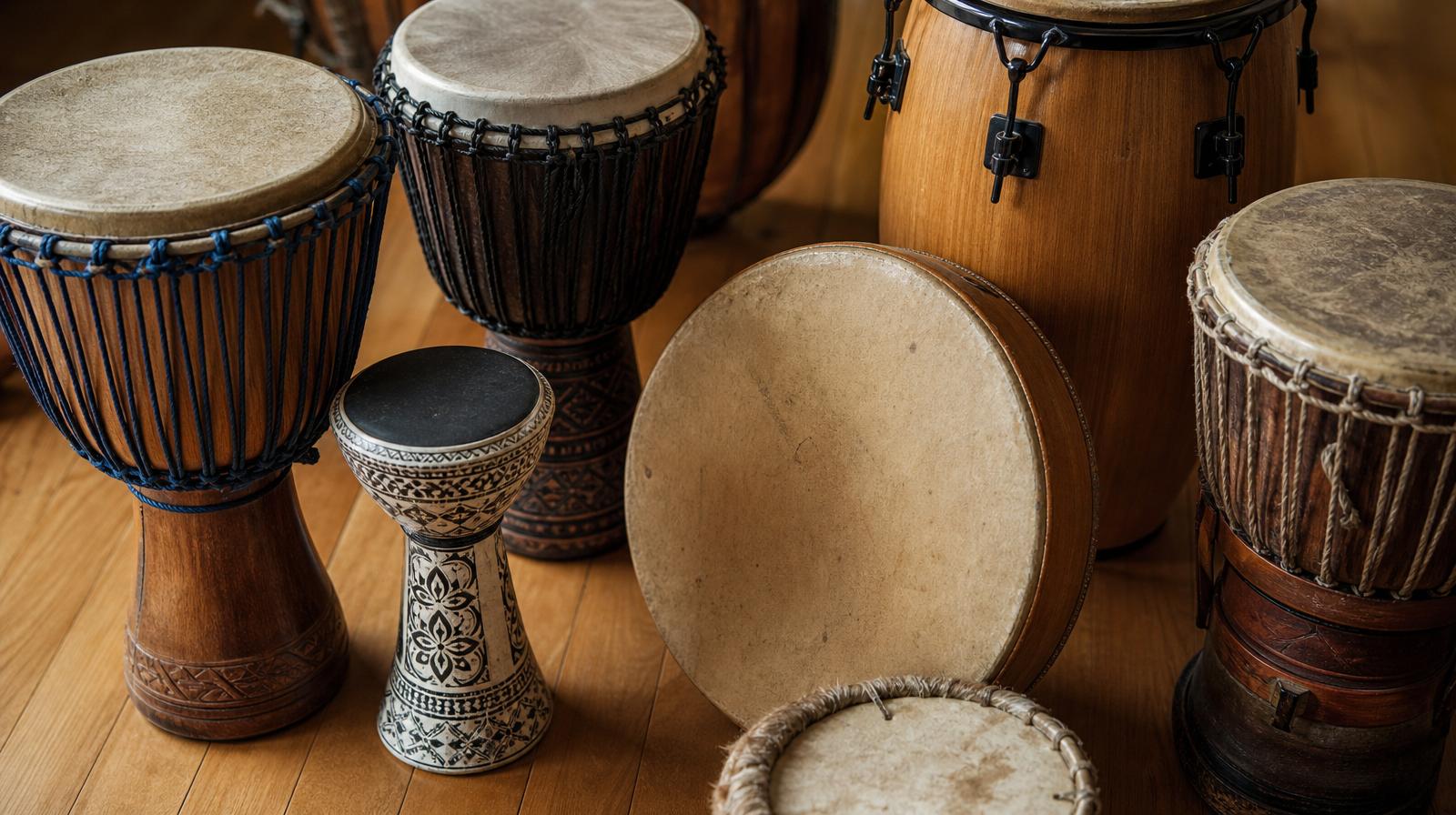
There is a unique magic that happens the first time you sit behind a djembe. This goblet-shaped drum, originating from West Africa, is more than just a musical instrument; it is a vessel for community, storytelling, and personal expression. Whether you were inspired by a local full-moon gathering or the high-energy performance of a professional ensemble, taking your first beginner djembe lessons is the start of a life-changing rhythmic journey.
In this guide, we will walk through everything a newcomer needs to know—from choosing your first drum to mastering the three fundamental notes that form the language of the djembe.
Why Start Your Journey with the Djembe?
The djembe is perhaps the most accessible hand drum for beginners. Unlike a complex drum kit or melodic instruments that require years of theory, the djembe allows you to produce a satisfying sound almost immediately. However, don't let its simplicity fool you. The djembe offers a lifetime of depth, with intricate polyrhythms and nuances that master drummers spend decades perfecting.
Beyond the music, djembe drumming is a physical and social activity. It improves coordination, reduces stress, and connects you to a global community of rhythm seekers. Many people find their way into this world by looking for local drum circles where they can play in a low-pressure, supportive environment.
Choosing Your First Instrument
Before you dive into beginner djembe lessons, you need a drum that fits your body and your goals. Djembes come in various sizes and materials, but here are the basics:
- Traditional Wood vs. Synthetic: Traditional djembes are carved from a single piece of hardwood (like Lenke or Mahogony) and topped with goat skin. These offer a warm, authentic sound. Synthetic drums are lighter, weather-resistant, and often easier for beginners to maintain.
- Size Matters: For most adults, a drum with a head diameter of 12 to 14 inches is ideal. If the drum is too small, you won't have enough room for your hands to execute proper techniques.
- The Skin: Look for a head that is free of nicks or deep scars. The tension should be high enough that the drum 'sings' when struck.
Proper Posture and Hand Positioning
Before you strike the drum, you must learn how to sit with it. Proper ergonomics will prevent fatigue and injury, allowing you to play for hours at a time.
- Sit on the edge of your chair: Use a stool or chair without arms. Keep your back straight and shoulders relaxed.
- Tilt the drum: Never play with the djembe flat on the floor, as the sound needs to escape from the bottom (the 'foot'). Tilt the drum away from you slightly, gripping it with your knees or using a strap.
- Relax your hands: Your hands should be an extension of your arms. Avoid tension in your wrists. Think of your hands as 'heavy,' let gravity do the work.
The Three Essential Notes: Bass, Tone, and Slap
Beginner djembe lessons revolve around mastering three distinct sounds. Think of these as the vowels of the drumming language.
The Bass
This is the heartbeat of the rhythm. To play a bass note, strike the center of the drum head with your full palm. Your hand should bounce off the skin immediately—never press into the drum, as this 'muffles' the vibration.
The Tone
The tone is a clear, melodic sound played at the edge of the drum. Keep your fingers together and strike the rim so that your knuckles are roughly aligned with the edge of the wood. The goal is a round, full sound that lacks the sharpness of a slap.
The Slap
The slap is the most challenging note for beginners but also the most exciting. It is a high-pitched, 'crackling' sound. To achieve this, relax your hand more than you would for a tone, allowing your fingertips to whip against the skin. It’s all about speed and relaxation, not force.
Developing Your Rhythm: Practice Exercises
Once you can distinguish between your bass, tone, and slap, it’s time to build muscle memory. Start with simple 'call-and-response' patterns.
- The Steady Pulse: Play four bass notes (B-B-B-B) followed by four tones (T-T-T-T). Keep a consistent tempo.
- The Heartbeat: Play a pattern of Bass-Tone-Tone (B-T-T), which mimics a common 3/4 or 6/8 waltz feel.
- Alternating Hands: Ensure you are practicing with both your dominant and non-dominant hands. A common mistake in beginner djembe lessons is over-relying on one hand, which limits your speed later on.
If you find yourself struggling with these basics, it may be time to seek out professional drum teachers who can provide real-time feedback on your hand technique.
Joining the Community: Etiquette and Circles
Drumming is rarely a solo endeavor. Eventually, you will want to join a circle. When you do, keep these 'unwritten rules' in mind:
- Listen more than you play: Pay attention to the facilitator or the lead drummer.
- Support the beat: If you are a beginner, stick to a simple, steady part rather than trying to play complex solos.
- Respect the instruments: Never play someone else's drum without asking first.
Many beginners find that attending drumming retreats is the fastest way to immerse themselves in the culture and etiquette of the djembe community while receiving intensive instruction.
Taking the Next Step
Learning the djembe is a marathon, not a sprint. Consistency is more important than the length of your practice sessions. Even fifteen minutes a day of focused practice on your tones and slaps will yield better results than a three-hour session once a month.
As you progress, look for specialized drum schools that offer structured curriculums in West African rhythms like Kuku, Moribayassa, or Djole. These traditional rhythms provide the context and history that make djembe playing so rewarding.
Find a drum circle near you: /drum-circles
Frequently asked
- Do I need to be musical to start beginner djembe lessons?
- Not at all. The djembe is an intuitive instrument that focuses on natural rhythm rather than complex music theory. Most beginners find they can play basic patterns within their first hour of instruction.
- Will drumming hurt my hands?
- If you use the correct technique, it should not hurt. Pain is usually a sign of hitting the drum too hard or with too much tension. A good teacher will show you how to use a 'rebound' stroke to protect your joints.
- How long does it take to learn the djembe?
- You can learn the basic notes in a single lesson. However, developing the hand strength for clear slaps and the coordination for fast polyrhythms typically takes several months of regular practice.
Find a drum circle near you
Browse hundreds of circles, teachers and rhythm community gatherings.
Explore drum circles