
Beginner Drum Circle Rhythms: Easy Beats to Find Your Groove
New to the circle? Learn the foundational beginner drum circle rhythms that will help you play with confidence and connect with the group.
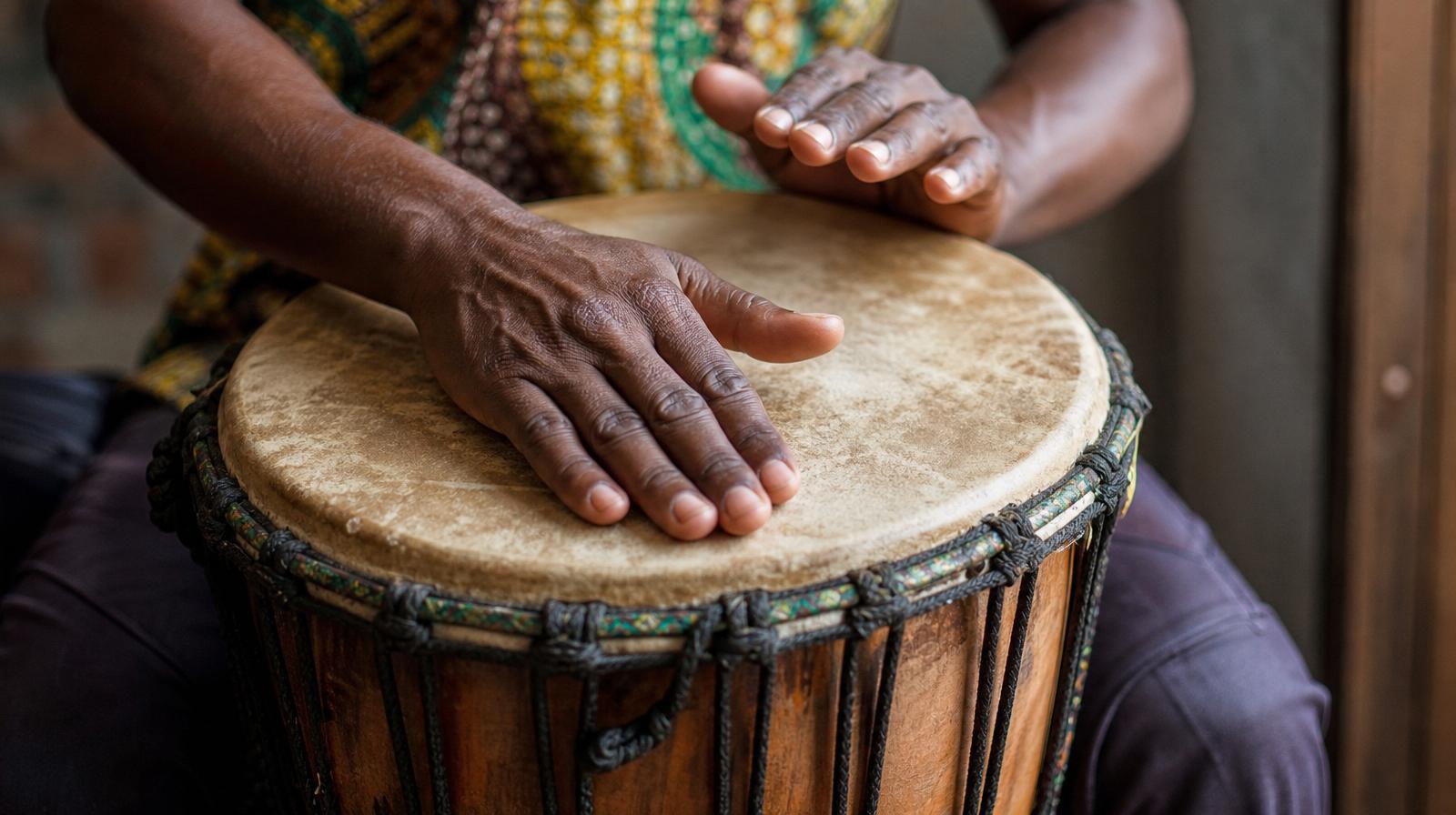
Walking into your first drum circle can be an exhilarating experience. The air is thick with the scent of wood and goatskin, the room vibrates with a collective pulse, and the smiles are infectious. However, for many newcomers, there is a moment of hesitation. You might ask yourself: "What do I actually play?"
Finding your place in the rhythm is easier than you think. You don't need years of conservatory training to contribute to a community jam. By mastering a few foundational beginner drum circle rhythms, you can move from being a nervous observer to a confident participant in the heartbeat of the group.
The Three Basic Sounds: Bass, Tone, and Slap
Before we dive into specific patterns, it is vital to understand the three primary sounds you can pull out of a drum like a djembe or an ashiko. These sounds are the building blocks of every rhythm you will hear.
- The Bass (Gun/Dun): Hit the center of the drum with your full palm. Keep your hand flat and let it bounce off the skin immediately. This is the heartbeat.
- The Tone (Go/Do): Hit the edge of the drum with your fingers together. Your knuckles should be roughly over the rim. The sound should be clear and melodic.
- The Slap (Pa/Ta): Similar to the tone, but your fingers are relaxed and slightly spread. This creates a sharp, high-pitched "crack" sound.
If you are playing a frame drum or a doumbek, the names might change (Doum, Tek, Ka), but the concept of low and high tones remains the same. If you find yourself struggling with these sounds, reaching out to drum teachers can help you refine your technique and prevent hand fatigue.
1. The Heartbeat (The 4/4 Pulse)
The simplest and most important rhythm in any circle is the steady pulse. This is the foundation upon which all other complex patterns are built. If you ever feel lost or the rhythm becomes too chaotic, return to the heartbeat.
- The Pattern: Bass - (rest) - Bass - (rest)
- The Count: 1 - 2 - 3 - 4
- Why it works: It grounds the group. While others are playing syncopated riffs on their congas or dununs, your steady bass note provides the "one" that keeps everyone together.
2. The "I Like To Play The Drum" Pattern
Many beginner drum circle rhythms are easier to remember if you associate them with a phrase. This simple four-beat pattern is a staple in community circles because it uses both bass and tones to create a conversational feel.
- The Phrase: "I - Like - To Play - The Drum"
- The Pattern: Bass - Tone - Tone Tone - Bass
- The Count: 1 - 2 - 3 & - 4
Try playing the "I Like" on your dominant hand and the "To Play" as a quick double-stroke. This introduces the concept of eighth notes (the "&") without being overly technical.
3. The Classic Rock-Style Backbeat
If you are at a family-friendly circle or a community gathering where the energy is high, a backbeat-inspired rhythm always fits. This mimics the sound of a standard drum kit.
- The Pattern: Bass - Slap - Bass - Slap
- The Count: 1 - 2 - 3 - 4
- The Feel: The slap on the 2 and the 4 provides the "snare" sound that people naturally want to clap along to. It is incredibly effective for driving the energy upward during a peak in the jam.
4. The Waltz (3/4 Time)
While most Western music is in 4/4, many beautiful drum circle moments happen in 3/4 or 6/8 time. This has a circular, swaying feel, often heard at full-moon gatherings or more meditative retreats. If you are interested in exploring these deeper rhythmic layers, consider attending drumming retreats where you can immerse yourself in polyrhythms.
- The Phrase: "Tea - Cup - Saucer"
- The Pattern: Bass - Tone - Tone
- The Count: 1 - 2 - 3
Think of this as a "Boom-Chak-Chak" sound. It’s elegant, simple, and leaves plenty of space for flute players or singers to join in.
5. Call-and-Response: The Conversation
One of the most exciting parts of a drum circle is the call-and-response. A facilitator or an experienced drummer will play a short riff, and the circle will repeat it back. For a beginner, the best "rhythm" here is simply listening.
When a call is made, stop your current pattern. Listen to the phrase. Try to mimic the rhythm, even if you don't get the tones perfect. This practice builds community and teaches you how to lock in with other players. You can find many of these facilitated events listed in our directory, which are perfect for learning this skill in a supportive environment.
Drum Circle Etiquette for Beginners
Knowing the rhythms is half the battle; knowing how to behave in the circle is the other half. To ensure you and everyone else has a great time, keep these tips in mind:
- Don't overplay: You don't need to fill every silence. Sometimes the most powerful thing you can do is play a single bass note once every four beats.
- Listen more than you play: If you can't hear the person next to you, you might be playing too loudly. The goal is a collective sound, not a solo performance.
- Follow the facilitator: If someone is in the center directing the group, watch for their signals to get louder, softer, or stop (the "cut-off").
- Support the pulse: If the rhythm starts to speed up (a common beginner mistake), focus on your steady bass notes to help pull the group back to a comfortable tempo.
Finding Your Place in the Rhythm
The beauty of a drum circle is that there are no mistakes, only variations. If you lose the beat, don't stop! Just smile, take a breath, and wait for the "one" to come back around. Every master drummer started exactly where you are today—learning to coordinate their hands and ears for the first time.
As you become more comfortable with these beginner drum circle rhythms, you’ll find yourself naturally experimenting. Maybe you’ll add a little flair to your tones or try a different instrument like a shekere or a woodblock. The most important thing is to stay relaxed and enjoy the vibration.
Ready to put these rhythms into practice? Find a drum circle near you and join the rhythm community today!
Frequently asked
- What is the best drum for a beginner to bring to a circle?
- The djembe is the most popular choice because it is versatile, easy to transport, and offers a wide range of clear sounds (bass, tone, and slap). However, frame drums and congas are also excellent choices for beginners due to their intuitive playing surfaces.
- Do I need to know how to read music to participate?
- Not at all. Most drum circles are based on oral tradition and 'feeling' the rhythm. Patterns are often taught through simple phrases or by watching the hands of more experienced players.
- How do I find my way back if I lose the beat?
- Stop playing for a moment and listen to the lowest-sounding drum in the room (usually a dunun or a large djembe). Locate the steady 'one' beat, and start by just playing a soft bass note on that beat until you feel synchronized again.
- Is it okay to join a drum circle if I don't own a drum?
- Many circles are 'community' focused and provide extra instruments or 'loaners' for newcomers. It is always a good idea to check the event description on the Drum Circle Directory or contact the facilitator beforehand to see if extras are available.
Find a drum circle near you
Browse hundreds of circles, teachers and rhythm community gatherings.
Explore drum circles