
A Beginner Friendly Drum Circle Guide: Join the Rhythm Today
Discover how to find your first beginner friendly drum circle and learn the basic etiquette for joining a rhythm community with confidence.
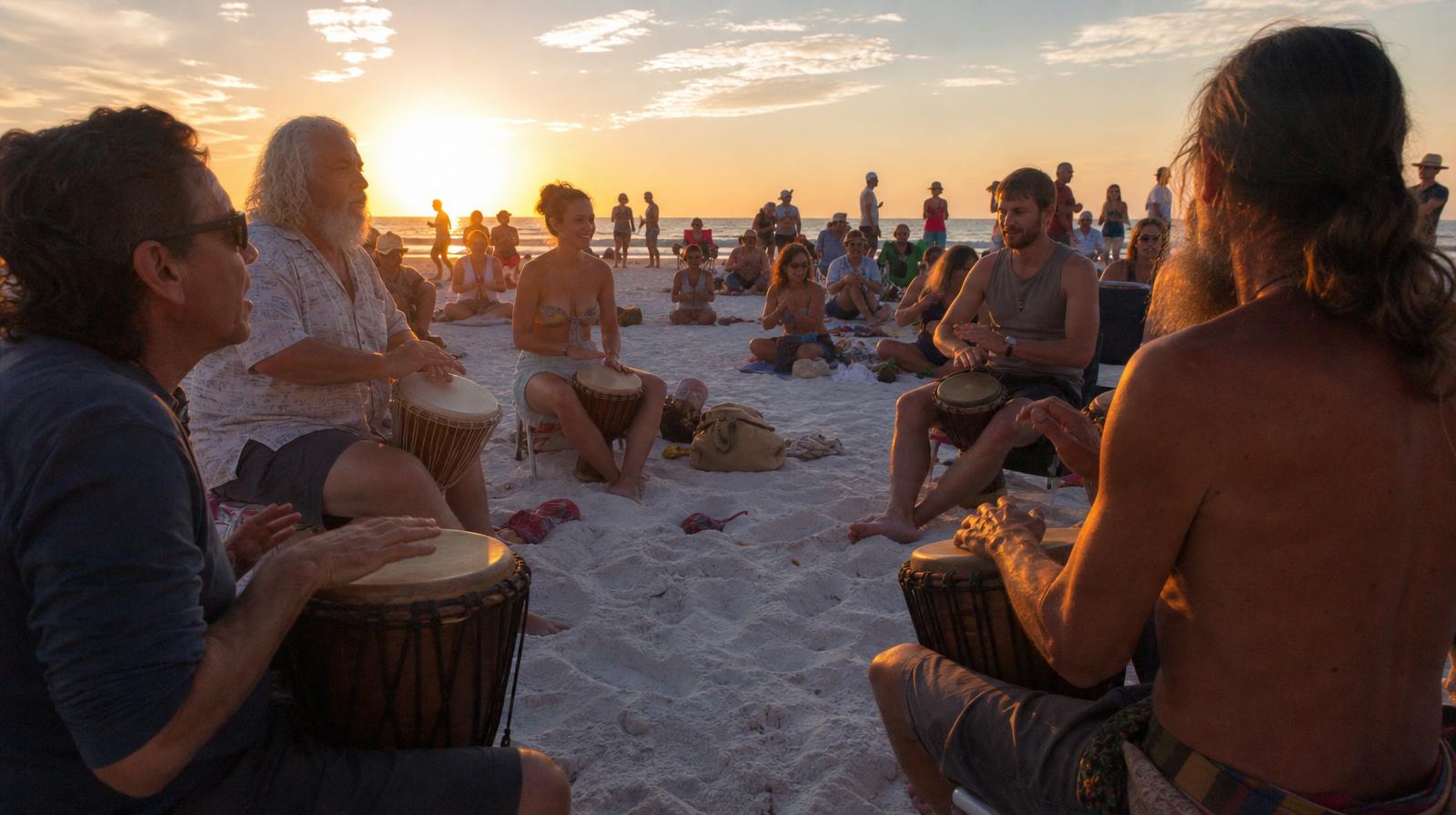
There is a unique magic that happens when a group of people gathers in a circle to create a collective heartbeat. If you have ever walked past a park and heard the resonant thump of a djembe or the sharp crack of a conga, you have likely felt that magnetic pull. However, for many, the idea of jumping into a circle of experienced drummers can feel intimidating.
The good news is that the vast majority of rhythmic gatherings are designed to be a beginner friendly drum circle experience. These spaces aren't about technical perfection; they are about connection, community, and the shared joy of sound. Whether you are holding a frame drum for the first time or you've been tapping on your steering wheel for years, there is a seat for you in the circle.
What Exactly is a Beginner Friendly Drum Circle?
In a professional percussion ensemble, every note is scripted. In a drum circle, the music is improvised and inclusive. A beginner-friendly environment is characterized by a lack of judgment and a focus on 'accessible rhythm.'
Typically, these circles are led by a facilitator—a guide who helps keep the pulse steady and ensures that everyone feels welcome. They might use call-and-response techniques to help newcomers find their footing or offer simple patterns that can be played on a variety of instruments, from the deep-toned dunun to the bright, metallic ring of a cowbell.
Choosing Your First Instrument
You don't need to own an expensive professional drum to participate. Many community circles provide 'loaner' instruments for those just starting out. If you are looking to purchase your first drum, here are the most common beginner-friendly options:
- Djembe: The most popular choice. It offers three distinct sounds (bass, tone, and slap) and is easy to transport.
- Doumbek: A goblet-shaped drum from the Middle East with a sharp, crisp sound often played with the fingers.
- Frame Drum: One of the world's oldest instruments, these are lightweight and can be played with hands or a soft mallet.
- Congas: Tall, staved drums that provide a warm, melodic tone.
- Small Percussion: If you aren't ready to lead the beat, shakers, maracas, and tambourines are vital for adding texture to the rhythm.
If you want to master the basics before your first public outing, reaching out to drum teachers can give you the confidence to play with clarity.
Basic Drum Circle Etiquette for Newcomers
While the atmosphere is usually relaxed, following a few simple 'unwritten rules' will help you integrate smoothly into the group:
- Listen More Than You Play: When you first sit down, listen to the established groove for a minute. Try to find the 'heartbeat' (the steady pulse) before adding your own rhythm.
- Leave Space: You don't have to play on every beat. Rhythmic 'silence' or 'air' allows the music to breathe.
- Support the Pulse: Beginners often accidentally speed up. Focus on staying steady rather than playing fast.
- Ask Before Playing Someone Else's Drum: Many drums are handmade and hold personal significance. Always ask before trying out another person’s instrument.
- Follow the Facilitator: If a facilitator is using hand signals to bring the volume down or stop the music, pay close attention.
The Health and Social Benefits of Group Drumming
Participating in a beginner friendly drum circle isn't just a hobby; it’s a wellness practice. Studies have shown that group drumming can reduce stress, lower blood pressure, and boost the immune system.
Beyond the physical benefits, it is a powerful social bridge. In a circle, age, profession, and background disappear. You are simply one part of a rhythmic conversation. For those looking for a deeper immersion, many people transition from local circles to drumming retreats to experience the transformative power of rhythm over several days.
Finding the Right Circle for You
Not all drum circles are the same. Some are 'facilitated,' meaning a leader guides the energy, while others are 'free-form' or 'anarchic.' For a beginner, a facilitated circle is often the best place to start because the leader ensures the rhythm doesn't become chaotic.
You can find these gatherings at community centers, local parks, full-moon beach gatherings, and even wellness studios. Checking local events listings is a great way to see what is happening in your area this month.
Overcoming 'Rhythm Anxiety'
The most common thing we hear is, "I don't have a rhythmic bone in my body." This is a myth. If you have a heartbeat and you can walk, you have rhythm. The goal of a beginner friendly drum circle is not to perform, but to participate. If you get lost, just stop, take a breath, and wait for the 'one' (the first beat of the measure) to start again. No one is judging you; they are too busy enjoying their own groove!
If you find that you truly love the experience and want to dive deeper into the technical side of West African, Afro-Cuban, or Middle Eastern rhythms, enrolling in drum schools can provide a structured path to mastery.
Find a drum circle near you and start your rhythmic journey today.
Frequently asked
- Do I need to bring my own drum to a beginner friendly drum circle?
- Not necessarily. Many community circles and facilitated events provide 'loaner' instruments like djembes or shakers. It is always a good idea to check the event description or contact the organizer beforehand to see if instruments are provided.
- What should I wear to a drum circle?
- Comfort is key. Wear loose-fitting clothing that allows you to sit comfortably with a drum between your knees. Avoid wearing heavy rings or bracelets, as these can damage the drum head and hurt your hands while playing.
- Is a drum circle the same as a drum lesson?
- No. A drum lesson focuses on technique and specific patterns taught by an instructor. A drum circle is a collaborative, improvisational event where the focus is on group connection and 'in-the-moment' music creation.
Find a drum circle near you
Browse hundreds of circles, teachers and rhythm community gatherings.
Explore drum circles