Best Instruments for Drum Circle Success: A Complete Guide
Discover the perfect percussion to bring to your next community jam, from the resonant djembe to pocket-sized shakers.
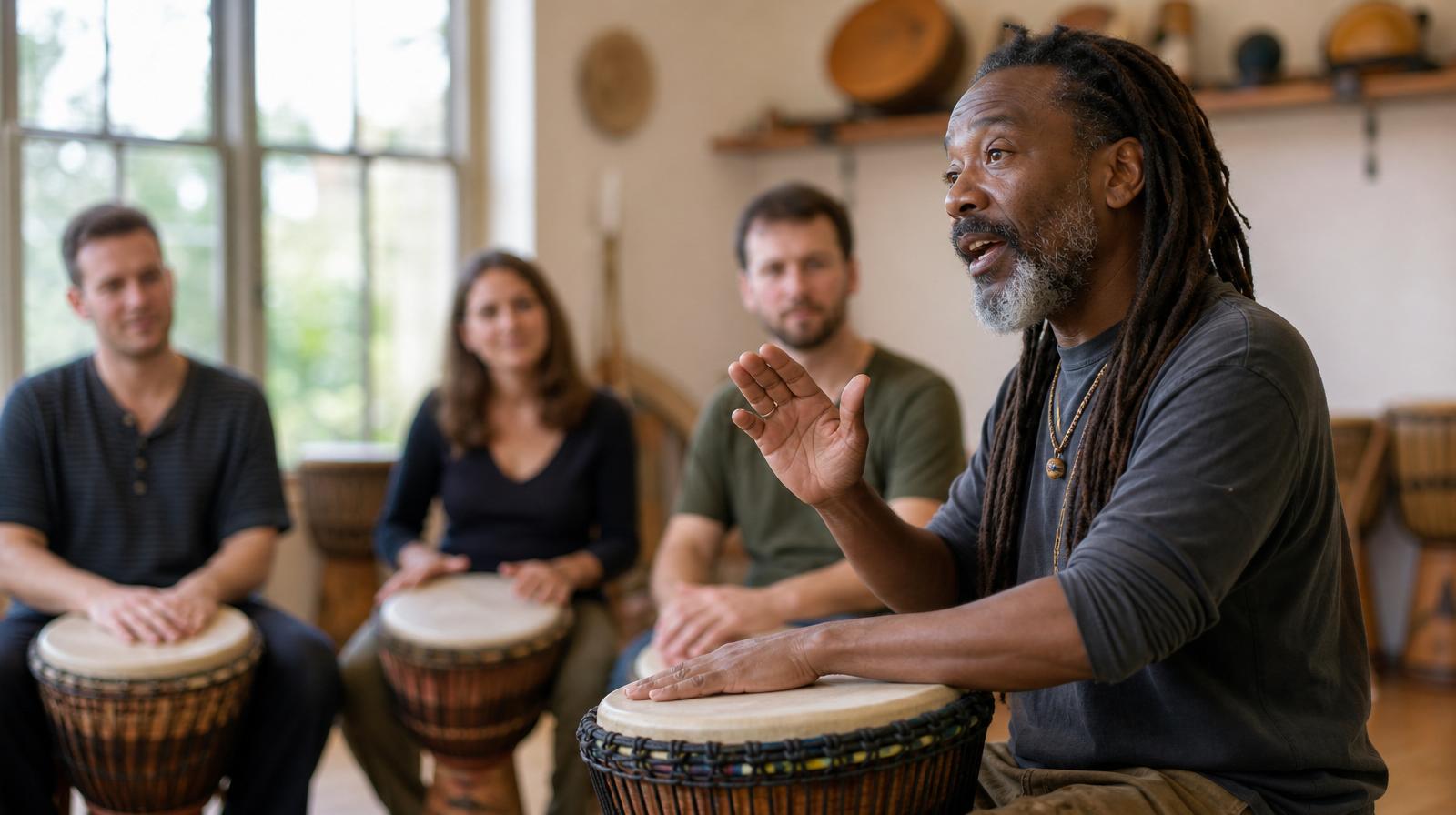
Walking into your first drum circle is a transformative experience. The air vibrates with a collective pulse, and the energy is palpable. But for many newcomers, the first question is often the most practical one: What are the best instruments for drum circle participation?
Choosing the right instrument isn't just about what looks cool; it's about finding a voice that complements the collective sound. Whether you are attending a high-energy full-moon gathering or a focused workshop led by professional drum teachers, your choice of percussion will define your experience.
The Heartbeat: The African Djembe
The djembe is arguably the most popular choice for modern drum circles. Originating from West Africa, this goblet-shaped drum is prized for its versatility. It offers three distinct tones—bass, tone, and slap—allowing a single player to provide both the deep foundation and the sharp rhythmic accents.
When selecting a djembe, consider the material. Traditional goat-skin heads provide a warm, organic sound but can be sensitive to humidity. Synthetic heads are more durable for outdoor beach circles and stay in tune regardless of the weather. Because of its volume, the djembe is one of the best instruments for drum circle leaders who need to signal changes in tempo or rhythm.
The Foundation: Congas and Dununs
If you prefer to hold down the low end, consider larger drums like the conga or the dunun.
- Congas: These tall, narrow drums from Cuba offer a melodic, warm quality. They are typically played in pairs, but a single conga is a fantastic addition to any circle, providing a steady "tumbao" rhythm that keeps the group grounded.
- Dununs: These are the bass drums of West African music. Played with sticks, the dundunba, sangban, and kenkeni provide the melodic backbone that djembes dance over. They are perfect for those who prefer a physical, stick-based playing style.
The Spirit: Frame Drums and Shamanic Drums
Not every drum circle is about high-volume intensity. Many drumming retreats focus on the meditative and healing aspects of rhythm. For these settings, the frame drum is an exquisite choice.
Frame drums are among the oldest instruments in the world. They consist of a hoop with a skin stretched over one side. Because they are lightweight and played with the fingers or a soft mallet, they are ideal for long sessions. The overtones produced by a frame drum can be hypnotic, making them perfect for intentional, spiritual gatherings.
The Flavor: Hand Percussion and Shakers
You don't need a massive drum to make a massive impact. In fact, a circle full of only loud drums can often sound muddy. This is where small percussion shines. These "flavor" instruments provide the high-frequency shimmer that cuts through the bass.
- Egg Shakers and Maracas: Essential for keeping time without overpowering others.
- Tambourines: Great for adding a bright, metallic edge to the rhythm.
- Claves: Two wooden sticks that produce a sharp, piercing sound—perfect for maintaining the "key" of the rhythm.
- Cowbells: A staple for Afro-Cuban rhythms that helps the group stay synchronized.
The Melodic Touch: Hand Pans and Tongue Drums
In recent years, the hand pan (or hang drum) has become a favorite at community jams. These steel instruments are tuned to specific scales, meaning every note you hit will harmonize with the others. While they are quieter than a djembe, they add a hauntingly beautiful melodic layer that can turn a standard jam into a cinematic experience.
If you are just starting, a steel tongue drum is a more affordable entry point that offers a similar ethereal sound and is very portable for traveling to various events.
Etiquette and Volume Control
Choosing the best instruments for drum circle success also involves understanding volume. If you bring a loud doumbek or a snare drum, you must be mindful of the collective volume. The goal of a drum circle is to listen as much as you play.
If you find yourself in a circle where you can't hear the person sitting across from you, it might be time to switch to a shaker or play with your fingertips instead of your palms. Learning these nuances is often covered in depth at established drum schools.
Summary of Top Choices
| Instrument | Best For | Sound Profile |
|---|---|---|
| Djembe | All-around versatility | Deep bass, sharp slaps |
| Frame Drum | Meditation & Healing | Gentle, resonant overtones |
| Conga | Steady foundations | Warm, melodic tones |
| Shakers | Beginners & Texture | High-frequency timekeeping |
| Hand Pan | Melodic atmosphere | Ethereal, metallic melody |
Finding the right instrument is a journey of self-discovery. Whether you gravitate toward the thundering bass of a dunun or the subtle pulse of a frame drum, the most important thing is that you show up and contribute your unique beat to the whole.
Find a drum circle near you.
Frequently asked
- What is the best drum for a beginner to bring to a circle?
- A djembe is widely considered the best beginner drum because it is intuitive to play and offers a wide range of sounds. If you aren't ready to invest in a drum, a high-quality shaker or a pair of maracas is a perfect, low-pressure way to start participating.
- Do I need to know how to read music to join a drum circle?
- No, drum circles are generally based on improvisation and oral tradition rather than sheet music. Most circles use call-and-response or simple repetitive patterns that you can pick up by listening to the facilitators and experienced players.
- Should I buy a goat-skin or synthetic drum head?
- Goat-skin heads offer a traditional, warm sound but can go flat in humid or cold weather. Synthetic heads, like those made by Remo, are much more stable and durable, making them better for outdoor community events and beginners who don't want to worry about tuning.
Find a drum circle near you
Browse hundreds of circles, teachers and rhythm community gatherings.
Explore drum circles