
Community Drum Circle Etiquette: A Guide for Beginners and
Walking into your first drum circle can be intimidating. This guide covers the unwritten rules of rhythm to help you play with confidence and respect.
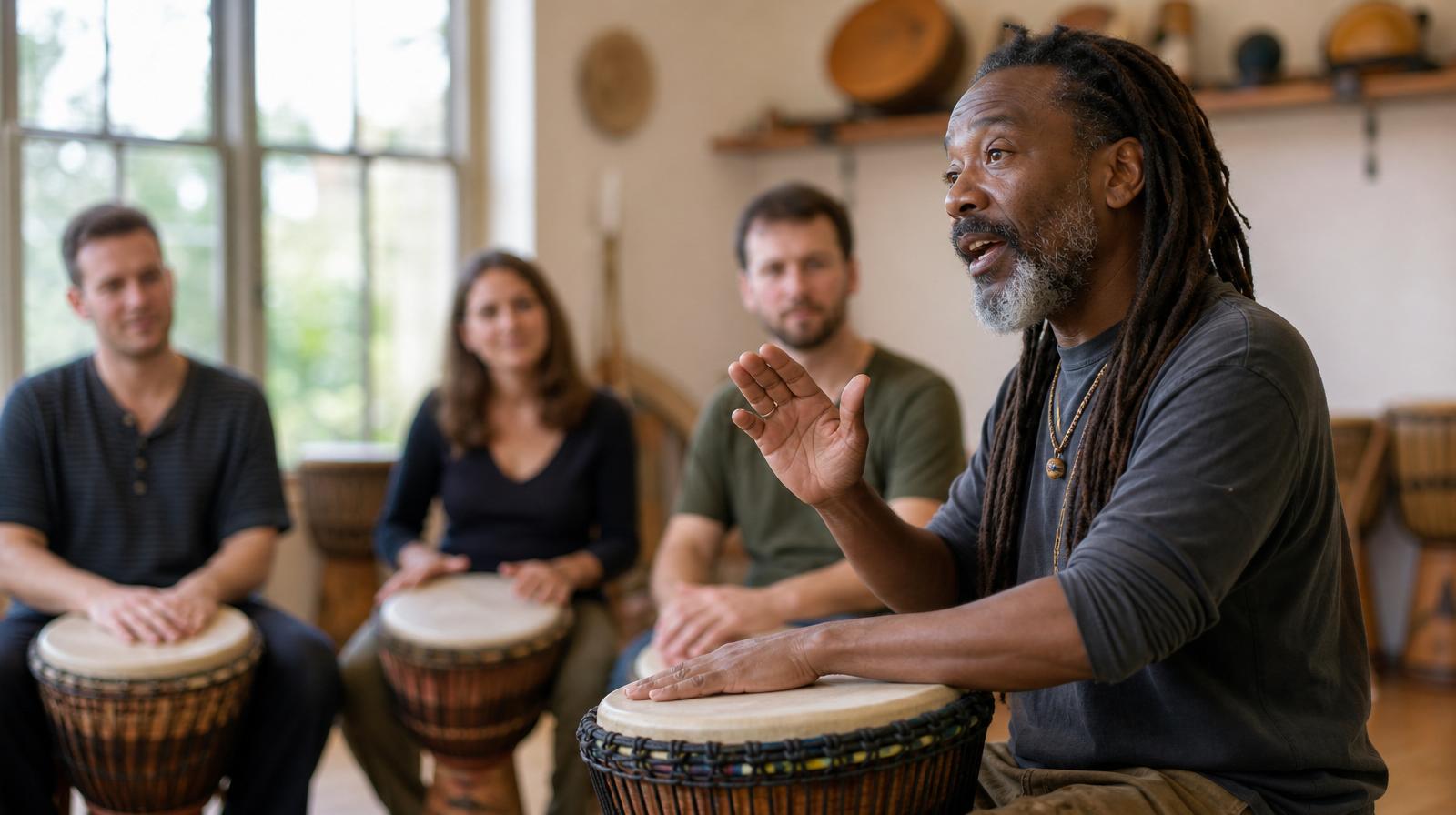
There is a unique magic that happens when a group of people, many of whom may be strangers, sit in a circle and find a collective heartbeat. Whether it is the deep resonance of a djembe, the sharp crack of a doumbek, or the steady pulse of a frame drum, the community drum circle is a space for connection, healing, and joy.
However, because these gatherings are often spontaneous and inclusive, they rely on a set of unwritten rules to keep the music from turning into noise. Understanding community drum circle etiquette is the key to moving from being an observer to becoming a vital part of the rhythmic tapestry. This guide will help you navigate the circle with grace, whether you are attending a full-moon beach gathering or a structured indoor session.
1. Listen More Than You Play
The most important rule of any musical collaboration is to listen. When you first arrive at a circle, don't immediately start banging your drum at full volume. Take a moment to sit, close your eyes, and identify the 'heartbeat'—the foundational pulse that the group is maintaining.
Try to find the space between the notes. If the circle is already dense with sound, you don't necessarily need to add more volume. Instead, look for a rhythmic pocket where your specific tone—perhaps the high-pitched click of a woodblock or the soft shake of a maraca—can add flavor without overcomplicating the groove.
2. Respect the Facilitator and the Center
Many modern gatherings are led by a facilitator. Their job is to guide the energy, signal transitions, and sometimes lead call-and-response patterns. If a facilitator is present, keep an eye on them for 'sculpting' signals. They may signal for the volume to drop to a whisper (a 'decrescendo') or for everyone to stop at once (a 'cut-off').
Additionally, the center of the circle is often considered a sacred or shared energetic space. Avoid walking across the middle of the circle while people are playing. If there are dancers in the center, give them room to move and let their movements inspire your tempo.
3. Ask Before You Borrow
Drummers are generally a generous bunch, but instruments are deeply personal and often expensive. A hand-carved djembe with a goat-skin head is sensitive to temperature, moisture, and the oils on your hands. Never pick up someone else's drum, bell, or shaker without asking permission first.
If you don't have your own instrument yet, many circles provide 'community drums' for public use. If you are looking to invest in your own, you might want to find drum teachers who can advise you on the right instrument for your hand size and musical interests.
4. Support the Basic Groove
It is tempting to try out that complex 16th-note fill you’ve been practicing at home, but in a community drum circle, the goal is 'we,' not 'me.' The circle stays together because of the people playing the 'low' parts—the steady, grounding bass notes on the dununs or the heavy thrum of the congas.
If the rhythm starts to feel shaky or 'train-wrecks,' return to the simplest beat possible. By reinforcing the foundation, you help the beginners stay on track and provide a canvas for others to experiment. If you want to refine your technique so you can hold that steady beat for hours, consider looking into drum schools that specialize in traditional West African or Afro-Cuban rhythms.
5. Be Mindful of Volume and Solos
A drum circle is not a drum battle. If you can't hear the person sitting next to you, you are probably playing too loud. Volume control is a sign of a mature player.
Soloing is a wonderful part of the experience, but it should be like a conversation. If you take a solo, keep it brief and musical. Once you’ve had your say, 'give the rhythm back' to the circle by returning to the basic groove. This allows someone else to step forward and share their voice.
6. Leave Your Ego at the Edge
Community drum circles are often family-friendly environments where toddlers and elders play side-by-side. It doesn't matter if you are a professional percussionist or someone who has never touched a drum before; in the circle, everyone is equal.
Be encouraging to those around you. If a beginner is struggling to find the beat, don't correct them harshly. Simply play a very clear, steady pulse near them to help them lock in. The goal is community harmony, both musically and socially.
7. Know When to Join and When to Fade
If you arrive late, wait for a natural lull or a transition in the rhythm before you start playing. Entering with a loud, clashing beat can disrupt the flow that the group has worked hard to establish. Similarly, if you feel the energy of a particular rhythm winding down, let it fade naturally into silence. That moment of silence after a powerful jam is often where the deepest connection is felt.
Ready to put these tips into practice? Find a drum circle near you and join the rhythm community.
Frequently asked
- What should I bring to my first drum circle?
- Bring a drum if you have one, a small folding chair (if seating isn't provided), and plenty of water. It's also wise to bring ear protection and a positive, open-minded attitude.
- Can I join a drum circle if I have no experience?
- Absolutely! Most community drum circles are 'all-levels' and welcome beginners. Focus on playing a simple, steady beat and listen to the experienced players to help you stay in time.
- Is it okay to take photos or videos during the circle?
- It depends on the specific group. Always ask the facilitator or the organizers first, as some circles are considered private or meditative spaces where cameras can be a distraction.
Find a drum circle near you
Browse hundreds of circles, teachers and rhythm community gatherings.
Explore drum circles