The Art of the Drum Circle Ceremony: Guide to Sacred Rhythm
Discover how a drum circle ceremony transforms simple rhythm into a profound communal experience through intention, sacred space, and the power of the djembe.
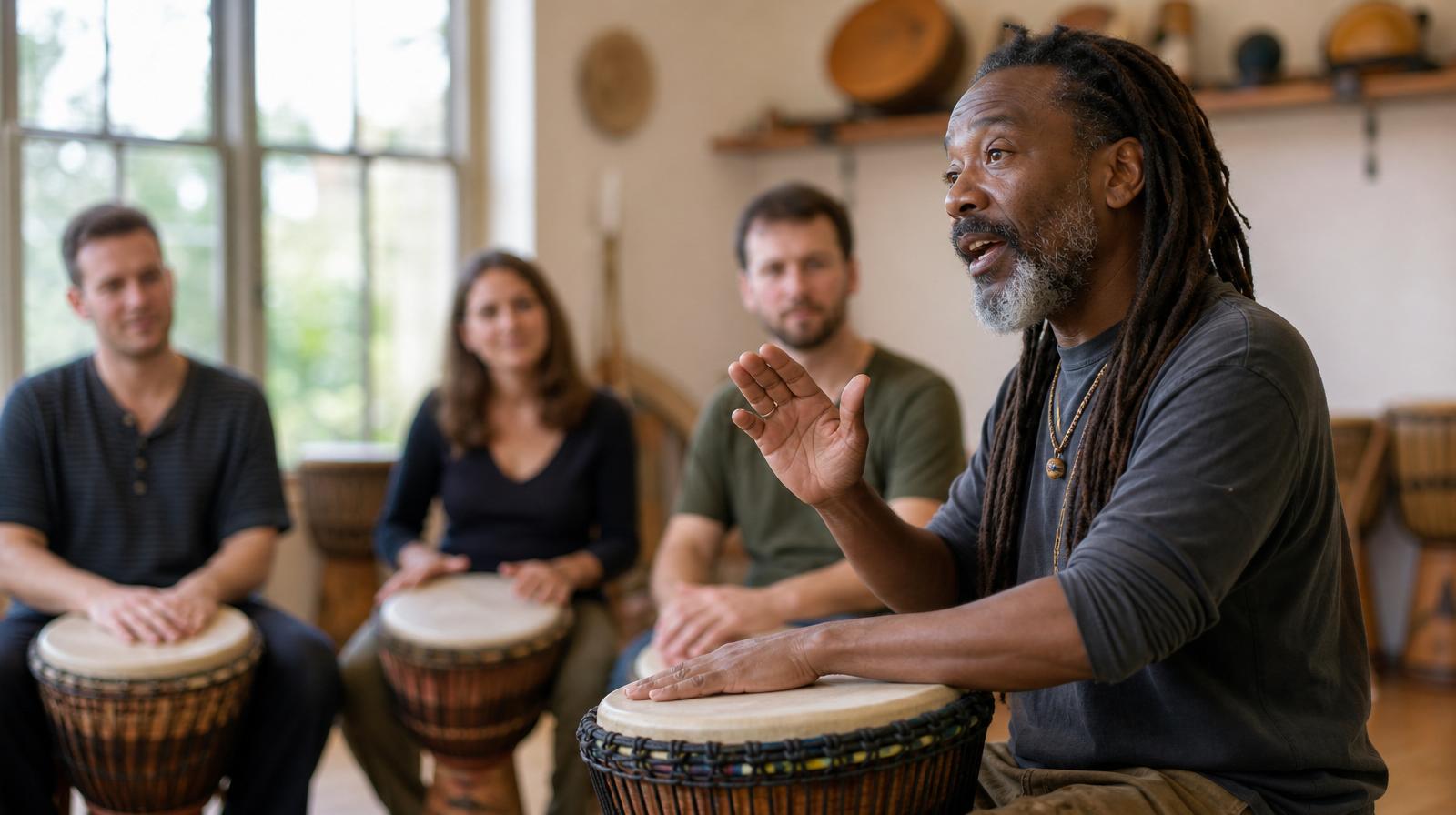
There is a profound difference between a casual jam session and a true drum circle ceremony. While both involve the joy of hitting a skin-headed instrument, a ceremony is defined by intention, ritual, and a shared sense of sacred space. From the ancient beats of the djembe in West Africa to the hypnotic pulse of the frame drum in Middle Eastern traditions, the drum has always been a tool for transcendence.
In this guide, we explore how to elevate a standard gathering into a transformative drum circle ceremony that nourishes the soul and strengthens the bonds of community.
The Foundation of Intentional Rhythm
At its heart, a drum circle ceremony is about more than just keeping time. It is a focused gathering where the participants use rhythm to mark a transition, celebrate a milestone, or connect with a higher sense of self. Unlike a performance where there is a clear divide between artist and audience, a ceremony invites everyone into the center of the experience.
When we gather with intention, the djembe becomes a voice, the dunun provides the heartbeat, and the shakere adds the shimmer of spirit. This intentionality is what separates a public park jam from a ceremonial circle. It starts with a clear beginning, a sustained middle, and a conscious closing.
Setting the Sacred Space
To host a drum circle ceremony, the physical environment must reflect the internal goal. Many facilitators choose to set an altar in the center of the circle. This might include candles, seasonal flowers, or meaningful stones. This central point serves as a visual anchor for the drummers, reminding them to keep their energy focused inward toward the community rather than outward toward distractions.
Smudging with sage or palo santo is a common practice to clear the energy before the first beat is struck. This ritual signals to the brain and the spirit that we are moving out of 'ordinary time' and into 'ceremonial time.'
Essential Instruments for the Ceremony
While any drum is welcome in a community setting, certain instruments carry specific weight in a ceremonial context:
- The Djembe: The 'healing drum' of the Mandinka people, known for its wide range of tones—bass, tone, and slap.
- The Dunun: These three drums (dundunba, sangban, and kenkeni) provide the melodic and rhythmic foundation, acting as the 'anchor' of the ceremony.
- The Frame Drum: Often associated with the feminine and ancient spiritual practices, its resonant, earthy tone is perfect for trance-like states.
- The Doumbek: A goblet-shaped drum that offers crisp, sharp sounds ideal for intricate Middle Eastern rhythms.
- The Conga: Bringing the warmth and heartbeat of Afro-Cuban traditions to the circle.
For those looking to deepen their technical skill before joining a formal ceremony, connecting with drum teachers can help you find your unique voice on these instruments.
The Flow of a Drum Circle Ceremony
1. The Opening Call
A ceremony usually begins with a 'call-and-response.' The facilitator or a lead drummer plays a specific phrase, and the circle answers in unison. This synchronizes the breathing and the heartbeats of everyone present. It is a moment of arrival.
2. Building the Groove
Once the circle is unified, a steady pulse is established. This isn't the time for complex solos; it is the time for 'weaving.' Each participant finds a pocket of space in the rhythm that complements the others. In a ceremonial setting, this phase can last for thirty minutes or more, allowing the repetitive nature of the beat to induce a meditative state.
3. The Peak and the Release
As the energy builds, the tempo may naturally increase. The facilitator might use a signal to lead the group into a 'rumble'—a chaotic, high-energy crescendo where everyone plays as fast and loud as they feel. This represents the release of tension and the breaking of old patterns.
4. The Silence
Perhaps the most important part of any drum circle ceremony is the silence that follows the final beat. In that sudden quiet, the vibration of the drums continues to ring in the body. This is the moment of integration.
Etiquette and Community Connection
Participating in a ceremony requires a different level of listening than a standard event. It is important to leave space for others and to avoid 'over-drumming.' If you cannot hear the person next to you, you are likely playing too loud. The goal is to become one single, rhythmic organism.
Many people find that attending drumming retreats is the best way to immerse themselves in these protocols, as these multi-day events often focus heavily on the ceremonial and spiritual aspects of the craft.
Why We Need These Rituals Today
In our modern, digital world, we are often disconnected from physical community and the natural rhythms of life. A drum circle ceremony provides a necessary 'unplugging.' It offers a family-friendly environment where people of all ages can communicate without words. Whether it is a full-moon gathering or a seasonal equinox celebration, these ceremonies remind us that we are part of something much larger than ourselves.
If you are ready to experience this for yourself, you can explore specialized events that focus on rhythmic ritual and healing.
Finding Your Rhythm
Whether you are a seasoned pro or a complete beginner, there is a seat for you in the circle. The beauty of the drum is that it meets you exactly where you are. You don't need to be a master of the djembe to contribute a steady, loving heartbeat to a ceremony.
Ready to find your tribe? Find a drum circle near you and step into the rhythm.
Frequently asked
- What should I bring to a drum circle ceremony?
- Most participants bring their own drum, such as a djembe or frame drum, but many circles provide 'loaner' instruments. It is also wise to bring a small stool, water, and an open heart. If the ceremony is outdoors, a blanket or cushion for sitting on the ground is recommended.
- Do I need to be a professional drummer to join a ceremony?
- Absolutely not. Drum circle ceremonies are inclusive and focus on community and intention rather than technical virtuosity. Beginners are often encouraged to start with a simple shaker or a steady bass beat on a djembe to help hold the foundation of the rhythm.
- How long does a typical drum circle ceremony last?
- While a casual jam might go on for hours, a structured ceremony usually lasts between 90 minutes and two hours. This includes the opening ritual, several rhythmic 'waves,' a period of silence or meditation, and a closing sharing circle.
Find a drum circle near you
Browse hundreds of circles, teachers and rhythm community gatherings.
Explore drum circles