What is the Drum Circle Meaning? A Guide to Rhythm and
Discover the profound meaning of drum circles, where rhythm transcends language to build community, wellness, and self-expression.
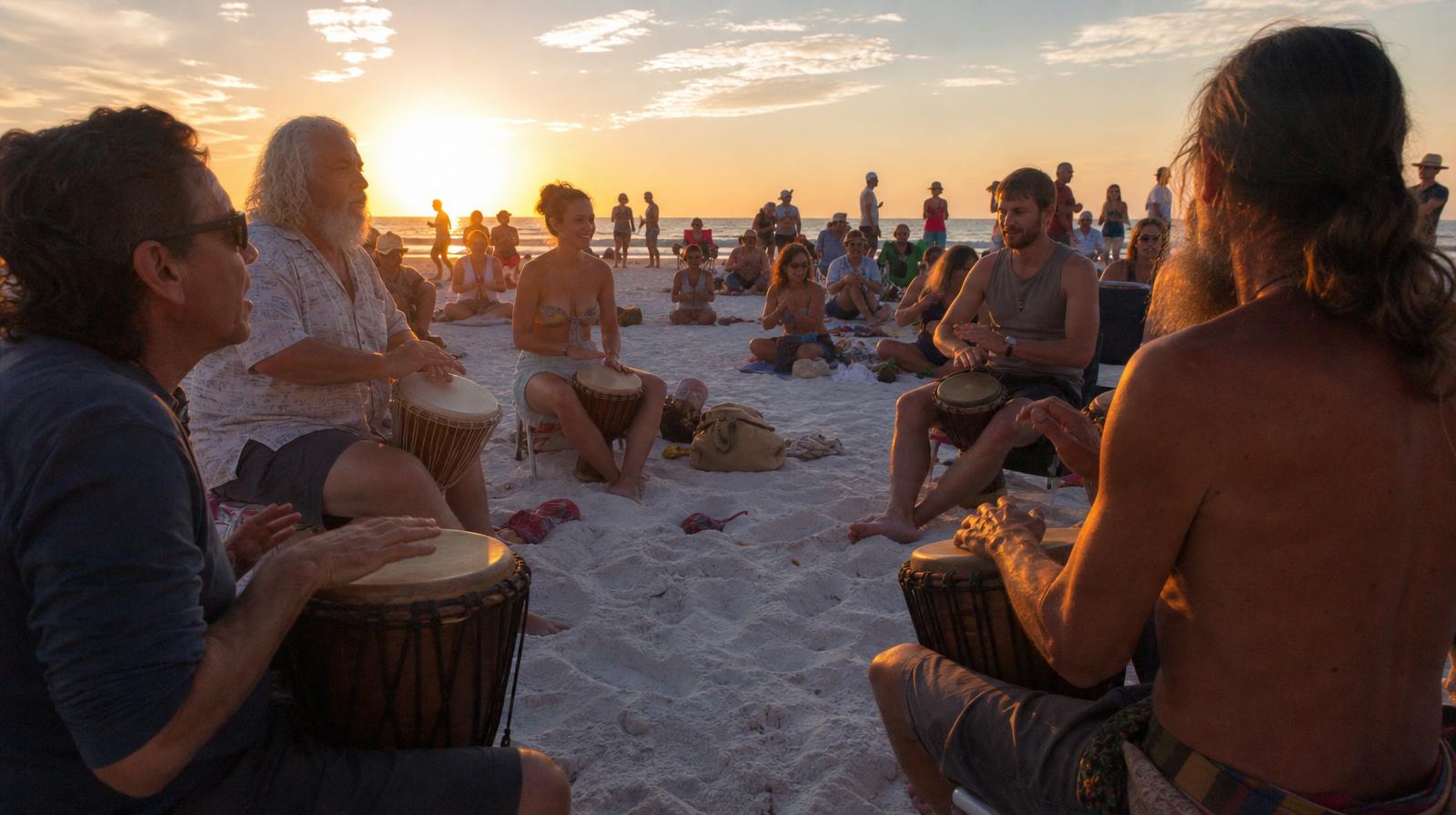
At its most basic level, a drum circle is a group of people sitting in a circle, playing hand drums and percussion instruments together. But if you ask anyone who has sat in the center of a pulsing rhythm under a full moon or in a community community center, they will tell you the drum circle meaning goes far deeper than just making noise. It is an ancient practice reimagined for the modern world—a celebration of life, a tool for healing, and a powerful way to find your tribe.
In this guide, we explore the layers of meaning behind the drum circle, from its historical roots to the spiritual and physiological benefits of the beat.
The Core Definition: More Than a Jam Session
While a musical performance focuses on the audience, the meaning of a drum circle is found in the participation. There is no stage, and there are no spectators. Everyone is a performer. In a circle, every seat is equal. Whether you are a professional percussionist or someone who has never touched a djembe before, your heartbeat is the only prerequisite for joining.
Unlike a structured band, many community drum circles are improvisational. The music is created in the moment, evolving through the collective energy of the group. This "in-the-moment" creation is what makes the experience so transformative; it requires active listening and a willingness to contribute to something larger than yourself.
The Cultural and Historical Roots
To understand the drum circle meaning, we must look at the traditions of Africa, the Middle East, and indigenous cultures worldwide. For millennia, the drum has been the heartbeat of the community. It was used to announce births, celebrate harvests, prepare for battle, and commune with the divine.
Instruments commonly found in modern circles carry these stories:
- The Djembe: From West Africa, known as the "healing drum," designed to bring people together in peace.
- The Dunun: The bass drums that provide the heartbeat and foundation of West African rhythms.
- The Doumbek: A goblet-shaped drum from the Middle East with crisp, sharp tones.
- The Conga: Afro-Cuban drums that bring a melodic, rhythmic heat to the circle.
- Frame Drums: Found in many cultures, often associated with spiritual ceremonies and shamanic practices.
The Social Meaning: Building Community
In an age of digital isolation, the drum circle offers a rare space for authentic human connection. The "meaning" here is social cohesion. When a group of strangers begins to play together, they initially struggle to find a common beat. However, after a few minutes, the rhythms begin to entrain. The group enters a state of "flow."
This entrainment is a physical manifestation of community building. You aren't just playing your drum; you are supporting the person to your left and drawing inspiration from the person to your right. Many people find their best friends and mentors through local drum teachers or by attending recurring community events.
Health and Wellness: The Healing Power of the Beat
Modern science is finally catching up to what ancient cultures have always known: drumming is good for the soul and the body. The drum circle meaning often centers on therapy and wellness. Research has shown that group drumming can:
- Reduce Stress: Drumming lowers cortisol levels and triggers the release of endorphins.
- Boost the Immune System: Studies indicate that group drumming increases natural killer cell activity, helping the body fight viruses.
- Release Trauma: The rhythmic vibrations provide a non-verbal outlet for emotions that are difficult to express in words.
- Chronic Pain Management: The focused, meditative state of drumming can provide a natural distraction from physical discomfort.
Understanding Facilitated vs. Organic Circles
If you are looking for drum circles near you, you will likely encounter two different styles, each with its own unique meaning:
The Facilitated Drum Circle
A facilitator acts as a rhythmic guide. They don't "conduct" in the traditional sense, but they use body language and signals to help the group start, stop, and transition between rhythms. This is ideal for beginners and corporate team-building, as it ensures everyone feels successful and the music remains cohesive.
The Organic or "Anarchic" Circle
These are often found at festivals or beaches. There is no designated leader. The rhythm starts with one person and others layer in. These circles celebrate raw expression and the natural evolution of sound. They require a higher level of listening and etiquette to ensure the rhythm doesn't become chaotic.
Beginner Etiquette: Finding Your Place in the Circle
To honor the meaning of the circle, one should follow a few unwritten rules of the rhythm. This ensures the experience remains positive for everyone:
- Listen more than you play: Before you start hitting your drum, listen to the established beat for at least a minute.
- Don't overplay: You don't need to play as loud or as fast as possible. Support the groove.
- Ask before playing someone else’s drum: Instruments are often deeply personal. Always seek permission.
- Respect the center: The middle of the circle is often a space for dancers or a shared percussion table. Keep it clear of trash or empty cases.
- Follow the facilitator: If someone is guiding the group, give them your attention.
Taking the Next Step in Your Journey
Understanding the drum circle meaning is just the beginning. The true magic happens when you pick up a mallet or place your hands on goat skin. Whether you want to attend drumming retreats to deepen your practice or simply find a family-friendly gathering in your local park, the rhythm is waiting for you.
If you're nervous about your skill level, consider enrolling in drum schools to learn the basic strokes: the tone, the slap, and the bass. This foundation will give you the confidence to contribute your unique voice to the global chorus of drummers.
Find a drum circle near you and start your rhythmic journey today.
Frequently asked
- Do I need to be a musician to join a drum circle?
- Absolutely not. The primary meaning of a drum circle is inclusivity. Most community circles welcome beginners with no prior musical experience, as the focus is on participation and connection rather than technical perfection.
- What should I bring to my first drum circle?
- If you have a drum (like a djembe or bongo), bring it! If not, don't worry—many circles provide extra percussion like shakers, bells, or loaner drums. It's also a good idea to bring water, a comfortable chair or stool, and an open mind.
- What is the difference between a drum circle and a jam session?
- A jam session is usually for experienced musicians to practice songs or solos, often with an audience. A drum circle is a democratic, participant-driven event where the goal is group synergy and community wellness rather than a polished musical performance.
Find a drum circle near you
Browse hundreds of circles, teachers and rhythm community gatherings.
Explore drum circles