Mastering the Drum Circle Rhythm: A Guide to Group Grooves
Discover the art of the drum circle rhythm, from basic djembe beats to advanced polyrhythms that connect communities through sound.
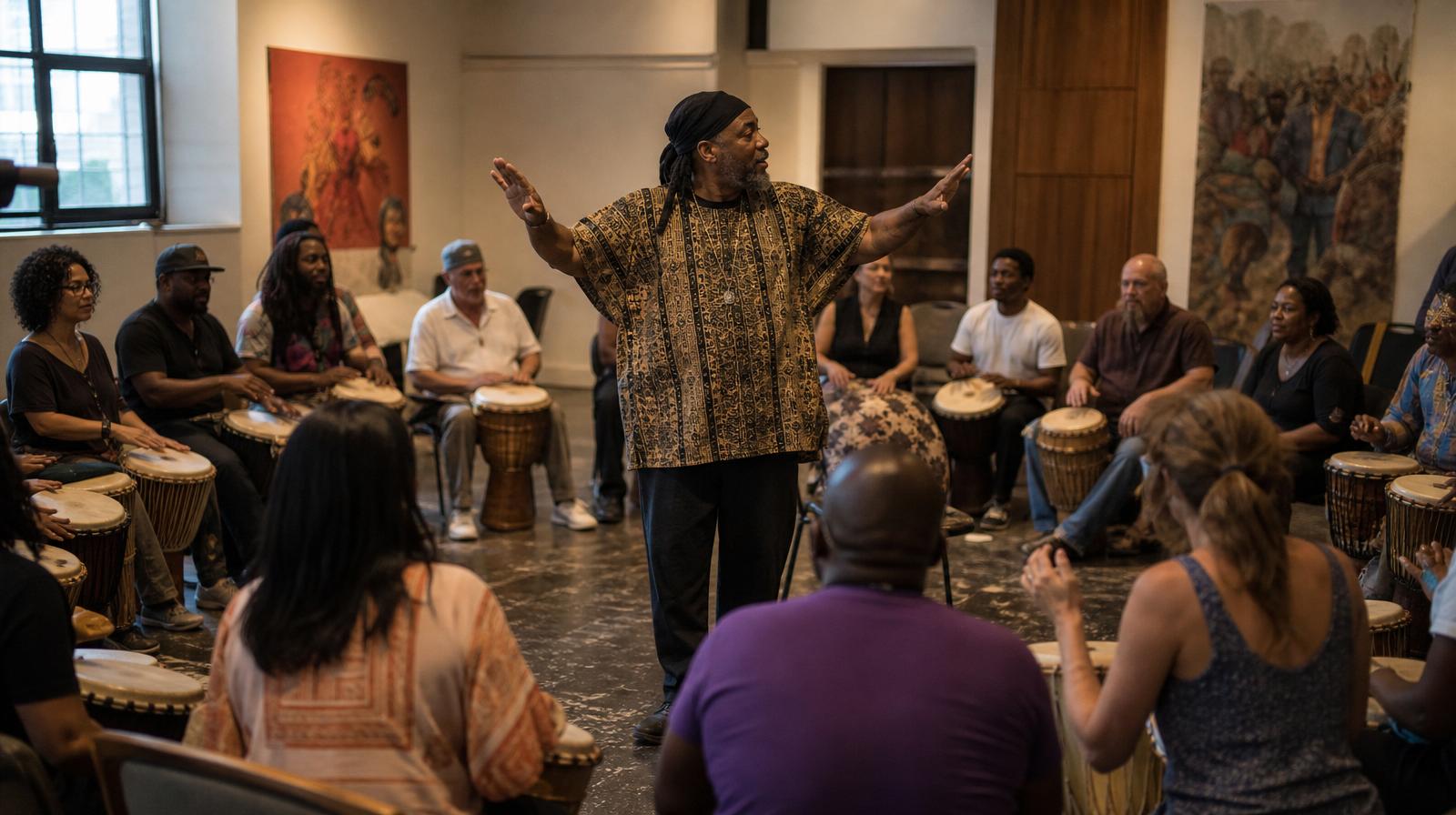
There is a primal magic that happens when a group of strangers sits in a circle, instruments in hand, and finds a collective pulse. This shared heartbeat, known as the drum circle rhythm, is more than just a series of notes; it is a language of connection that transcends words. Whether you are holding a djembe for the first time or you are a seasoned conga player, understanding how to contribute to the groove is essential for a rewarding experience.
At Drum Circle Directory, we believe that everyone has a rhythm within them. The goal isn't to play the most complex solo, but to weave your sound into the tapestry of the group. In this guide, we will explore the foundations of rhythm, the instruments that drive the circle, and how you can find your place in the pocket.
The Anatomy of a Drum Circle Rhythm
Every successful drum circle rhythm is built on a foundation of layers. Think of it like a house: you need a solid floor before you can add the walls and the roof. In a community setting, this floor is usually provided by the low-end instruments.
- The Pulse: This is the heartbeat, often played on a large dunun or a deep-toned djembe. It is the steady 1-2-3-4 that keeps everyone together.
- The Support: Mid-range instruments like congas or bongos add syncopation, filling the gaps between the main pulses.
- The Spark: High-pitched instruments like the doumbek, tambourines, or shakers provide the 'decoration' on top of the rhythm.
When these layers lock together, they create 'the groove'—that effortless state where the music seems to play itself.
Essential Instruments and Their Roles
To find the right drum circle rhythm, you must understand what your specific instrument brings to the conversation. Different drums have different voices, and knowing yours helps prevent the sound from becoming muddy.
The Djembe
The djembe is the king of the modern drum circle. With its wide range of tones—bass, tone, and slap—it is incredibly versatile. If you are a beginner, finding a drum teacher can help you master these three basic sounds so your contributions are clear and melodic.
The Dunun (Dundun)
These are the large, cylindrical bass drums of West Africa. They often provide the ‘hook’ or the melody of the rhythm. Without a steady dunun player, a circle can easily lose its way.
The Frame Drum and Doumbek
Frame drums offer a subtle, earthy vibration perfect for indoor or more meditative circles. The doumbek, with its sharp, crisp 'teks' and deep 'doums,' adds a Middle Eastern flair that cuts through the heavier bass of the larger drums.
How to Find the Groove as a Beginner
Walking into your first gathering can be intimidating, but the drum circle rhythm is inclusive by nature. The secret is to listen more than you play. Start by simply feeling the vibration in the floor. Once you feel the pulse in your body, gently add a single bass note on the '1'.
As you get comfortable, you can experiment with call-and-response. This is a classic rhythmic technique where a leader (or another player) throws out a short phrase, and the group answers back. It is a fantastic way to learn new patterns on the fly. If you want to dive deeper into these techniques, consider attending drumming retreats where you can immerse yourself in rhythm for several days.
The Importance of the 'One'
In almost every drum circle rhythm, the 'One' is the most important beat. It is the anchor. If the circle starts to speed up or become chaotic, returning to a strong, unified beat on the 'One' acts as a reset button. Many facilitators will use a bell or a woodblock to emphasize this beat, ensuring that even as polyrhythms get complex, the foundation remains unshakable.
Etiquette: Playing Within the Pulse
To maintain a beautiful drum circle rhythm, one must follow the unwritten rules of the circle. This isn't about restriction; it's about creating a space where everyone can be heard.
- Leave Space: You don't have to play on every beat. Silence is a part of music. By leaving gaps, you allow other instruments to shine through.
- Watch the Facilitator: If the circle has a facilitator, they may use hand signals to change the volume or end the song. Pay attention to their cues.
- Match the Volume: If you can’t hear the person next to you, you are likely playing too loud. A great rhythm is balanced.
- Support the Soloist: If someone is taking a solo, keep your rhythm steady and slightly quieter to give them the floor.
Beyond the Basics: Polyrhythms and Syncopation
Once a group is comfortable with a basic 4/4 pulse, the drum circle rhythm can evolve into something more complex, such as polyrhythms. This is when two or more different rhythms are played simultaneously. For example, some players might be feeling the beat in groups of three (1-2-3, 1-2-3) while others stay in four (1-2-3-4, 1-2-3-4).
This creates a 'rolling' sensation that is common in Afro-Cuban and West African music. It requires a high level of listening and a steady hand, but when it clicks, the energy in the circle reaches a whole new level. To see these complex rhythms in action, check out upcoming percussion events in your area.
Healing Through Rhythm
There is a reason why drum circles are used in wellness retreats and hospitals. The repetitive nature of a drum circle rhythm can induce a meditative state, reducing stress and promoting a sense of community belonging. When you sync your internal rhythm with the group, it releases endorphins and fosters a deep sense of 'entrainment'—the synchronization of organisms to an external rhythm.
Find Your Beat Today
Whether you’re looking for a high-energy full-moon gathering or a quiet, family-friendly afternoon beat, there is a seat in the circle waiting for you. The beauty of the drum circle rhythm is that it is never the same twice; it is a living, breathing expression of the people present in that moment.
Ready to start your journey? Find a drum circle near you and become part of the global rhythm community.
Frequently asked
- What is the best rhythm for a beginner to play in a drum circle?
- The best rhythm for a beginner is the steady heartbeat pulse. Focus on playing a solid bass note on the '1' of every four beats, or simply match the lowest-sounding drum in the circle until you feel confident to add more notes.
- Do I need to know how to read music to join a drum circle?
- No, you do not need to read music. Drum circles are primarily based on oral tradition and listening. You will learn by observing others, following the facilitator, and feeling the vibration of the group.
- What should I do if the drum circle rhythm gets too fast?
- If the tempo speeds up beyond your comfort level, simplify your pattern. Drop back to just playing the 'One' or the 'One and Three.' This helps you stay in time without getting overwhelmed or dragging the rest of the group down.
Find a drum circle near you
Browse hundreds of circles, teachers and rhythm community gatherings.
Explore drum circles