Drum Circles Near Me: Find Your Local Rhythm Community
Discover the magic of local drumming and learn how to find the perfect drum circle near you to connect with rhythm and community.
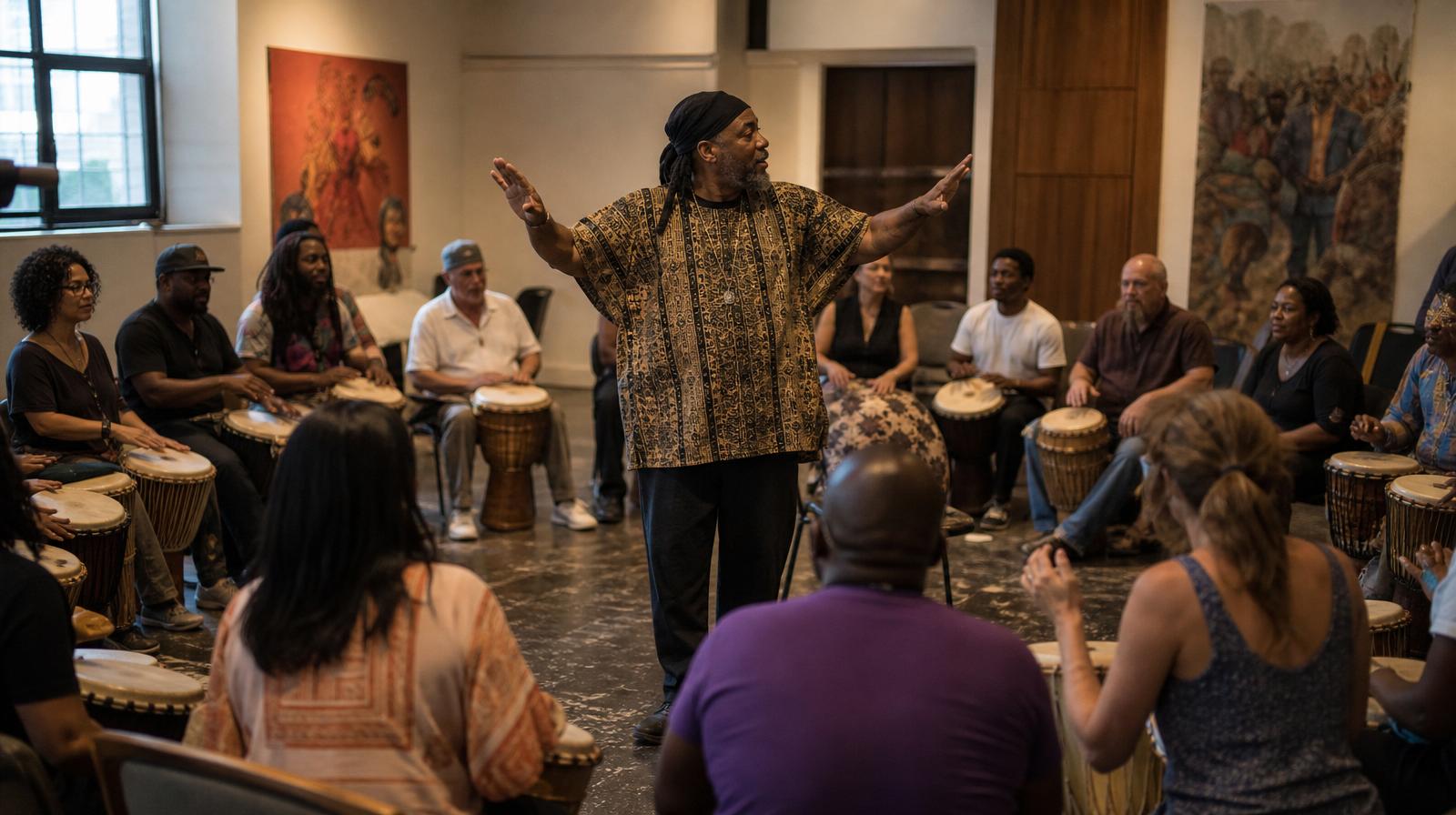
There is a unique feeling that occurs when dozens of people strike a drum at the exact same time. It is a resonant, grounding hum that vibrates through the floor and settles in your chest. Whether you are a seasoned percussionist or someone who has never touched a djembe before, the search for "drum circles near me" is often the first step toward finding a vibrant, welcoming community.
At Drum Circle Directory, we believe that rhythm is a birthright. You don't need to be a professional musician to participate in a community drum circle. These gatherings are about connection, not perfection. In this guide, we will explore what to expect at your first circle, the different types of drumming events available, and how to find the right rhythm home for you.
Why Join a Local Drum Circle?
In our increasingly digital world, the drum circle offers a rare opportunity for analog connection. It is one of the few places where people of all ages, backgrounds, and skill levels can come together to create something beautiful in real-time.
Beyond the social aspect, the health benefits of drumming are well-documented. Participating in a rhythm circle can reduce stress, boost the immune system, and provide a healthy outlet for emotional expression. When you find a circle in your neighborhood, you aren't just finding a hobby; you are finding a wellness practice.
Understanding the Different Types of Drum Circles
Not all drum circles are created equal. Before you head out to your first event, it helps to know what kind of environment you are walking into. Generally, circles fall into three categories:
- Community Facilitated Circles: These are led by a trained facilitator who uses verbal and non-verbal cues to guide the group. They are perfect for beginners because the facilitator ensures the rhythm stays cohesive and inclusive.
- Improvisational or "Spirit" Circles: These are more organic and less structured. There is no central leader; instead, the rhythm evolves naturally. These are common at full-moon gatherings or beach bonfires.
- Culturally Specific Circles: These focus on specific traditions, such as West African djembe and dunun rhythms, Middle Eastern doumbek patterns, or Afro-Cuban conga styles. These often require a bit more study and may be linked to local drum schools.
What Instruments Should You Bring?
While many community circles provide extra instruments, it is always a good idea to bring your own if you have one. The most common instruments you will see include:
- Djembe: The most popular choice for its wide range of tones (bass, tone, and slap).
- Congas and Bongos: Great for adding melodic, syncopated textures.
- Frame Drums: Lightweight and ancient, perfect for soft, meditative circles.
- Doumbek or Darbuka: Essential for those interested in Middle Eastern rhythms.
- Hand Percussion: Never underestimate the power of a shaker, cowbell, or tambourine to hold the pulse.
If you are looking to improve your technique before showing up, consider connecting with local drum teachers to learn the basics of hand placement and tone production.
Drum Circle Etiquette for Beginners
Walking into a new circle can be intimidating, but following a few simple rules of etiquette will make you a welcome addition to any group:
- Listen First: Before you start playing, listen to the established groove for a minute. Try to find the "heartbeat" or the pulse of the rhythm.
- Support the Pulse: Don't feel the need to play a complex solo. The most valuable players are those who hold down a steady, simple beat that others can lean on.
- Leave Space: Music is made of sound and silence. You don't have to play every single beat. Leaving "holes" in the rhythm allows the music to breathe.
- Ask Before Playing Someone Else's Drum: Drums are personal instruments. Always ask permission before trying out someone else's gear.
- Follow the Facilitator: If there is a leader, keep an eye on them for signals to fade out, speed up, or stop.
Finding the Right Event for Your Style
Depending on where you live, you might find a variety of events ranging from family-friendly park jams to late-night fire circles. Some circles are specifically designed for healing and meditation, while others are high-energy celebrations.
If you are looking for a deeper dive than a weekly local meetup, you might even explore drumming retreats that offer immersive experiences in nature, allowing you to bond with other drummers over several days.
How to Use the Drum Circle Directory
Our mission is to make rhythm accessible to everyone. To find "drum circles near me," simply navigate to our main directory. You can filter by location to find facilitators and groups in your city or state. We recommend checking the listings regularly, as many circles are seasonal or tied to lunar cycles.
When you find a listing that interests you, reach out to the organizer. Ask if they have drums to loan, if there is a suggested donation, and if the event is kid-friendly. Most organizers are thrilled to welcome new members to their rhythm family.
Start Your Rhythm Journey Today
The beat is already inside you; you just need a place to let it out. Whether you want to drum under the stars at a beach circle or find a quiet indoor space for meditative rhythm, your community is waiting for you.
Find a drum circle near you and start drumming today.
Frequently asked
- Do I need to own a drum to attend a drum circle?
- Not necessarily. Many community drum circles are 'facilitated,' meaning the organizer often brings a 'drum truck' full of extra djembes, shakers, and bells for newcomers to use. However, it is always best to check the event description or message the organizer beforehand to ensure loaner instruments are available.
- What is the best drum for a beginner to buy?
- The djembe is widely considered the best all-around drum for beginners. It is versatile, relatively easy to learn, and produces three distinct sounds (bass, tone, and slap) that fit into almost any musical style. A 10-inch or 12-inch synthetic head djembe is a great, low-maintenance starting point.
- Are drum circles kid-friendly?
- Most community drum circles are very family-friendly and welcome children of all ages. Drumming is a fantastic way for kids to develop motor skills and social cooperation. Just be sure to check if the specific event is labeled as a 'healing circle' or 'meditative circle,' which might require a quieter, more focused environment.
- How long do drum circles usually last?
- A typical community drum circle usually lasts between 90 minutes and two hours. This typically includes a warm-up period, several long 'grooves' or jams, and a brief closing or cool-down period. Larger festival circles or beach jams may go on for much longer, often well into the night.
Find a drum circle near you
Browse hundreds of circles, teachers and rhythm community gatherings.
Explore drum circles