Group Drumming Benefits: Why Playing Together Heals and
Discover how group drumming improves mental health, boosts immunity, and fosters deep community connection through the power of rhythm.
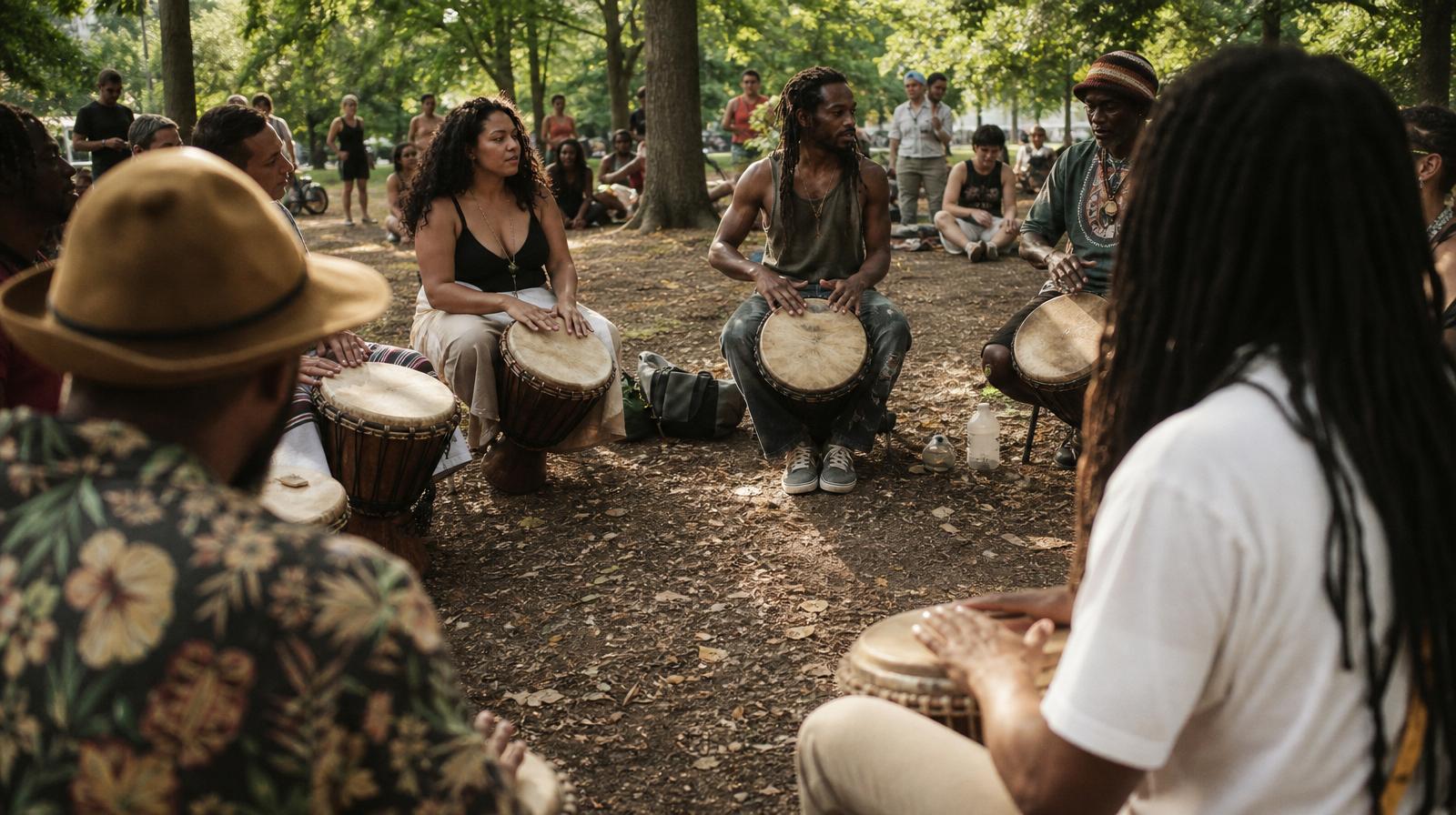
There is something primal and deeply moving about the sound of a heartbeat. When we gather in a circle, instruments in hand, we aren't just making noise; we are tapping into a rhythmic language that predates speech. Whether it is the deep resonance of a djembe, the sharp slap of a conga, or the steady pulse of a frame drum, group drumming offers a unique blend of physical, emotional, and social rewards.
In recent years, researchers and wellness practitioners have begun to quantify what indigenous cultures have known for millennia: drumming in a group is a powerful catalyst for human health. From reducing stress to building unbreakable community bonds, the advantages of picking up a pair of sticks or using your bare palms are profound.
1. The Science of Stress Reduction and Cortisol
One of the most immediate group drumming benefits is the reduction of stress. Modern life keeps many of us in a state of 'fight or flight,' with elevated cortisol levels that tax the immune system. When you join a drum circle, the rhythmic repetition helps shift the brain from high-frequency beta waves (associated with concentration and anxiety) to slower alpha and theta waves.
This transition induces a state of deep relaxation. Studies have shown that a single hour of group drumming can significantly lower cortisol levels. As you focus on the 'one'—the downbeat that anchors the group—the chatter of the mind fades away, replaced by a meditative flow state.
2. Boosting the Immune System through Rhythm
It sounds like magic, but it is biology. Research led by neurologist Dr. Barry Bittman has demonstrated that group drumming actually increases the activity of 'Natural Killer' (NK) cells. These specialized white blood cells are the body's front-line defense against viruses and even cancer cells.
Unlike passive listening, the active participation required in a rhythm circle engages the endocrine and immune systems. When you participate in drumming retreats, you aren't just taking a vacation; you are giving your biological defenses a significant upgrade through sustained rhythmic engagement.
3. Social Connection and the 'Rhythmic Entrainment'
Humans are hardwired for connection, yet loneliness is a modern epidemic. Group drumming acts as a social glue. In a circle, there is no hierarchy; everyone’s pulse contributes to the collective sound. This creates a sense of belonging that is difficult to find elsewhere.
Through a process called entrainment, the biological rhythms of individuals in the group—heart rates and brain waves—actually begin to synchronize. This shared resonance fosters empathy and reduces feelings of isolation. Whether you are a seasoned pro or a total novice, the local drum circles in your area offer a space where you are seen, heard, and valued.
4. Emotional Release and Trauma Healing
For many, drumming is a form of non-verbal communication. It allows for the expression of complex emotions—anger, grief, joy, or frustration—without the need for words. This makes it an exceptional tool for those recovering from trauma or managing PTSD.
- Catharsis: The physical act of striking a drum (like a doumbek or djembe) provides a safe outlet for pent-up energy.
- Grounding: The vibration of the drum against the body helps individuals stay present and grounded in the physical moment.
- Support: Being surrounded by a supportive community of drummers provides a safety net for emotional exploration.
5. Cognitive Benefits and Brain Health
Drumming is a full-brain workout. It requires the coordination of both hemispheres of the brain, as the left side handles the logical timing and the right side manages the creative, intuitive flow. This cross-hemispheric communication strengthens neural pathways.
For seniors, group drumming has been linked to improved memory and cognitive function. For younger players, it enhances focus and motor skills. Learning complex call-and-response patterns from drum teachers challenges the brain to map new sequences, keeping the mind sharp and agile.
6. Physical Exercise and Coordination
Don't underestimate the physical effort involved in a spirited rhythm session. A high-energy circle involving dununs (bass drums played with sticks) or traditional West African dancing alongside the drummers can be quite a workout.
- Improved Circulation: The movement of the arms and hands stimulates blood flow.
- Motor Skills: Balancing different rhythms between the left and right hands improves fine motor coordination.
- Endurance: Sustaining a groove for twenty minutes or more builds cardiovascular stamina.
Finding Your Rhythm
You don't need to be a professional musician to reap these rewards. Most community circles are 'all-levels,' meaning they welcome everyone from toddlers to retirees. If you are looking to deepen your practice, enrolling in drum schools can provide the technical foundation to express yourself even more freely.
Group drumming reminds us that we are part of something larger than ourselves. It is a celebration of life, a release of tension, and a path to holistic health. So, grab a drum, find a seat in the circle, and let the rhythm do the work.
Find a drum circle near you and start experiencing these benefits today.
Frequently asked
- Do I need to own a drum to join a group drumming session?
- Not necessarily! Many community drum circles are 'facilitated,' meaning the organizer often provides extra instruments like djembes, shakers, and bells for newcomers. However, it is always a good idea to check the event description on the Drum Circle Directory to see if you should bring your own gear.
- Is group drumming effective for children with ADHD?
- Yes, group drumming is highly beneficial for children with ADHD as it provides a structured yet creative outlet for energy. The rhythmic patterns help improve focus, impulse control, and social synchronization, making it a popular tool in therapeutic and educational settings.
- What is the difference between a drum circle and a drum class?
- A drum circle is generally a community-led event focused on spontaneous music-making and social connection, whereas a drum class is led by a teacher focused on specific techniques, traditional rhythms, and instrument mastery. Both offer great health benefits, but the 'circle' emphasizes free expression over technical perfection.
Find a drum circle near you
Browse hundreds of circles, teachers and rhythm community gatherings.
Explore drum circles