
Gulf Coast Beach Drum Circle Guide: Rhythms in the Sand
Experience the magic of drumming at sunset along the Gulf of Mexico. Discover the best beach circles from Florida to Texas and learn how to join the rhythm.
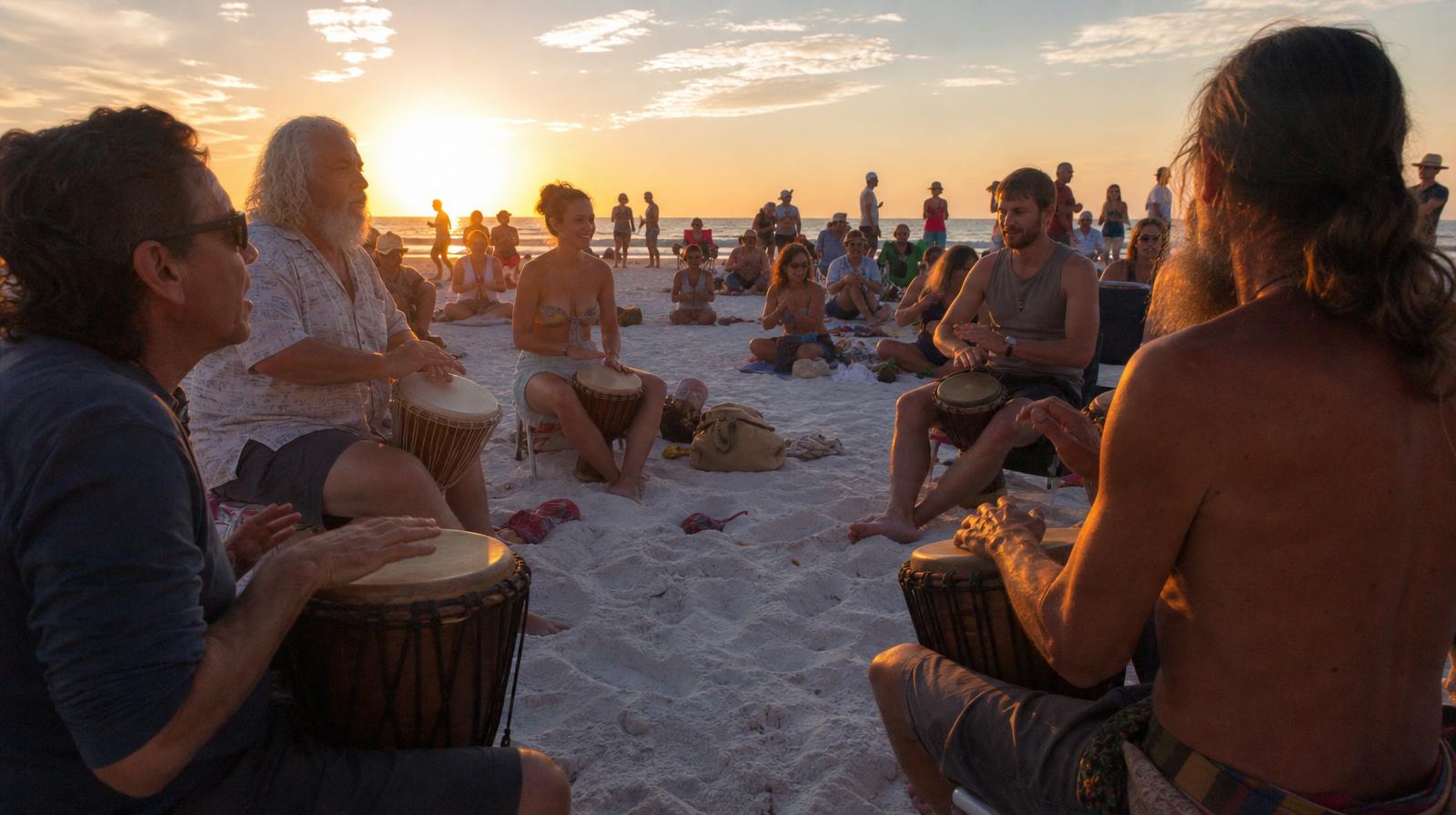
There is a specific kind of magic that happens when the humidity of the Gulf of Mexico meets the resonance of a goatskin head. As the sun dips below the horizon, painting the sky in shades of violet and fiery orange, the first beat of a djembe breaks the silence. This is the heart of the Gulf Coast beach drum circle—a tradition that spans from the tip of the Florida Keys to the sandy reaches of South Padre Island.
For residents and travelers alike, these gatherings are more than just musical performances; they are communal rituals. Whether you are a seasoned percussionist or a curious bystander, the rhythmic pulse of the Gulf Coast offers a unique way to connect with nature and neighbors.
The Unique Vibe of Gulf Coast Drumming
Unlike the high-energy, fast-paced circles found in urban parks, a Gulf Coast beach drum circle tends to follow the pace of the water. The rhythm is often fluid, beginning with a slow, meditative pulse as the sun sets and gradually building into a celebratory dance as the stars appear.
You will hear a diverse array of instruments. While the djembe is the undisputed king of the beach, you will also encounter the sharp, metallic clatter of the agogo bell, the deep thrum of the dununs, and the intricate patterns of the doumbek. The soft sand acts as a natural acoustic dampener, creating an intimate soundscape where the highs of a tambourine can cut through the salt air with crystalline clarity.
Top Destinations for Beach Drumming
If you are planning a trip along the coast, several locations have become legendary within the drumming community:
- Siesta Key, Florida: Perhaps the most famous circle in the region. Every Sunday evening, hundreds gather south of the main pavilion. It is a family-friendly event where hula hoopers and fire dancers often join the fray.
- Nokomis Beach, Florida: A slightly more laid-back alternative to Siesta Key, occurring on Wednesdays and Saturdays. It is an excellent spot for those looking for a more focused musical experience.
- Gulf Shores, Alabama: While smaller, the gatherings here are deeply rooted in Southern hospitality. You will often find local drum teachers leading basic patterns for newcomers.
- Galveston, Texas: The West Beach area frequently hosts full-moon circles that lean into the spiritual and meditative aspects of rhythm.
Essential Gear for the Sand and Salt
Drumming on the beach requires a bit more preparation than an indoor jam. The salt air and sand can be harsh on professional-grade instruments. If you are bringing a wooden djembe, ensure the wood is well-oiled to prevent cracking from the salt spray.
Many regulars prefer synthetic heads (like those from Remo or Meinl) for beach circles. Synthetic heads are unaffected by humidity, whereas natural goatskin can lose its tension and sound "tubby" when the air gets damp. If you are a beginner, a simple frame drum or a pair of maracas is a great way to start without a heavy investment.
Don't forget the non-musical essentials:
- A low-profile beach chair or a sturdy drum stool (sand is uneven!).
- A small brush to wipe sand off your gear before packing it away.
- Water and eco-friendly insect repellent.
Understanding Beach Circle Etiquette
To keep these community events thriving, following basic etiquette is vital. Most circles follow a "center-out" philosophy. The core drummers hold the steady beat in the middle, while dancers and observers form the outer rings.
If you are new, listen for a few minutes before jumping in. Try to find the "heartbeat" of the rhythm—the steady pulse that everyone is following. Avoid playing over others; instead, look for the gaps in the rhythm where your sound can fit. If you are unsure of your timing, a shaker or a cowbell is a perfect way to contribute without overpowering the collective sound.
Health, Wellness, and the Rhythm of the Tide
There is a growing body of research suggesting that group drumming reduces stress and boosts the immune system. When you combine these benefits with the negative ions found in sea air and the grounding effect of sand beneath your feet, a Gulf Coast beach drum circle becomes a powerful tool for health and wellness.
Many participants describe the experience as a "reset button" for their week. The synchronization of heartbeats and rhythms creates a sense of social entrainment, fostering a deep feeling of belonging and peace that lasts long after the last beat has faded.
Finding Your Tribe
Whether you are looking for a high-energy party or a quiet sunset meditation, there is a circle waiting for you. Many of these groups coordinate through local events pages or community boards. If you find yourself falling in love with the rhythm, consider looking into drumming retreats held along the coast, which offer immersive experiences for all skill levels.
Find a drum circle near you at Drum Circle Directory.
Frequently asked
- What time do beach drum circles usually start?
- Most Gulf Coast circles are timed with the sunset. Participants typically begin arriving about an hour before the sun goes down to set up, with the peak energy occurring just as the sun hits the horizon.
- Do I need to be a professional drummer to join?
- Not at all. Most beach circles are community-driven and open to all skill levels. Beginners are encouraged to start with simple percussion like shakers or to simply listen until they feel comfortable joining the rhythm.
- Is it okay to bring children to a beach drum circle?
- Yes, the majority of Gulf Coast circles, especially the famous Siesta Key gathering, are very family-friendly. Children often enjoy dancing in the center or playing with small hand percussion instruments provided by the community.
Find a drum circle near you
Browse hundreds of circles, teachers and rhythm community gatherings.
Explore drum circles