
Gulf Coast Florida Drum Circles: A Rhythmic Travel Guide
Discover the vibrant rhythm of the Suncoast with our guide to the best beach drum circles and community jams across Gulf Coast Florida.
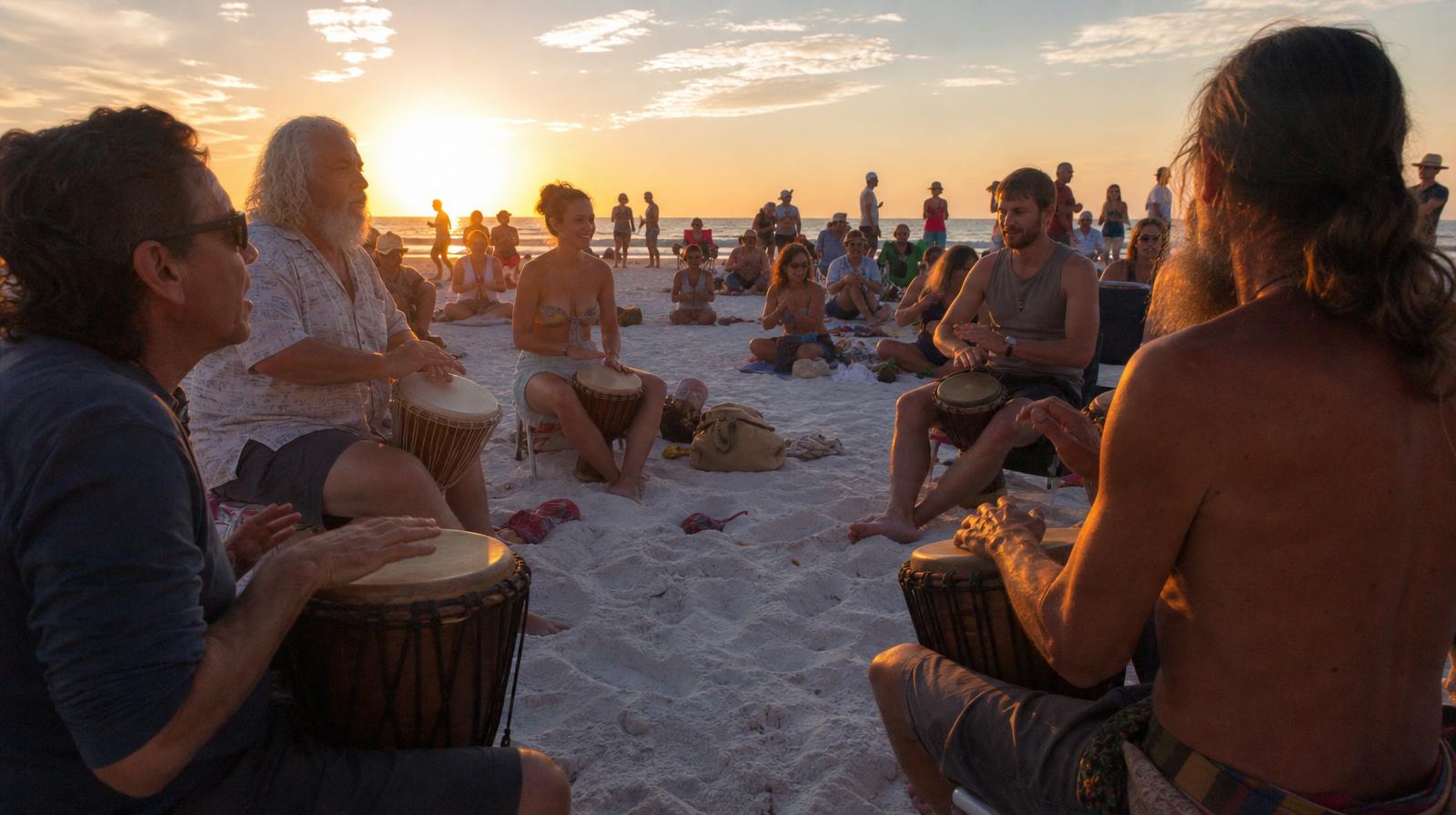
There is a specific magic that happens when the humidity of the Gulf Coast meets the cooling breeze of sunset. As the sky turns a fiery palette of orange and violet, a low rumble begins to resonate across the quartz sands. This is the sound of the Gulf Coast Florida drum circles—a tradition that has turned the region's beaches into a global destination for rhythm seekers.
From the legendary gatherings at Siesta Key to the hidden gems in Englewood, the Florida Gulf Coast offers a unique drumming culture. It is a blend of bohemian spirit, spiritual grounding, and pure community joy. Whether you are a seasoned percussionist or a curious traveler, these circles invite you to lose yourself in the beat.
The Legend of Siesta Key Drum Circle
No discussion of Florida drumming is complete without mentioning Siesta Key. Located just south of Sarasota, this circle is perhaps the most famous in the United States. Every Sunday evening, roughly an hour before sunset, hundreds of people gather on the public beach to celebrate the end of the week.
What makes Siesta Key special is its sheer scale. You will see professional conga players locked in tight grooves alongside beginners tapping out rhythms on djembes. The energy is infectious, often attracting fire dancers and hula-hoopers who move to the pulse of the collective. If you are looking to connect with a wider network of performers, checking our directory for drumming retreats can help you find similar high-energy experiences.
Nokomis Beach: The Community Heartbeat
Just a short drive south of Sarasota lies Nokomis Beach. While Siesta Key is a spectacle, Nokomis feels like a family reunion. The Nokomis drum circle occurs every Wednesday and Saturday, making it a reliable mid-week escape for locals.
This circle is known for its welcoming atmosphere. It is a fantastic place for those who have just started their journey with drum teachers to practice their timing in a low-pressure environment. The focus here is less on performance and more on the "heartbeat"—a steady, grounding rhythm that allows everyone to participate.
Essential Gear: What to Bring to the Beach
Drumming on the Gulf Coast requires a bit of preparation, especially regarding your instruments. The salt air and fine sand can be harsh on natural materials.
- The Right Drum: While traditional wood djembes with goat skins are popular, many Florida regulars prefer synthetic heads and PVC or fiberglass shells. These are less affected by the high humidity.
- Protection: Always bring a bag or a stand to keep your drum off the direct sand. Fine quartz sand can work its way into the hardware of a conga or the rope of a djembe.
- Hydration: Florida heat is no joke. Even at sunset, the physical exertion of drumming requires plenty of water.
- Lighting: Once the sun goes down, it gets dark quickly. A small clip-on light for your music stand or drum rim can be a lifesaver.
Understanding Beach Drumming Etiquette
To keep these community gatherings sustainable and welcoming, there are a few unwritten rules to follow. The Gulf Coast Florida drum circles thrive on mutual respect.
- Listen First: Before you start playing, listen to the established rhythm for a few minutes. Try to find the "pocket" where your sound fits without overpowering others.
- Respect the Center: The center of the circle is usually reserved for dancers. Avoid walking through the middle with your gear.
- Ask Before Borrowing: Never play someone else's drum without explicit permission. Many of these instruments are handmade and hold deep personal value.
- Support Local Guidelines: Be aware of local ordinances regarding noise and park hours. Most circles end promptly at dark or shortly after.
Discovering Niche Circles: From Treasure Island to Englewood
While Sarasota is the hub, the rhythm extends far north and south.
- Treasure Island: Located near St. Petersburg, this circle has a younger, more eclectic vibe. You might hear more experimental percussion, including frame drums and even the occasional handpan.
- Englewood Beach: A quieter, more soulful gathering that often takes place on Sunday evenings. It is a great spot for those who prefer a smaller, more intimate group.
- Fort Myers Beach: Though recovering and rebuilding, the spirit of the drum remains strong here, with pop-up circles often appearing at community events to celebrate the resilience of the coast.
Why Drumming on the Coast is Healing
The Gulf Coast is known for its "healing waters," but the addition of rhythmic entrainment takes it to another level. Drumming has been shown to reduce stress, boost the immune system, and create a sense of belonging. In Florida, the combination of the negative ions from the ocean waves and the steady 120-BPM pulse of a drum circle creates a natural meditative state.
Many participants describe the experience as a "cleansing of the week." It is a place where social barriers dissolve. You might find a corporate lawyer, a local fisherman, and a college student all locked into the same call-and-response pattern. For those looking to deepen this connection, exploring drum schools can provide the technical foundation to express that inner rhythm more clearly.
Find a drum circle near you by visiting /drum-circles.
Frequently asked
- What time do Gulf Coast drum circles usually start?
- Most Florida beach drum circles begin approximately one to two hours before sunset. This allows the rhythm to build as the sun goes down, typically reaching its peak energy just as the sun touches the horizon.
- Do I need to be a professional drummer to join a circle in Florida?
- Not at all. Most Gulf Coast circles are community-based and open to all skill levels. As long as you respect the basic etiquette and listen to the group rhythm, beginners are warmly welcomed to join in with a shaker, tambourine, or drum.
- Are children allowed at the beach drum circles?
- Yes, the majority of these events are family-friendly. Places like Nokomis and Siesta Key often have children dancing in the center or playing small percussion instruments, making it a great way to introduce kids to the world of rhythm.
- Do these drum circles happen every week?
- While the larger circles like Siesta Key (Sundays) and Nokomis (Wednesdays/Saturdays) are very consistent, weather can be a factor. In the event of heavy rain or lightning—common in Florida summers—circles are typically cancelled for safety.
Find a drum circle near you
Browse hundreds of circles, teachers and rhythm community gatherings.
Explore drum circles