Finding Hand Drumming Events: Your Guide to Local Rhythm
Discover the magic of community rhythm. From beachside djembe jams to professional facilitator workshops, here is how to find and join hand drumming events near you.
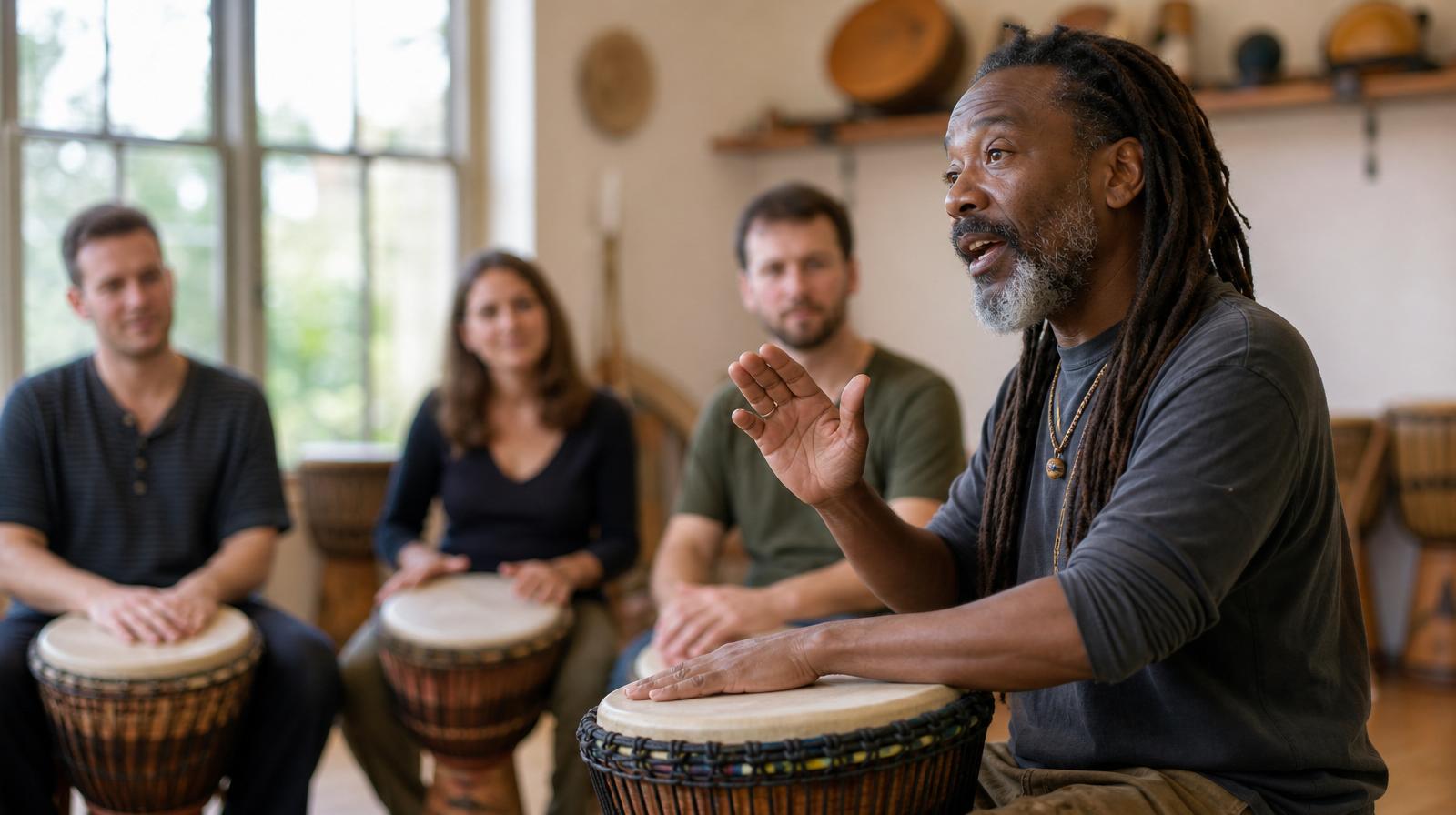
There is a unique magic that happens when a group of people comes together to create a collective heartbeat. Hand drumming events are more than just musical performances; they are immersive experiences that foster community, reduce stress, and ignite creativity. Whether you are holding a djembe for the first time or you are a seasoned conguero, finding the right space to share your rhythm is the first step into a larger world of connection.
At Drum Circle Directory, we believe that everyone has a rhythm. From the thunderous bass of the dununs to the delicate shimmer of a frame drum, every voice matters in the circle. This guide will help you navigate the different types of gatherings available and how to find the perfect event to suit your style.
Types of Hand Drumming Events
Not all drumming gatherings are created equal. Depending on your goals—whether you want to learn a specific technique or simply let loose—you will find several distinct formats:
- Community Drum Circles: These are often free or low-cost gatherings held in parks, community centers, or on beaches. They are usually "freestyle," meaning there is no sheet music and the rhythm evolves organically.
- Facilitated Circles: A trained facilitator guides the group using games and signals. This is perfect for beginners because the facilitator ensures the rhythm stays cohesive and inclusive.
- Instructional Workshops: These focus on specific instruments like the doumbek or congas. You will learn traditional rhythms, proper hand technique, and the cultural history of the instrument.
- Performance Jams: More structured than a circle, these events often feature experienced players and may lead into a dance party or fire spinning gathering.
What to Expect at Your First Event
Walking into your first hand drumming event can feel a bit intimidating, but the drumming community is famously welcoming. Most events follow a "low-stakes" philosophy. You don’t need to be a virtuoso to participate.
When you arrive, you’ll likely see a ring of chairs. If you brought your own drum—perhaps a djembe or a cajon—you can find a spot and start warming up quietly. If you don't own an instrument yet, don't worry. Many facilitators provide "loaner" instruments, including shakers, bells, and extra hand drums, so that everyone can join in the fun.
The Etiquette of the Circle
While hand drumming events are about freedom, a few unwritten rules help the rhythm thrive. Following these ensures a better experience for everyone:
- Listen as much as you play: The best drummers are those who leave space for others. If you can't hear the person next to you, you might be playing a bit too loud.
- Support the heartbeat: Every circle has a fundamental pulse. Before trying a complex solo, make sure you are locked into the main groove.
- Ask before playing someone else’s drum: Instruments are often deeply personal. Always seek permission before trying out a neighbor's beautiful new Ashiko or custom-skinned frame drum.
- Follow the facilitator: If a facilitator raises their hands or uses a whistle for a "cut-off," stop playing immediately. This allows for silence and the start of a new rhythmic journey.
Hand Drumming Events for Health and Wellness
Beyond the music, many people attend hand drumming events for the therapeutic benefits. Scientific studies have shown that group drumming can lower cortisol levels, boost the immune system, and even help manage chronic pain.
In a wellness-focused circle, the emphasis is on the vibration and the meditative state of repetitive rhythm. These events are often quieter and may include guided visualizations or breathing exercises. It is a powerful way to disconnect from the digital world and reconnect with your own physical body.
Traveling for Rhythm: Retreats and Festivals
If you find that your local weekly circle has sparked a deep passion, you might consider attending drumming retreats. These are multi-day immersive experiences often held in beautiful natural settings.
Retreats allow you to study under master drummers, often focusing on the traditional West African or Middle Eastern roots of the music. It’s a chance to eat, sleep, and breathe rhythm alongside a community of like-minded souls. Many of these festivals also include dance workshops, making them a holistic celebration of movement and sound.
Finding Local Circles and Teachers
Finding the right community is easier than ever. While social media groups can be helpful, they are often cluttered. For a curated experience, you can browse our extensive database of drum circles to find a gathering in your city.
If you feel you need a little more confidence before joining a large public event, reaching out to drum teachers for a few private lessons can make a world of difference. Learning the basic "bass, tone, and slap" notes on a djembe will give you the vocabulary you need to express yourself clearly in any group setting.
How to Start Your Own Event
Can’t find any hand drumming events in your area? Start one! All you need is a public space (check local permit laws for parks), a few chairs, and a heartbeat. Start small by inviting friends, and use our directory to list your new circle so others in your area can find you. Consistency is key—meeting on the same day every month (like a full moon or the first Saturday) helps a community grow over time.
Hand drumming is a universal language. No matter where you come from or what language you speak, the drum allows us to communicate heart-to-heart. We hope to see you in the circle soon.
Find a drum circle near you.
Frequently asked
- Do I need to bring my own drum to a hand drumming event?
- Not necessarily. Many community drum circles and facilitated events provide extra instruments like shakers, tambourines, or even spare djembes for newcomers. However, it is always a good idea to check the event description or contact the organizer beforehand to confirm.
- Are hand drumming events family-friendly?
- Most community drum circles are very family-friendly and welcome children of all ages. Drumming is a wonderful way for kids to develop coordination and social skills. Just be sure to bring ear protection for very young children, as the volume can sometimes get quite loud.
- What is the best drum for a beginner to bring to an event?
- The djembe is the most popular choice for beginners because it is versatile, easy to transport, and has a wide range of sounds. Other great options include the cajon (a box drum you sit on) or a simple frame drum, both of which are common sights at local hand drumming events.
Find a drum circle near you
Browse hundreds of circles, teachers and rhythm community gatherings.
Explore drum circles