Health Rhythms Training: Drumming for Wellness and Healing
Discover how Health Rhythms training integrates evidence-based drumming protocols into clinical and community settings to improve mental and physical well-being.
For centuries, the rhythmic pulse of the drum has served as the heartbeat of community life. From the vibrant djembe rhythms of West Africa to the steady, grounding pulse of the Native American frame drum, rhythm has always been a tool for connection. However, in recent decades, we have moved beyond the cultural and ceremonial aspects of drumming to discover its profound clinical benefits. This is where Health Rhythms training comes into play.
Health Rhythms is not just about playing music; it is an evidence-based protocol designed to harness the biological and psychological benefits of group drumming. Whether you are a healthcare professional, a music educator, or a community leader, understanding this specialized training can transform the way you facilitate rhythm.
What is Health Rhythms Training?
Health Rhythms is a research-based group drumming protocol developed by neurologist Dr. Barry Bittman and music therapist Christine Stevens. Unlike a traditional drum circle, which is often improvisational and focused on musicality, Health Rhythms is structured around ten specific steps designed to achieve measurable health outcomes.
The training teaches facilitators how to use the djembe, conga, and various handheld percussion instruments to foster a safe, non-judgmental environment. The focus shifts from "how well do you play?" to "how much do you feel?" By following this protocol, facilitators can help participants reduce stress, improve mood states, and even boost immune system function.
The Science Behind the Beat
What sets Health Rhythms training apart from other drumming workshops is its foundation in peer-reviewed science. Research has shown that participants in these specific drumming sessions experience an increase in Natural Killer (NK) cell activity. NK cells are vital to the immune system as they seek out and destroy virally infected cells and cancer cells.
Beyond the physiological markers, the training addresses the epidemic of social isolation. By engaging in call-and-response patterns and shared rhythmic expression, participants experience a decrease in cortisol (the stress hormone) and an increase in social bonding. This makes it an invaluable tool for hospitals, support groups, and corporate wellness programs.
The Ten-Step Protocol
When you undergo Health Rhythms training, you learn a specific sequence that guides a group from silence to a state of deep connection. Here are some of the core elements involved:
- Wellness Disclosures: Participants share their current state of being, creating an atmosphere of honesty.
- Guided Imagery Drumming: Using the soft sounds of a frame drum or the deep resonance of a djembe to visualize healing and relaxation.
- Rhythmic Naming: A playful way to introduce members of the circle through rhythm.
- Entrainment: Syncing the group's internal rhythms to a collective pulse.
- Inspirational Drumming: Using specific themes to empower the group.
This structure ensures that even someone who has never touched a drum before feels successful and supported. If you are interested in learning these techniques, you might look for drum teachers who specialize in therapeutic applications.
Who Benefits from Health Rhythms?
The versatility of this training allows it to be applied in diverse settings. It is particularly effective for:
- Clinical Environments: Hospitals and cancer support centers use the protocol to help patients manage chronic pain and treatment-related anxiety.
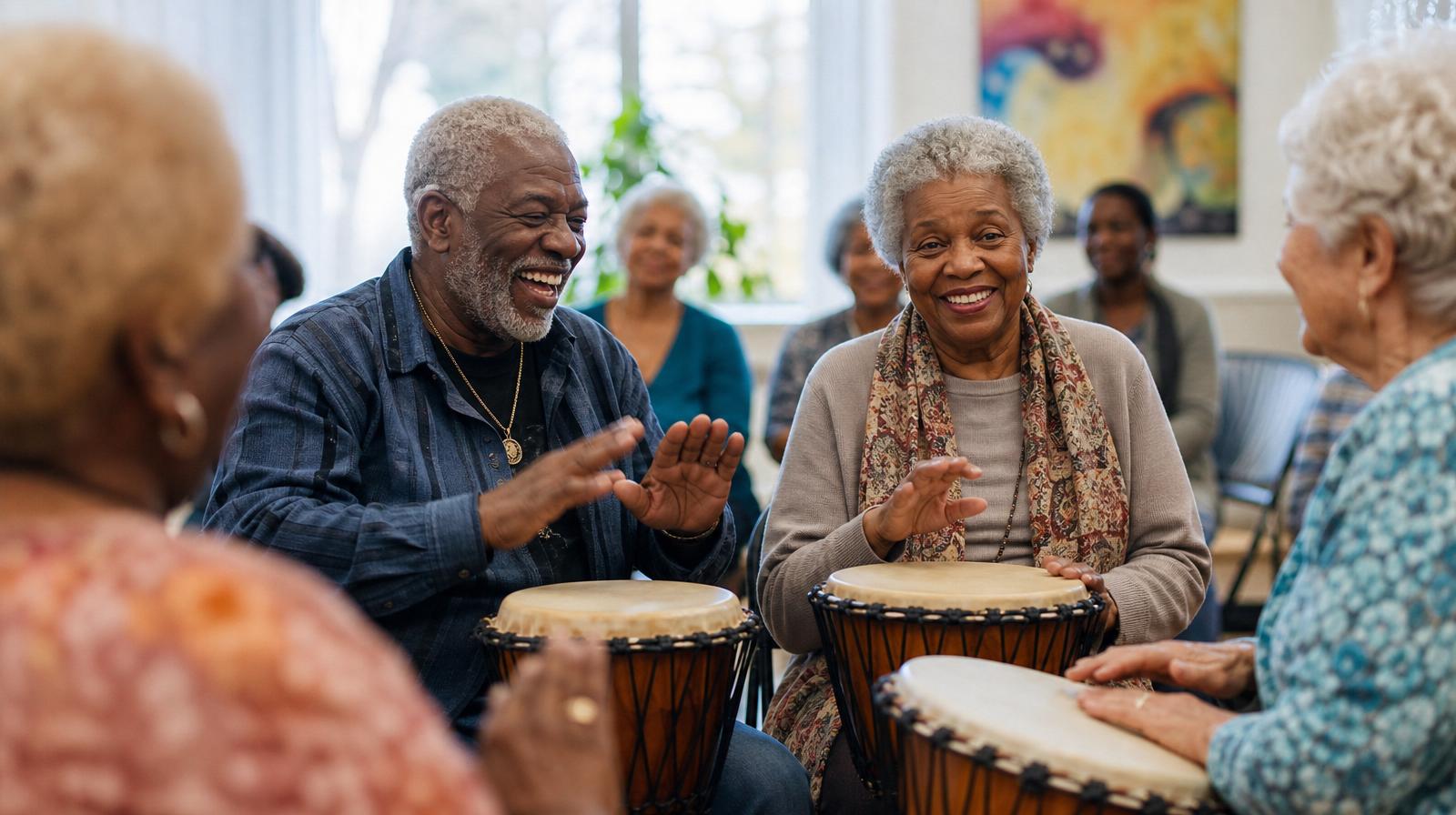
- Senior Care: Facilitators use light percussion and doumbeks to improve motor skills and provide social stimulation for those with dementia or Alzheimer's.
- Youth at Risk: Drumming provides a non-verbal outlet for anger and trauma, helping students build emotional resilience.
- Corporate Wellness: It serves as a powerful team-building tool that breaks down hierarchies and reduces workplace burnout.
Many facilitators who complete their training go on to host specialized events that bridge the gap between music and medicine.
Essential Instruments for Therapeutic Drumming
You don't need a professional percussion kit to start, but certain instruments are staples in the Health Rhythms toolkit. The goal is to provide a variety of textures and tones:
- Djembes: Excellent for providing a strong, grounding bass note.
- Frame Drums: Perfect for quiet, meditative work and guided imagery.
- Shakers and Tambourines: These allow participants with limited mobility to join in easily.
- Tubanos: Often used in clinical settings because they are easy to play while sitting and have a consistent, warm tone.
Learning how to select the right instrument for a participant's physical needs is a key component of the training. Many practitioners find that attending drumming retreats helps them deepen their own relationship with these instruments before they begin leading others.
Integrating Health Rhythms into Your Community
Once you have completed Health Rhythms training, the next step is building a community practice. This involves more than just finding a room; it involves creating a "rhythm sanctuary." You’ll learn how to facilitate without being the center of attention, allowing the group's collective voice to emerge.
Many trained facilitators start by volunteering at local community centers or partnering with mental health professionals. If you are looking for a place to practice your skills or observe a seasoned facilitator, you can search for existing drum circles in your area to see how different styles of facilitation compare.
Conclusion: The Future of Rhythmic Medicine
Health Rhythms training represents a bridge between ancient wisdom and modern science. It reminds us that we are rhythmic beings by nature—from our heartbeat to our gait. By becoming a trained facilitator, you are not just teaching people how to drum; you are giving them a tool for self-care that they can carry with them long after the circle ends.
Whether you are looking to enhance your professional practice or simply want to bring more healing to your local community, this training offers a proven path forward. The world needs more rhythm, more connection, and more healing beats.
Find a drum circle near you at Drum Circle Directory.
Frequently asked
- Do I need to be a musician to take Health Rhythms training?
- No, you do not need to be a professional musician. The training is designed for healthcare professionals, educators, and community leaders. The focus is on facilitation and the therapeutic application of rhythm rather than technical musical mastery.
- What is the difference between Health Rhythms and a standard drum circle?
- While a standard drum circle is often focused on social improvisation and musical fun, Health Rhythms follows a specific, 10-step evidence-based protocol. It is designed to achieve specific health outcomes, such as stress reduction and immune system support, backed by scientific research.
- Where can I use my Health Rhythms facilitation skills?
- Trained facilitators work in a wide range of environments, including hospitals, schools, corporate boardrooms, support groups, senior living facilities, and wellness retreats. The protocol is highly adaptable to the needs of the specific group.
Find a drum circle near you
Browse hundreds of circles, teachers and rhythm community gatherings.
Explore drum circles