How Does a Drum Circle Work? A Beginner’s Guide to Rhythm
Discover the magic of group rhythm and learn exactly what to expect when you step into your first community drum circle.
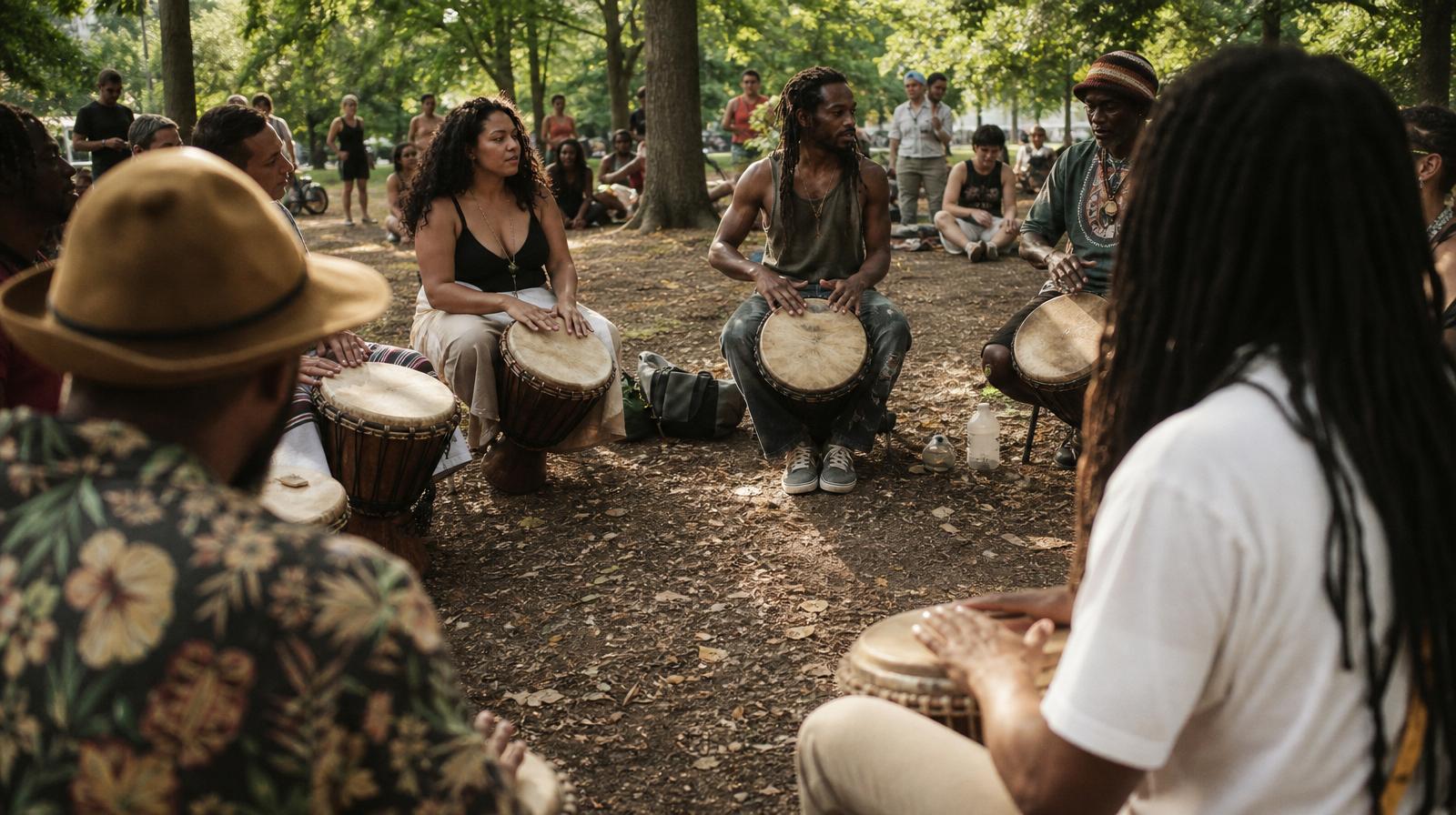
If you have ever walked through a park or attended a community festival and heard the distant, pulsing thrum of percussion, you have likely encountered a drum circle. To the outsider, it might look like a chaotic collection of people hitting skins and wood, but to those inside the ring, it is a sophisticated, non-verbal conversation.
So, how does a drum circle work? At its core, a drum circle is a group of people playing hand-drums and percussion instruments together to create a spontaneous, collective groove. Unlike a band or an orchestra, there is often no sheet music and no rehearsal. It is an exercise in listening, cooperation, and shared energy.
The Anatomy of a Drum Circle
To understand how a drum circle works, you first need to look at the physical setup. Most circles are arranged in—you guessed it—a circle. This shape is intentional and symbolic. In a circle, every participant can see and hear every other participant. There is no "front" or "back," and no one person is more important than another.
In the center of the circle, you might find a "heartbeat" area. This is often where the larger, deeper-toned drums like the dunun (West African bass drums) or large pow-wow drums sit. These instruments provide the steady anchor—the pulse—that keeps the faster, higher-pitched instruments from drifting off tempo.
The Flow: How the Music Starts and Evolves
One of the most common questions beginners ask is, "How do we know what to play?" Most community drum circles follow a natural progression:
- The Seed: Someone starts a simple, steady beat. This could be a facilitator or an experienced regular.
- The Layering: One by one, other drummers join in. A djembe player might add a sharp, syncopated slap, while someone with a conga adds a melodic middle-tone pattern.
- The Groove: Once everyone is playing, the circle enters a state of "entrainment," where the individual pulses merge into a single, powerful wall of sound.
- The Peak and Fade: The energy naturally rises and falls. Eventually, the rhythm reaches a crescendo and ends—sometimes with a signaled "cut-off" and sometimes by simply fading into silence.
If you are looking for structured guidance, many people start by finding local drum teachers who can help them master basic strokes before joining a large public gathering.
Facilitated vs. Organic Circles
Not all drum circles are the same. Understanding the two main types will help you know what to expect:
The Facilitated Drum Circle
In a facilitated circle, a professional leader stands in the center or the periphery. Their job isn't to be the "boss," but to act as a bridge. They use hand signals to manage the volume, guide the tempo, and encourage soloing. This format is excellent for beginners and corporate team-building events because it ensures the music stays cohesive.
The Organic (or Traditional) Drum Circle
In an organic circle, there is no formal leader. The music is entirely self-governed. These circles often lean into specific traditions, such as West African, Afro-Cuban, or Middle Eastern rhythms. Here, the "lead" drum (often a high-tuned djembe or a doumbek) signals changes in the rhythm through musical cues rather than hand gestures.
Common Instruments You’ll Encounter
You don't need a specific drum to participate, but knowing the "voices" in the circle helps you find your place. Most circles are a mix of:
- Djembe: The most popular drum in circles world-wide, known for its deep bass and sharp, cracking slaps.
- Congas: Tall, narrow drums that provide warm, melodic tones.
- Frame Drums: Large, shallow drums often played with the fingers, common in spiritual and meditative circles.
- Small Percussion: Shakers, cowbells, woodblocks, and tambourines. These are the "salt and pepper" of the rhythm.
If you want to dive deeper into specific techniques, checking out drum schools can provide the foundation needed to play these instruments with proper form to avoid fatigue.
The Unwritten Rules: Drum Circle Etiquette
While drum circles are about freedom, a few simple rules of etiquette keep the experience positive for everyone:
- Listen more than you play: This is the golden rule. If you can’t hear the person next to you, you are probably playing too loud.
- Respect the center: The middle of the circle is for dancing or the heartbeat drums; try not to walk through it while the music is playing.
- Ask before you play someone else's drum: Many drums are handmade and deeply personal. Always ask before trying out an instrument that isn't yours.
- Support the beat: Beginners often try to play complex solos. The best way to contribute is to find a simple, steady pattern and hold it down.
Why Do People Join Drum Circles?
Beyond the music, drum circles offer profound social and health benefits. Research has shown that group drumming can reduce stress, boost the immune system, and foster a sense of belonging. In a world that is increasingly digital and isolated, the drum circle offers a rare opportunity for analog, face-to-face connection.
Many enthusiasts even travel to drumming retreats to spend a week immersed in rhythm, away from the distractions of daily life. For others, it’s simply a fun way to spend a Saturday afternoon at a local event with the family.
Finding Your Rhythm
If you are feeling nervous about your first time, remember that every master drummer started with their first beat. Drum circles are inherently inclusive. Whether you are a professional percussionist or someone who has never touched a drum in your life, there is a space for you in the ring.
Ready to find your beat? Find a drum circle near you on the Drum Circle Directory.
Frequently asked
- Do I need to bring my own drum to a circle?
- Not necessarily. Many community circles and facilitated events provide 'loaner' instruments like shakers or extra djembes. However, if you plan on attending regularly, bringing your own instrument ensures you have a voice you are comfortable with.
- What if I have no musical experience or rhythm?
- Drum circles are designed for all skill levels. Most people find that by simply listening to the group pulse, their hands naturally fall into sync. You can start by playing a simple shaker or a small bell until you feel confident enough to try a drum.
- How long does a drum circle usually last?
- A typical community drum circle lasts anywhere from 90 minutes to three hours. The music usually happens in 'waves,' with a few 15-20 minute drumming sessions separated by short breaks for water and conversation.
Find a drum circle near you
Browse hundreds of circles, teachers and rhythm community gatherings.
Explore drum circles