How to Become a Drum Circle Facilitator: A Complete Guide
Feeling the call to lead? This guide walks you through the essential skills, training, and community-building mindset needed to transform your passion for rhythm into the art of drum circle facilitation.
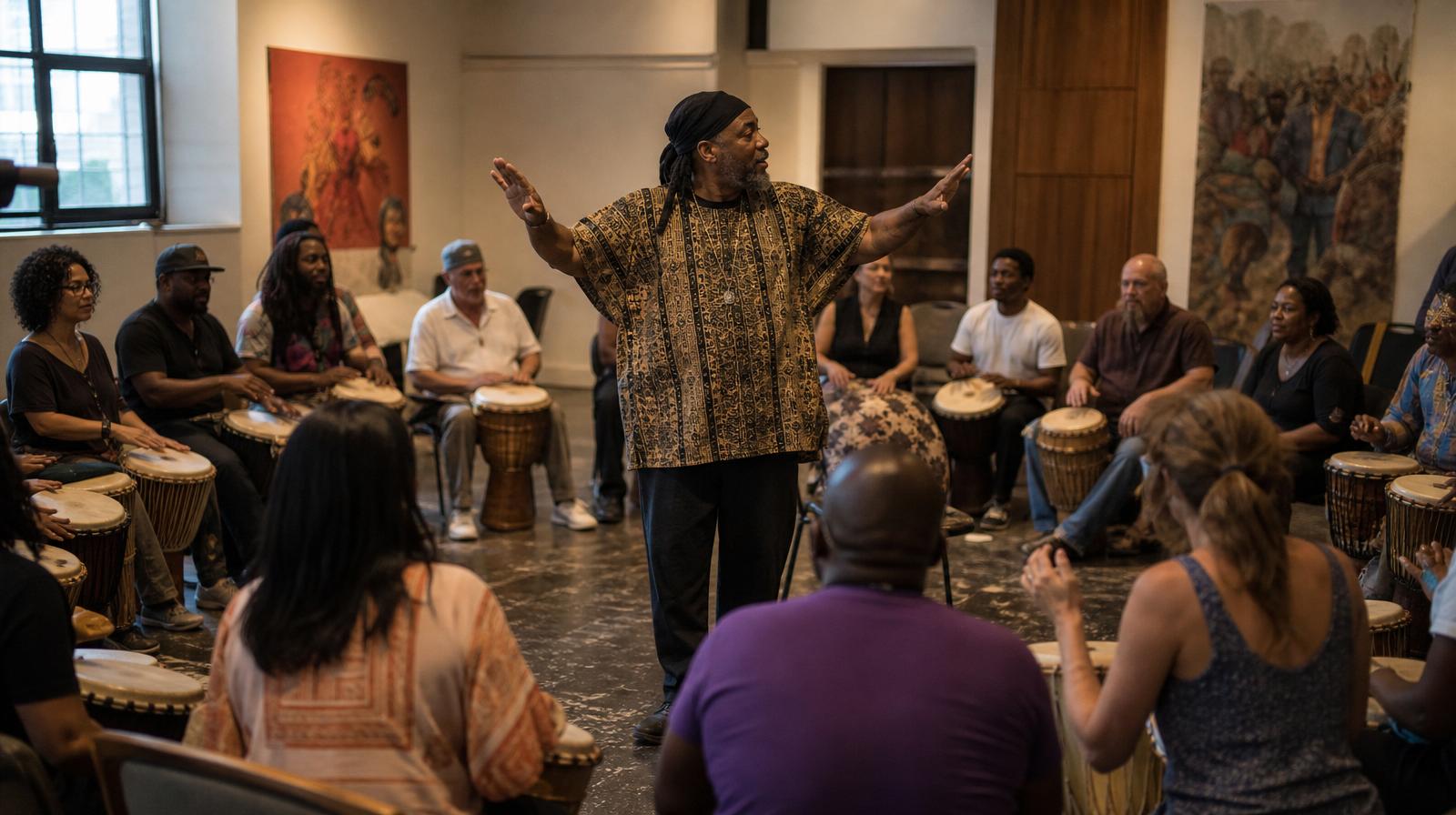
There's a magical moment in a drum circle when individual beats merge into a single, cohesive groove. The room breathes together, smiles are exchanged, and a powerful sense of connection emerges. If you've felt that magic and thought, "I want to help create this for others," then you may be hearing the call to become a drum circle facilitator.
But what does it really take to step into the center of the circle? It's less about being the best drummer and more about being the best guide. A facilitator is a unique blend of musician, leader, space-holder, and community builder. This guide will walk you through the philosophy, skills, and practical steps on your path to becoming a confident and effective drum circle facilitator.
The Core Philosophy: What is a Drum Circle Facilitator?
First, let's clarify what a facilitator is—and isn't. A facilitator is not a performer putting on a show, nor are they a teacher drilling specific techniques. Instead, a facilitator's primary role is to create a safe, inclusive, and empowering container where a group of people can create their own music, together, in the moment.
Think of yourself as a "guide on the side," not a "sage on the stage." Your job is to serve the group's nascent musical creation. This philosophy, largely pioneered by figures like Arthur Hull, emphasizes that there are no wrong notes in a community drum circle. The goal is connection, expression, and shared joy, not rhythmic perfection.
A great facilitator makes it look easy, subtly guiding the energy of the room, encouraging participation from the shyest beginners, and ensuring everyone feels heard—both musically and personally.
Essential Skills for a Facilitator
While the philosophy is about inclusion, a facilitator does need a specific set of skills to effectively lead a group. These can be broken down into three key areas.
1. Musical & Rhythmic Skills
You don't need to be a percussion virtuoso, but a solid foundation is crucial.
- Rock-Solid Time: You are the anchor. Your ability to hold a steady tempo, especially when the energy gets chaotic, is non-negotiable.
- Understanding Foundational Parts: Be comfortable playing simple, supportive bass lines on a dunun or djembe, steady shaker patterns, and clear bell patterns. These are the building blocks of the groove.
- Call-and-Response: This is one of your most powerful tools. You must be able to create and clearly communicate simple, memorable rhythmic phrases that the group can easily repeat.
- Active Listening: Can you hear when the groove is settling? Can you identify a rhythm someone introduces and support it? Your ears are your most important asset.
2. Leadership & Communication Skills
This is where the art of facilitation truly lies.
- Non-Verbal Cueing: The majority of your guidance will be non-verbal. You'll learn a vocabulary of hand signals to "sculpt" the music: raising hands to increase volume, lowering them to bring it down, pointing to a section to feature them, and using a cutting motion to signal a stop.
- Clear, Minimal Verbal Instruction: When you do speak, be concise and encouraging. Avoid technical jargon. Phrases like, "Listen to the low drum," or, "Let's see if we can all end together," are far more effective than complex musical theory.
- Reading the Room: Is the energy lagging? Is one person dominating? Is the group ready for a change? A facilitator is constantly scanning the circle, sensing the collective mood and responding to its needs.
3. Logistical Skills
Before the first beat is ever played, a facilitator handles the logistics.
- Instrumentation: Gathering and transporting a variety of instruments. Not just djembes and congas, but also frame drums, dununs for the low end, and a whole host of shakers, bells, and woodblocks for accessibility.
- Space Setup: Arranging chairs in a perfect circle with no physical barriers. Ensuring the space is welcoming and has good acoustics.
- Marketing & Outreach: Getting the word out about your circle, whether it's a flyer for a local park jam or an email to a corporate wellness client.
Your Training Path: Formal vs. Self-Taught
There's no single path to becoming a facilitator. Most experienced leaders use a combination of formal training and hands-on experience.
Formal Training Programs
For those who want a structured, intensive learning experience, formal training is an excellent choice. Programs like Village Music Circles (VMC) offer multi-day workshops that cover everything from facilitation techniques to the business side of running rhythm events. These trainings provide a proven methodology, a supportive network of peers, and often a certification that can add credibility.
Many facilitators find their calling at immersive workshops held at dedicated drum schools or as part of longer drumming retreats where they can learn in a focused, community environment.
Apprenticeship and Experience
Formal training isn't the only way. The path of apprenticeship is equally valid.
- Participate, Participate, Participate: Before you can lead, you must understand what it feels like to be a participant. Attend as many different circles as you can. Observe how different facilitators work. What do you like? What would you do differently?
- Find a Mentor: Is there an experienced facilitator in your area whose style you admire? Reach out to them. Many seasoned leaders are happy to share their knowledge. You can search for local experts on our drum teachers directory.
- Start Small: Your first circle doesn't need to be a 50-person public event. Gather a few friends in your living room. The stakes are low, and it's the perfect place to practice your cues and build confidence.
Building Your Instrument Collection
You don't need a truck full of drums to start, but you do need enough instruments to create a full and inviting sound.
- The Core Voices: Aim for a handful of accessible hand drums. Djembes are a popular choice due to their range of tones. Doumbeks and congas also work wonderfully. It's crucial to have at least one bass drum, like a set of dununs or a large tubano, to provide the heartbeat of the groove.
- The "Percussion Buffet": This is key for including everyone, regardless of experience. A box full of shakers, maracas, claves, woodblocks, cowbells, and frame drums ensures that even a first-timer can pick something up and immediately join the music.
- Where to Source: Start with what you have. Ask friends to bring instruments. Scour local music shops, online marketplaces, and yard sales. Building your collection is a journey, not a race.
Leading Your First Circle: A Step-by-Step Flow
Feeling nervous before your first facilitation is normal! Here is a simple, effective flow to guide you.
- The Setup: Arrange your chairs in a true circle, leaving clear pathways. Place a variety of instruments in the middle or on chairs, making them look inviting.
- The Welcome: Greet everyone warmly. Briefly introduce yourself and the concept of a community circle. Set the one and only rule: to listen to one another.
- The Warm-Up: Begin with something incredibly simple. A universal heartbeat rhythm (BUM-bum... BUM-bum...) is a perfect start. You can play it on your bass drum, and have everyone clap or play along.
- Introduce a Groove: Once the pulse is steady, use a simple call-and-response on your djembe or conga. Keep the phrase short and easy to remember. Repeat it until the group has locked in.
- Start Sculpting: Once a groove is established, start using your non-verbal cues. Ask the shakers to play alone. Quiet the djembes down to a whisper. Bring the volume of the whole group up into a joyful crescendo. This empowers the group and shows them you are listening.
- The Closing: Don't just stop. Guide the circle to a close. Signal for the volume to come down, slow the tempo, and lead the group to a final, unified beat. The silence that follows is just as important as the sound.
- Gratitude: Thank everyone for their presence and their music. The circle is complete.
Growing as a Facilitator: Finding Your Niche
As you gain experience, you'll discover the types of circles that resonate most with you. The possibilities are endless:
- Community Gatherings: Full-moon beach circles, weekly park jams, family-friendly library events.
- Health & Wellness: Circles for stress reduction in corporate settings, rhythm groups in hospitals or for seniors, programs for at-risk youth.
- Educational Settings: Bringing rhythm into schools to teach collaboration and listening.
- Spiritual & Ceremonial: Circles as part of yoga retreats, spiritual services, or personal growth workshops.
Your journey as a facilitator is a path of lifelong learning. Stay curious, continue to be a student of rhythm, and never forget the joy and connection that brought you to the center of the circle in the first place.
Ready to deepen your experience by joining a circle? Find a drum circle near you on the Drum Circle Directory.
Frequently asked
- Do I need to be a master drummer to facilitate a drum circle?
- Not at all! Facilitation is more about leadership and creating a safe space than virtuosic playing. Solid rhythm and the ability to hold a basic groove are important, but communication and listening skills are even more critical for a successful circle.
- How many drums do I need to start a drum circle?
- You can start with just a few! A good initial collection includes 5-10 assorted hand drums (like djembes or doumbeks) and a wide variety of smaller percussion like shakers, bells, and woodblocks. The goal is to have something for everyone, not to provide a specific drum for each person.
- What is the difference between a drum circle facilitator and a drum teacher?
- A drum teacher focuses on technique and specific rhythms, often in a structured class format. A facilitator's goal is to empower a group to create its own in-the-moment music, focusing on connection, inclusion, and the collective experience rather than technical perfection.
- How do I handle a participant who is playing too loud or off-beat?
- This is a classic facilitation challenge! Approach it with kindness and as a guide, not a critic. Use non-verbal cues first, like making eye contact and gesturing to lower the volume. You can also stand near them and play a simple, grounding rhythm on your own drum to help them lock into the group pulse.
Find a drum circle near you
Browse hundreds of circles, teachers and rhythm community gatherings.
Explore drum circles