How to Drum for Beginners: A Guide to Rhythmic Connection
Discover the joy of hand drumming with our expert guide on technique, choosing your first instrument, and finding your rhythm in a community circle.
There is a primal magic that happens when your hands meet the skin of a drum. It is one of the oldest forms of human communication, a bridge between the physical and the spiritual, and a powerful tool for building community. If you have ever felt the urge to tap along to a beat or felt your heart race at the sound of a distant thunder of percussion, you are already a drummer at heart.
Learning how to drum for beginners isn’t about mastering complex sheet music or having a perfect sense of timing from day one. It is about listening, feeling the vibration, and finding your unique voice within the collective pulse. Whether you are holding a djembe for the first time or curious about the meditative frame drum, this guide will help you start your rhythmic journey with confidence.
Choosing Your First Drum: Finding Your Sound
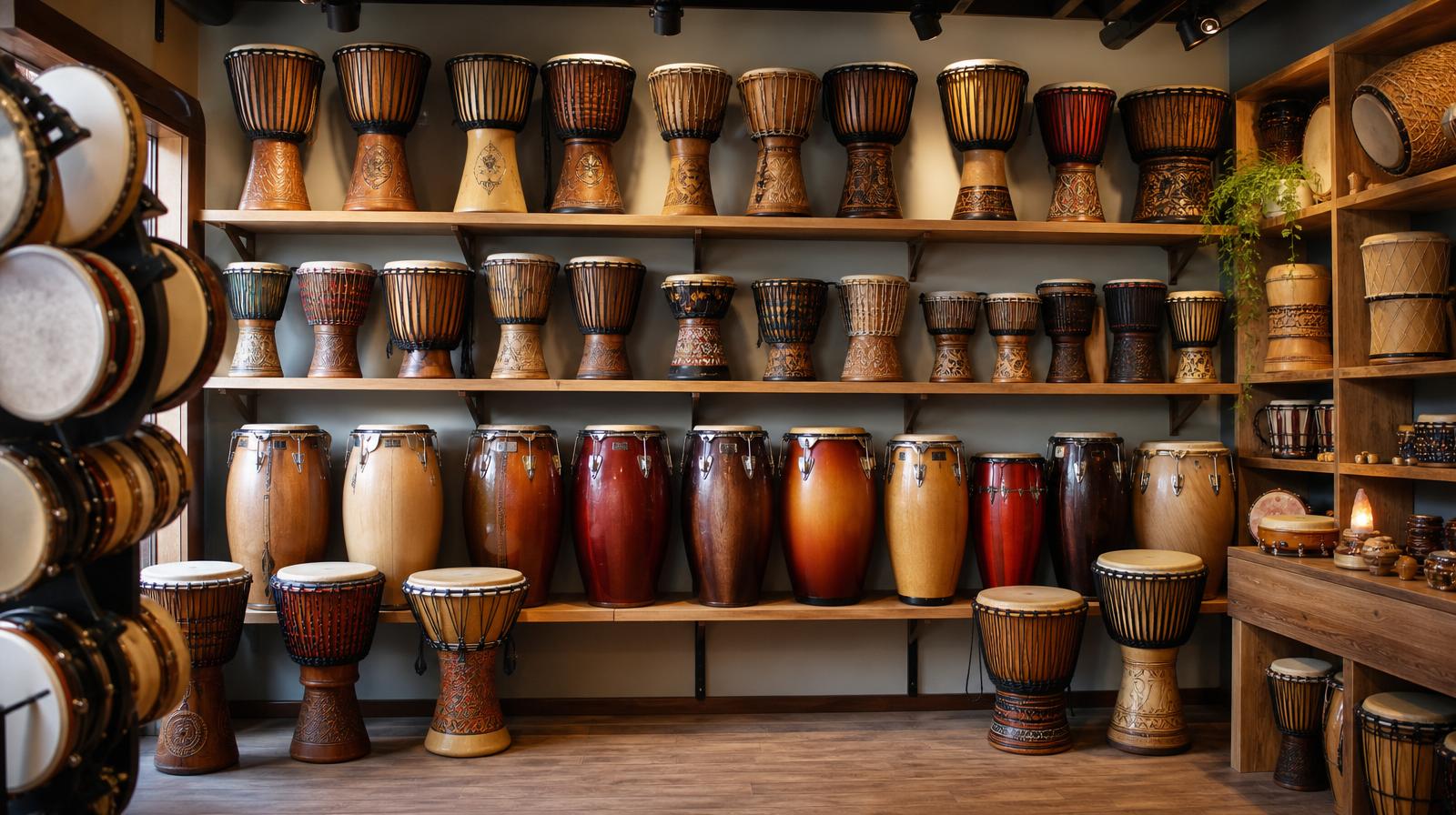
The world of hand drumming is vast, and the first step is selecting an instrument that resonates with you. While there are hundreds of options, most beginners find success starting with one of these three staples:
- The Djembe: Originally from West Africa, the djembe is perhaps the most popular drum in modern circles. Its goblet shape provides a wide range of tones—from deep, booming basses to sharp, cracking slaps.
- The Conga: With roots in Afro-Cuban music, congas are tall, narrow drums played in sets or solo. They offer a warm, melodic quality and are essential for Latin rhythms.
- The Frame Drum: One of the most ancient instruments, the frame drum is simple and portable. It is often used for meditative practices, shamanic journeying, and folk music.
Before you buy, we recommend visiting local drum schools to try different instruments. Many teachers offer rental drums so you can find the weight and size that feels comfortable for your body.
The Three Basic Strokes: Your Rhythmic Alphabet
Regardless of the drum you choose, most hand drumming is built upon three fundamental sounds. Mastering these is the secret to making your drum "sing."
1. The Bass
This is the heartbeat of the rhythm. To play a bass note, keep your hand flat with fingers together. Strike the center of the drum head and let your hand bounce off immediately. Imagine you are touching a hot stove; you want the vibration to ring out, not be muffled by your palm.
2. The Tone
This is a mid-range sound played near the edge of the drum. Keep your fingers together and strike the rim so that the pads of your fingers (just below the knuckles) hit the edge. Your hand should remain straight, creating a full, round sound.
3. The Slap
The slap is the most challenging but rewarding stroke. It is a high-pitched, sharp sound. Relax your hand and let your fingertips "whip" against the drum head. It requires less force and more technique, focusing on the snap of the wrist.
Developing Your Inner Metronome
One of the biggest hurdles when learning how to drum for beginners is maintaining a steady tempo. It is natural to speed up when you get excited! To combat this, practice "internalizing" the beat. Instead of just hearing the rhythm, try to feel it in your feet or your chest.
Start by playing along to your favorite music. Don't worry about being fancy; just try to hit the bass note on the "one" of every measure. You can also work with professional drum teachers who can provide exercises to help stabilize your timing and introduce you to the concept of the "ghost note"—the silent beats that happen between the strikes.
The Etiquette of the Circle
Joining a community gathering is the best way to grow as a drummer. However, drum circles have their own social ecosystem. Understanding the unwritten rules ensures a positive experience for everyone.
- Listen more than you play: When you first arrive, listen to the established groove for a few minutes before joining in.
- Respect the center: The middle of the circle is often a sacred space for dancers or a place where the sound resonates. Avoid walking through it if possible.
- Support the pulse: You don't need to play a solo. Often, the most valuable person in the circle is the one holding down a steady, simple beat that others can lean on.
- Follow the facilitator: If someone is leading the group, watch for their signals to get louder, softer, or stop.
Health and Wellness Benefits of Drumming
Beyond the music, drumming is a profound wellness practice. Studies have shown that group drumming can reduce stress, lower blood pressure, and even boost the immune system. The act of rhythmic drumming induces a "flow state," similar to deep meditation, which helps quiet the mind and release endorphins.
Many people attend drumming retreats specifically for the therapeutic benefits. These immersive experiences combine rhythm with nature, mindfulness, and community connection, providing a total reset for the nervous system.
Taking the Next Step
Learning to drum is a lifelong path. Once you have the basics down, you might explore specific traditions like the complex polyrhythms of the West African dunun or the intricate finger-tapping styles of the Middle Eastern doumbek. The key is to stay curious and keep playing.
Are you ready to find your beat? The best way to learn is by doing. Find a drum circle near you and start your journey today.
Frequently asked
- Do I need to be musical to start drumming?
- Not at all. Drumming is a physical and intuitive practice. If you can walk or breathe in a steady rhythm, you have the foundational skills needed to start. Most beginners find their rhythm through repetition and listening rather than formal music theory.
- Is it better to learn on my own or with a teacher?
- While you can learn basic strokes from videos, a teacher provides immediate feedback on your posture and technique. This prevents injury and helps you progress much faster. Group classes also provide the essential experience of playing with others.
- What is the best drum for a absolute beginner?
- The djembe is widely considered the best starter drum. It is versatile, relatively easy to get a good sound out of, and is the standard instrument used in most community drum circles worldwide.
Find a drum circle near you
Browse hundreds of circles, teachers and rhythm community gatherings.
Explore drum circles