
How to Play Djembe: A Master Guide for Beginners
Discover the essential techniques, rhythms, and cultural roots of the West African djembe in this comprehensive beginner's guide.
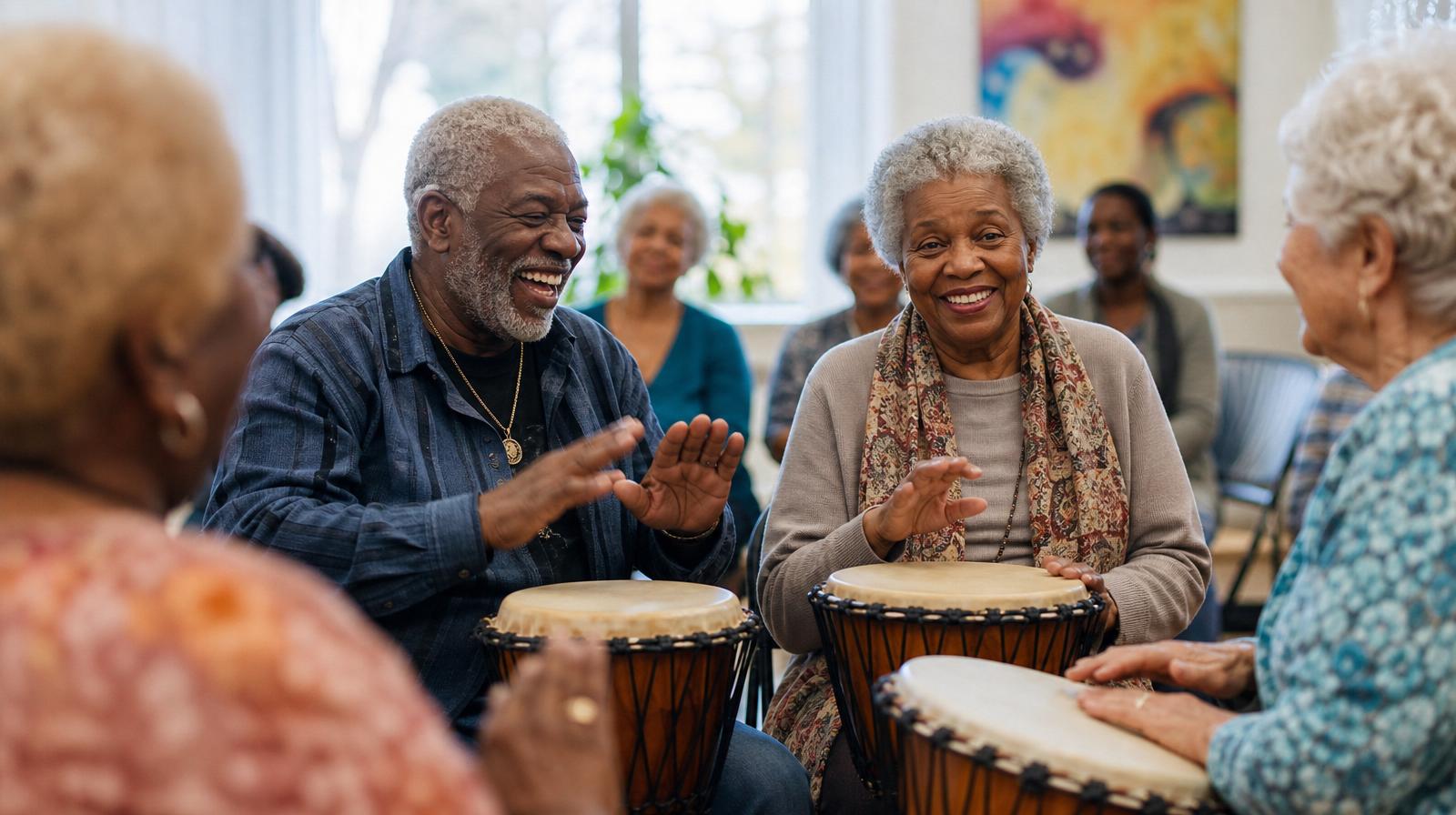
The djembe is more than just a drum; it is a vessel for community, a tool for healing, and a powerful voice that has traveled from West Africa to every corner of the globe. Known as the "healing drum," the djembe (pronounced JEM-bay) is unique because of its wide range of pitches—from deep, earth-shaking bass to crisp, bird-like slaps.
Whether you’ve just picked up your first goat-skin drum or you're preparing for your first community gathering, learning how to play djembe is a journey of both physical technique and spiritual connection. In this guide, we will break down the fundamentals of posture, the three primary strokes, and how to find your place in the rhythm.
Understanding Your Instrument
Before you strike the drum, it’s important to understand what you are holding. A traditional djembe is carved from a single piece of hardwood (like Lenke or Mahogony) and topped with a rawhide head, usually goatskin. The goblet shape is acoustically designed to compress air and create a resonant bass note in the belly, while the flared rim allows for sharp high notes.
When you begin your practice, check your drum's tension. If the skin feels soft like a trampoline, it may need tuning. A well-tuned djembe should have a clear distinction between its different sounds. If you're looking for professional guidance on maintenance, you can often find experts through our directory of drum schools.
Correct Posture and Positioning
To play the djembe effectively and avoid injury, your posture must be relaxed yet intentional.
- Seated Position: Sit on the edge of a chair or stool with your feet flat on the ground. Tilt the djembe slightly forward, away from you, and grip it between your knees. This allows the sound to escape from the bottom of the drum. If the drum sits flat on the floor, the bass note will be muffled.
- Standing Position: Use a djembe strap (harness) to suspend the drum between your legs. Ensure the height allows your arms to hang naturally at about a 90-degree angle.
- Arm Alignment: Your forearms should be roughly parallel to the drum head. Keep your shoulders down and relaxed. Tension is the enemy of good rhythm.
The Three Primary Strokes
Mastering how to play djembe comes down to three basic sounds: the Bass, the Tone, and the Slap. Mastery isn't about hitting hard; it's about where and how your hand meets the skin.
1. The Bass (The Heartbeat)
To play a bass note, strike the center of the drum with your palm flat and your fingers together. Think of your hand as a heavy weight bouncing off a trampoline. Do not leave your hand on the skin; let it rebound instantly to allow the drum to vibrate.
2. The Tone (The Body)
For the tone, strike the edge of the drum where the skin meets the wood. Your fingers should be held together and flat. The "meat" of your hand (the pads just below your fingers) should strike the rim, while your fingers land on the skin. This creates a full, round, melodic sound.
3. The Slap (The Spice)
The slap is the most challenging stroke to master. Similar to the tone, you strike the edge of the drum, but your fingers are relaxed and slightly spread. As your palm hits the rim, your fingertips should "whip" against the skin. This creates a sharp, high-pitched crack.
Developing Your Rhythm and Timing
Once you can distinguish between your strokes, it's time to build a vocabulary. Most West African rhythms are built on a four-beat or six-beat cycle.
- Call and Response: This is the foundation of djembe culture. A lead drummer will play a "call," and the group responds with a specific pattern.
- The Pulse: Practice playing steady bass notes with your dominant hand while keeping time with your feet.
- Alternating Hands: Avoid "leading" with only one hand. Practice patterns like Bass-Tone-Tone or Bass-Slap-Slap, alternating Right-Left-Right, Left-Right-Left.
If you find yourself struggling with complex polyrhythms, consider booking a session with one of the many drum teachers who specialize in traditional Mandingue rhythms.
Etiquette in the Drum Circle
Learning how to play djembe often leads to your first public gathering. Drum circles are inclusive spaces, but they do have an unwritten code of conduct:
- Listen more than you play: Pay attention to the pulse established by the group.
- Support the groove: Don't feel pressured to play fast or loud. A steady, simple beat is more valuable than a chaotic, fast one.
- Respect the lead: If a facilitator or elder drummer signals a change in tempo or a stop, follow their lead immediately.
- Ask before playing someone else's drum: Instruments are personal and often have deep sentimental value.
Taking Your Practice Further
Consistency is the key to muscle memory. Even 15 minutes of daily practice will yield better results than a three-hour session once a month. As you grow more confident, you may want to immerse yourself in the culture by attending drumming retreats or local events where you can learn from master drummers in a focused environment.
Remember, the djembe is an instrument of joy. Don't get too caught up in technical perfection at the start. Focus on the feeling of the vibration in your hands and the connection to the people around you.
Find a drum circle near you to start sharing your rhythm today!
Frequently asked
- Do I need to use my fingers or my whole hand to play djembe?
- You use both, depending on the stroke. The bass uses the full palm, the tone uses the upper palm and flat fingers, and the slap uses a relaxed 'whipping' motion of the fingertips. Never use just your knuckles or individual fingers, as this can cause injury.
- How do I stop my hands from hurting when I play?
- Hand pain is usually caused by tension or hitting the drum too hard. Focus on a 'rebound' technique where your hand bounces off the skin rather than pushing into it. Ensure you are hitting the rim with the fleshy part of your palm rather than your finger bones.
- What is the best way for a beginner to learn djembe rhythms?
- Start by vocalizing the rhythm using syllables like 'Gun' (Right Bass), 'Dun' (Left Bass), 'Go' (Right Tone), and 'Do' (Left Tone). If you can say it, you can play it. Practicing along to a metronome or a simple pulse will also help build your internal clock.
Find a drum circle near you
Browse hundreds of circles, teachers and rhythm community gatherings.
Explore drum circles