
International Drum Circle Guide: Join the Global Rhythm
Discover how the international drum circle movement bridges cultures through the universal language of rhythm and learn how to join global gatherings.
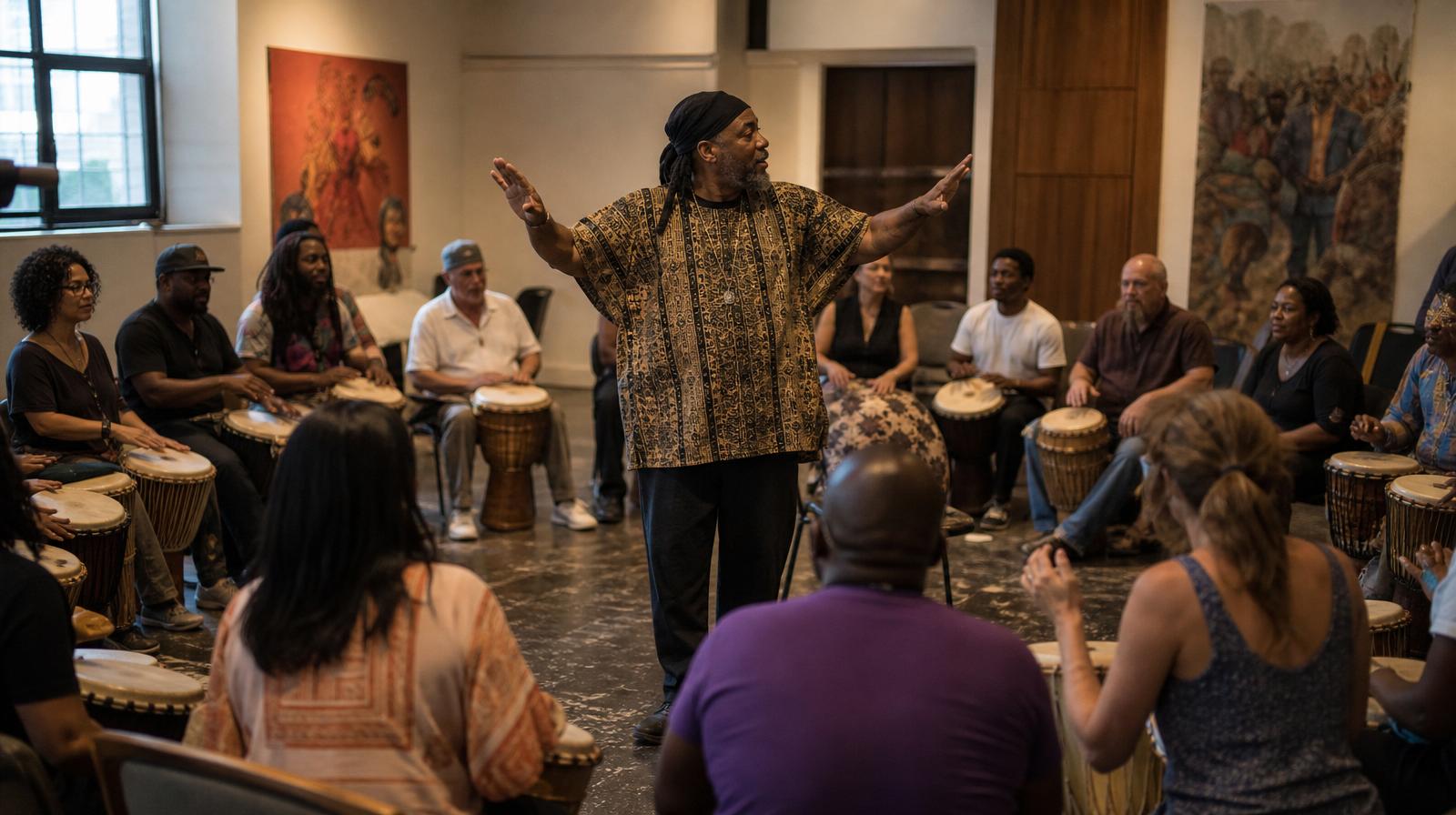
There is a specific magic that happens when a djembe from West Africa, a doumbek from the Middle East, and a conga from the Caribbean find the same pulse. This is the heart of the international drum circle—a movement that transcends borders, languages, and politics to create a shared human experience through vibration.
Whether you are a seasoned percussionist or someone who has never touched a drum skin, the global rhythm community offers a seat at the bench. In this guide, we explore how rhythm connects us globally and how you can participate in this thriving worldwide scene.
The Universal Language of the International Drum Circle
At its core, an international drum circle is about connection. While spoken languages vary, the language of the 'one'—the downbeat—is universal. In cities from Tokyo to Berlin to San Francisco, people gather in parks, community centers, and sacred spaces to share in the rhythmic flow.
These gatherings aren't just about music; they are about social cohesion. In an international context, drumming serves as a bridge. When we play together, we practice deep listening. We learn to support the collective sound, moving beyond individual ego to create something larger than ourselves. This global phenomenon has grown from small grassroots meetups into massive synchronized events that celebrate peace and unity.
Iconic Instruments of the Global Circle
To understand the international drum circle, one must appreciate the diversity of the instruments involved. Each brings a unique voice and cultural history to the center of the ring:
- Djembe (West Africa): Perhaps the most recognizable drum in modern circles, known for its wide range of tones—from deep bass to sharp slaps.
- Doumbek/Darbuka (Middle East): A goblet-shaped drum that provides intricate, crisp high-end rhythms and rapid-fire finger techniques.
- Congas and Bongos (Latin America): The melodic heartbeat of Afro-Cuban rhythms, bringing a warm, driving energy to any session.
- Frame Drums (Global): Found in various forms across the Mediterranean, Asia, and the Americas, these drums are often used for meditative and shamanic drumming styles.
- Dunun (West Africa): The bass drums that provide the melodic foundation and 'heartbeat' for djembe ensembles.
Finding Your Place in the World Rhythm Scene
If you are traveling or looking to expand your horizons, finding a local group is the best way to immerse yourself in a new culture. Many travelers now plan their itineraries around drumming retreats and festivals where they can learn from master drummers in their ancestral homelands.
From the full-moon drum circles on the beaches of Koh Phangan to the Sunday afternoon gatherings at Mount Royal in Montreal, the spirit remains the same: come as you are, bring what you have, and contribute to the groove. If you are just starting out, you might want to look for drum schools that offer workshops on traditional rhythms to build your confidence before joining a large-scale international event.
Etiquette for Global Gatherings
While the international drum circle is inclusive, there are unwritten rules—often called 'drum circle etiquette'—that ensure the experience is positive for everyone, regardless of where in the world you are playing:
- Listen as much as you play: The best drummers are the best listeners. Tune into the pulse before you start striking your drum.
- Support the foundation: If the rhythm is complex, stick to a simple, steady beat that holds the group together.
- Respect the lead: Some circles are facilitated, meaning a leader may use hand signals to change the volume or tempo. Follow their cues.
- Ask before playing someone else’s drum: Instruments are often deeply personal. Always seek permission before trying out a neighbor's gear.
- Leave space: Silence is a part of music. You don't have to play every single beat; let the rhythm breathe.
The Rise of Virtual and Synchronized Global Beats
In recent years, the international drum circle has moved into the digital realm. Synchronized drumming events now allow thousands of people across different time zones to play the same rhythm simultaneously via live stream. These events often coincide with the equinox, solstice, or International Day of Peace, symbolizing a 'global heartbeat.'
For those who cannot travel, connecting with drum teachers online is a fantastic way to learn the nuances of international styles like Samba, Highlife, or Middle Eastern Malfuf. This digital exchange has accelerated the blending of styles, leading to new, contemporary 'fusion' rhythms that characterize modern circles.
Health and Wellness Benefits of Group Drumming
Beyond the music, the international drum circle movement is fueled by a growing awareness of the health benefits of rhythm. Scientific studies have shown that group drumming can reduce stress, boost the immune system, and even help manage chronic pain. In a globalized world where many feel isolated, the drum circle provides a sense of belonging and 'rhythmic entrainment'—the process where our biological rhythms synchronize with the external beat.
Planning Your Rhythm Journey
Are you ready to take your drumming beyond your backyard? Whether you're looking for events in your home country or planning a trip to a percussion festival in Senegal or Brazil, the resources are at your fingertips. The world is full of rhythms waiting to be discovered, and every circle you join is an opportunity to make a new friend and learn a new pattern.
Remember, you don't need to be a professional to participate in an international drum circle. You only need a willing heart and a steady pulse. The community is waiting for you to add your unique voice to the global song.
Find a drum circle near you.
Frequently asked
- What is an international drum circle?
- An international drum circle is a gathering of people from diverse cultural backgrounds who use hand drums and percussion to create spontaneous music. These events emphasize global unity, cultural exchange, and the universal language of rhythm, often occurring at major festivals or through synchronized global events.
- Do I need my own drum to participate in a global circle?
- While many participants bring their own instruments like a djembe or conga, many large-scale international drum circles and retreats provide 'loaner' instruments for beginners. It is always a good idea to check the event description or contact the facilitator beforehand to see if drums are provided.
- Can beginners join international drumming events?
- Yes, the vast majority of international drum circles are family-friendly and open to all skill levels. The focus is usually on community and connection rather than technical perfection, making it the perfect environment for beginners to learn by ear and feel the rhythm.
Find a drum circle near you
Browse hundreds of circles, teachers and rhythm community gatherings.
Explore drum circles