Meditation Drumming Near Me: A Guide to Rhythmic Mindfulness
Discover how the primal pulse of the drum can quiet the mind and foster deep inner peace in your local community.
In an age of constant digital noise, many are seeking a different kind of frequency—one that resonates within the body and grounds the spirit. If you have been searching for "meditation drumming near me," you are likely looking for more than just a musical performance. You are looking for a way to quiet the internal monologue through the steady, primal pulse of the drum.
Meditation drumming, often referred to as rhythmic mindfulness or therapeutic drumming, uses the repetitive beat of a hand drum to induce a state of deep relaxation and focused awareness. Unlike a high-energy performance, these sessions focus on the internal experience of the player and the collective vibration of the group.
The Power of the Pulse: Why Drumming is Meditative
At its core, meditation drumming works because our bodies are inherently rhythmic. From our heartbeat to our breath and our brainwaves, we are biological metronomes. When we strike a djembe or a frame drum in a steady, repetitive pattern, our brainwaves begin to entrain with the rhythm.
This process, known as auditory driving, can shift the brain from the high-frequency beta waves of active thinking into the slower alpha and theta waves associated with deep meditation and creative flow. For those who find sitting in silence difficult, the drum provides a physical anchor that makes mindfulness accessible.
What to Expect at a Meditation Drumming Circle
If you find a local gathering through our drum circle directory, you might wonder what the atmosphere will be like. Unlike a standard drum circle which might be loud and chaotic, a meditation-focused circle is usually more intentional.
- The Setting: Often held in yoga studios, community centers, or outdoors during full moons.
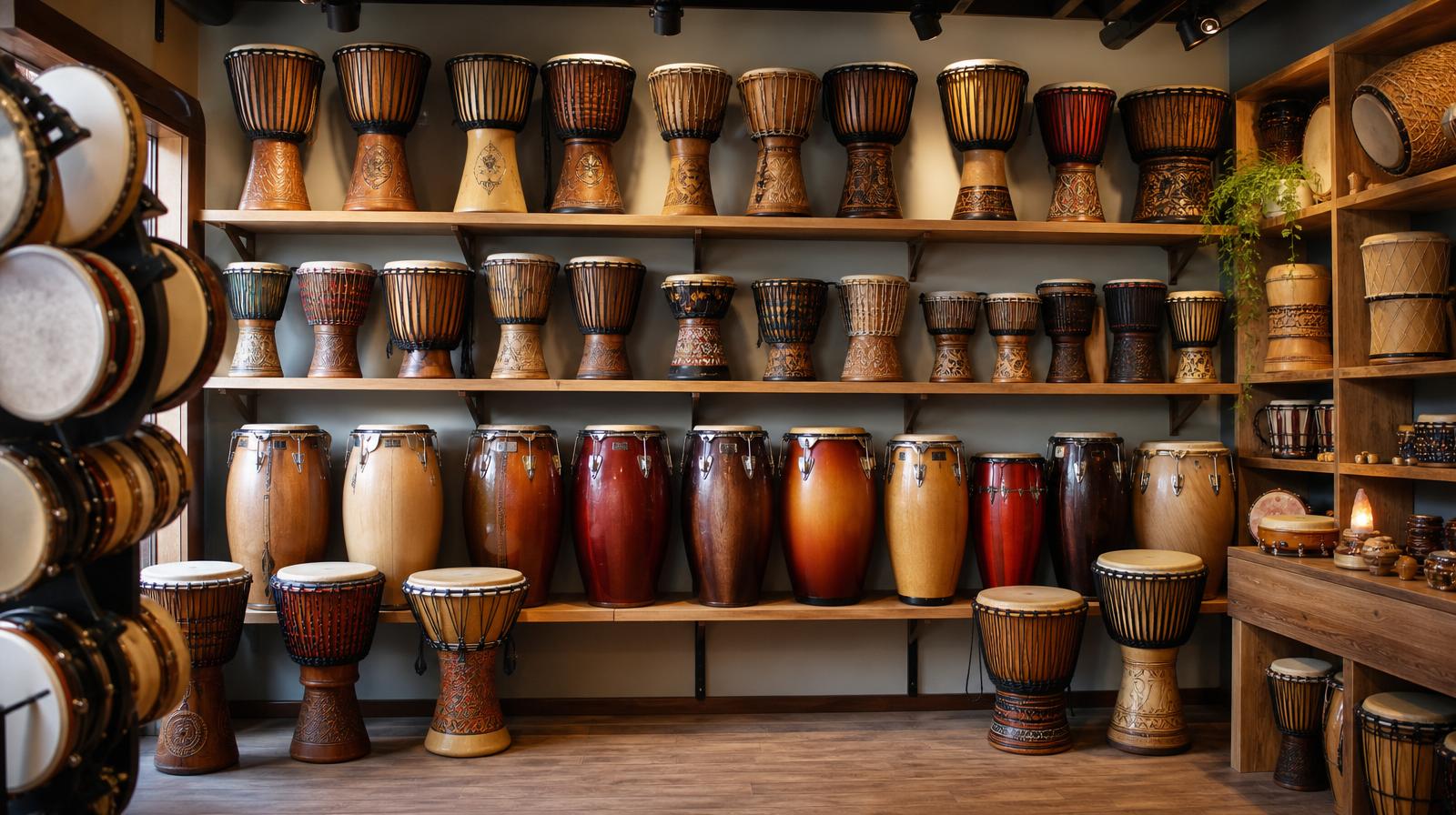
- The Instruments: You will see a variety of skins and shells, including the deep bass of the djembe, the earthy tones of the conga, and the ethereal ring of the frame drum.
- The Pace: The tempo is usually steady and moderate, mimicking a resting heart rate.
- The Guidance: A facilitator may lead the group through a visualization or a specific breathing pattern synchronized with the beat.
Choosing Your Instrument for Mindfulness
While any drum can be used for meditation, certain instruments are particularly well-suited for solo or group practice:
- The Frame Drum: One of the world's oldest instruments, its lightweight design and harmonic overtones make it perfect for personal trance work.
- The Djembe: With its wide range of tones—from deep bass to sharp slaps—the djembe allows for a full-body resonance that is very grounding.
- The Doumbek: This goblet-shaped drum offers crisp, intricate sounds that require a level of finger precision that naturally focuses the mind.
- The Dunun: These large bass drums, often played with sticks, provide the "heartbeat" of the ensemble, offering a powerful vibration that you can feel in your chest.
Finding Your Rhythm: Group vs. Solo Practice
Searching for meditation drumming near me often leads to two paths: joining a community or practicing at home. Both have unique benefits.
Community Circles: Joining a group fosters a sense of belonging. There is a profound psychological shift that occurs when twenty people strike a drum in unison. It dissolves the ego and creates a "group mind" that is incredibly healing. You can find these local gatherings by browsing our upcoming events.
Solo Practice: Drumming alone allows you to follow your own internal rhythm without distraction. It is a private conversation between you and the drum. If you are new to the instrument, connecting with qualified drum teachers can help you learn the basic techniques so your practice becomes effortless and fluid.
The Health Benefits of Rhythmic Sound
Science is beginning to catch up with what indigenous cultures have known for millennia. Meditation drumming has been shown to:
- Reduce Stress: Drumming lowers cortisol levels and triggers the release of endorphins.
- Boost Immunity: Studies have indicated that group drumming can increase the activity of natural killer cells which fight viruses.
- Improve Focus: The bilateral movement required to play a drum engages both hemispheres of the brain, improving cognitive function.
- Emotional Release: The drum provides a non-verbal outlet for processing grief, anger, or anxiety.
Tips for Your First Meditation Drumming Session
If you’ve located a session and are ready to attend, keep these etiquette tips in mind to ensure a positive experience for everyone:
- Listen More Than You Play: In a meditative circle, the space between the notes is as important as the notes themselves.
- Respect the Silence: Often, these sessions end with a period of silence to allow the vibration to settle. Avoid the urge to chat immediately after the drumming stops.
- No Experience Necessary: Don't worry about being "musical." Meditation drumming is about the process, not the product. Most drum schools offer introductory workshops that focus specifically on the wellness aspects of the craft.
Conclusion: Start Your Rhythmic Journey Today
The beat of the drum is a universal language that transcends barriers and connects us to our deepest selves. Whether you are looking to relieve stress, find community, or explore a new spiritual practice, meditation drumming offers a powerful, accessible path.
Find a drum circle near you and start your journey today: /drum-circles.
Frequently asked
- Do I need to own a drum to attend a meditation drumming circle?
- In many cases, no. Most facilitators and community circles provide extra instruments like djembes or frame drums for newcomers. However, it is always a good idea to check the event description or contact the organizer beforehand to ensure a drum will be available for you.
- Is meditation drumming a religious practice?
- While drumming has deep roots in many spiritual and indigenous traditions, most modern meditation drumming circles are secular and inclusive. They focus on the physiological and psychological benefits of rhythm rather than a specific religious doctrine, making them open to people of all backgrounds.
- What is the difference between a drum circle and meditation drumming?
- A standard drum circle is often high-energy, improvisational, and focused on social celebration. Meditation drumming is more structured and intentional, typically utilizing slower tempos and repetitive patterns designed to induce a relaxed, contemplative state of mind.
Find a drum circle near you
Browse hundreds of circles, teachers and rhythm community gatherings.
Explore drum circles