Mastering the Rhythm: How to Choose the Best Online Drum
Discover how an online drum school can transform your technique from your own living room, offering world-class instruction on djembe, conga, and frame drums.
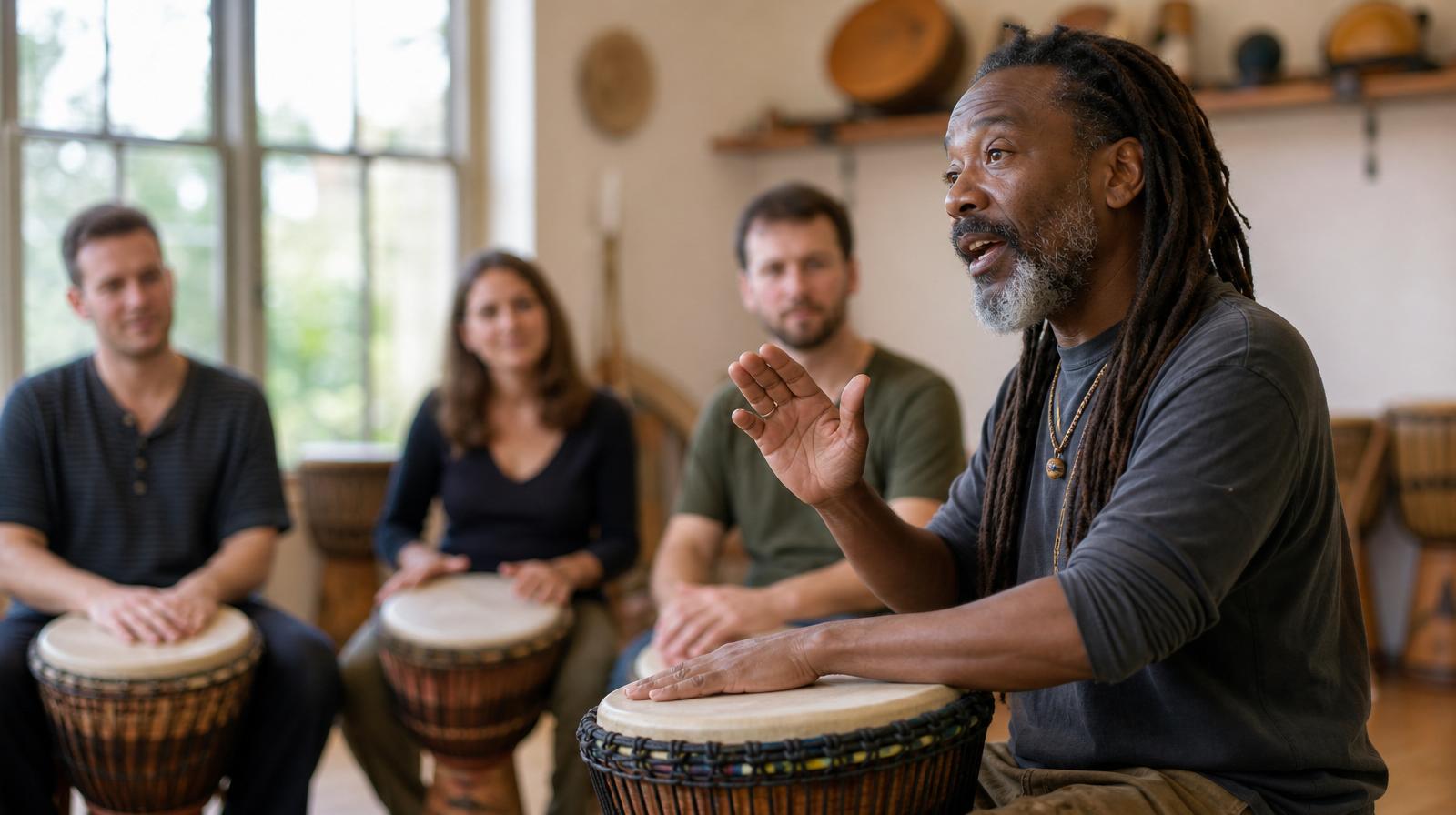
In the past, learning the art of hand drumming required living near a master teacher or traveling to remote retreats. Today, the landscape has changed. Whether you are holding your first djembe or looking to refine complex polyrhythms on the dununs, an online drum school provides a bridge between ancient traditions and modern convenience.
Virtual learning has opened doors for enthusiasts who previously lacked access to specialized instruction. From the comfort of your home, you can now access the wisdom of West African griots, Middle Eastern percussionists, and Latin jazz masters. But with so many digital platforms available, how do you find the one that resonates with your personal rhythm journey?
The Benefits of Learning Drums Online
The most immediate advantage of a digital curriculum is flexibility. Traditional weekly lessons can be difficult to maintain with a busy schedule. An online drum school allows you to pause, rewind, and re-watch a specific hand technique—like the subtle difference between a slap and a tone on a djembe—until it feels natural.
- Global Access: Study with world-class drum teachers who live thousands of miles away.
- Pace Control: Speed up through basics or slow down for intricate odd-meter rhythms.
- Cost-Effectiveness: Online subscriptions are often more affordable than private, in-person hourly rates.
- Visual Aids: High-definition multi-camera angles provide a better view of hand placement than you might get sitting across a room from a teacher.
Essential Features of a High-Quality Online Drum School
Not all virtual platforms are created equal. A premium learning experience should go beyond simple video playback. When evaluating an online drum school, look for these key pillars of education:
Structured Curriculum
Randomly watching YouTube videos often leads to gaps in your foundational knowledge. A dedicated school offers a step-by-step path, starting with posture and basic strokes before moving into traditional rhythms like Kuku or Moribayassa.
Interactive Feedback
The biggest challenge of online learning is the lack of real-time correction. The best schools offer "video exchanges" or live Q&A sessions where instructors can critique your form, ensuring you don't develop habits that lead to wrist strain or poor tone.
Diverse Instrument Tracks
While some schools focus exclusively on the drum kit, hand drum enthusiasts should look for programs that offer specialized tracks for:
- Djembe: Focusing on the bass, tone, and slap.
- Congas: Mastering the heel-toe technique and the open slap.
- Doumbek/Darbuka: Learning the finger-snapping techniques of the Middle East.
- Frame Drums: Exploring the ancient traditions of the Tar and Bodhran.
Transitioning from Screen to Skin: Practice Habits
Enrolling in an online drum school is only the first step. To truly improve, you must bridge the gap between digital instruction and physical practice. Setting up a dedicated space is vital. Ensure your chair allows for proper hip alignment and that your drum is at the correct height to prevent slouching.
Many students find success by using a "call-and-response" method with their video lessons. Play a phrase, pause the video, and repeat it until your drum's voice matches the instructor's. This mimics the traditional way drumming has been taught for centuries in communal settings.
Finding Community in a Virtual World
One of the common fears of online learning is isolation. Drumming is, at its heart, a social activity. The best online schools foster a sense of belonging through student forums, virtual events, and community challenges.
Participating in these forums allows you to share your progress, ask about drum maintenance (like how to tune a skin-headed drum in humid weather), and find inspiration from fellow students. Eventually, your online studies will give you the confidence to step into a local circle and contribute to the collective groove.
From Virtual Lessons to Live Gatherings
While an online drum school builds your technical muscles, the ultimate goal for many is to play with others. The skills you learn—keeping a steady pulse, listening to the "heartbeat" of the group, and understanding when to solo—are all preparations for the real world.
Once you've mastered a few traditional rhythms online, consider taking your skills to the next level by attending drumming retreats. These immersive experiences allow you to apply your digital knowledge in a high-energy, face-to-face environment, often led by the very teachers you've been following online.
Choosing Your Path
Before signing up, take advantage of free trials. See if the instructor's teaching style matches your learning speed. Do they explain the cultural history of the rhythm? Do they emphasize the "feel" as much as the technique? Whether you want to facilitate your own drum circles or simply play for your own well-being, the right online school is out there waiting to help you find your beat.
Find a drum circle near you at Drum Circle Directory.
Frequently asked
- Can I really learn to drum through a computer screen?
- Yes, modern online drum schools use multi-angle cameras and high-fidelity audio to demonstrate techniques clearly. Many also offer interactive feedback where you can upload videos of your playing for expert critique, ensuring your form and rhythm are correct.
- What equipment do I need to start an online drum course?
- At a minimum, you will need the specific instrument the course focuses on, such as a djembe, conga, or frame drum. A stable internet connection, a comfortable armless chair, and a pair of headphones are also recommended to hear the subtle tonal differences in the lessons.
- How long does it take to see progress with online lessons?
- Most students see a noticeable improvement in their hand technique and timing within 4 to 6 weeks of consistent practice. Because you can repeat lessons as often as needed, online learning can actually accelerate the mastery of fundamental strokes compared to occasional in-person classes.
Find a drum circle near you
Browse hundreds of circles, teachers and rhythm community gatherings.
Explore drum circles