
Mastering Rhythm: A Guide to Online Hand Drum Lessons
Discover how to master the djembe, conga, or frame drum from home with our comprehensive guide to the best online hand drum lessons.
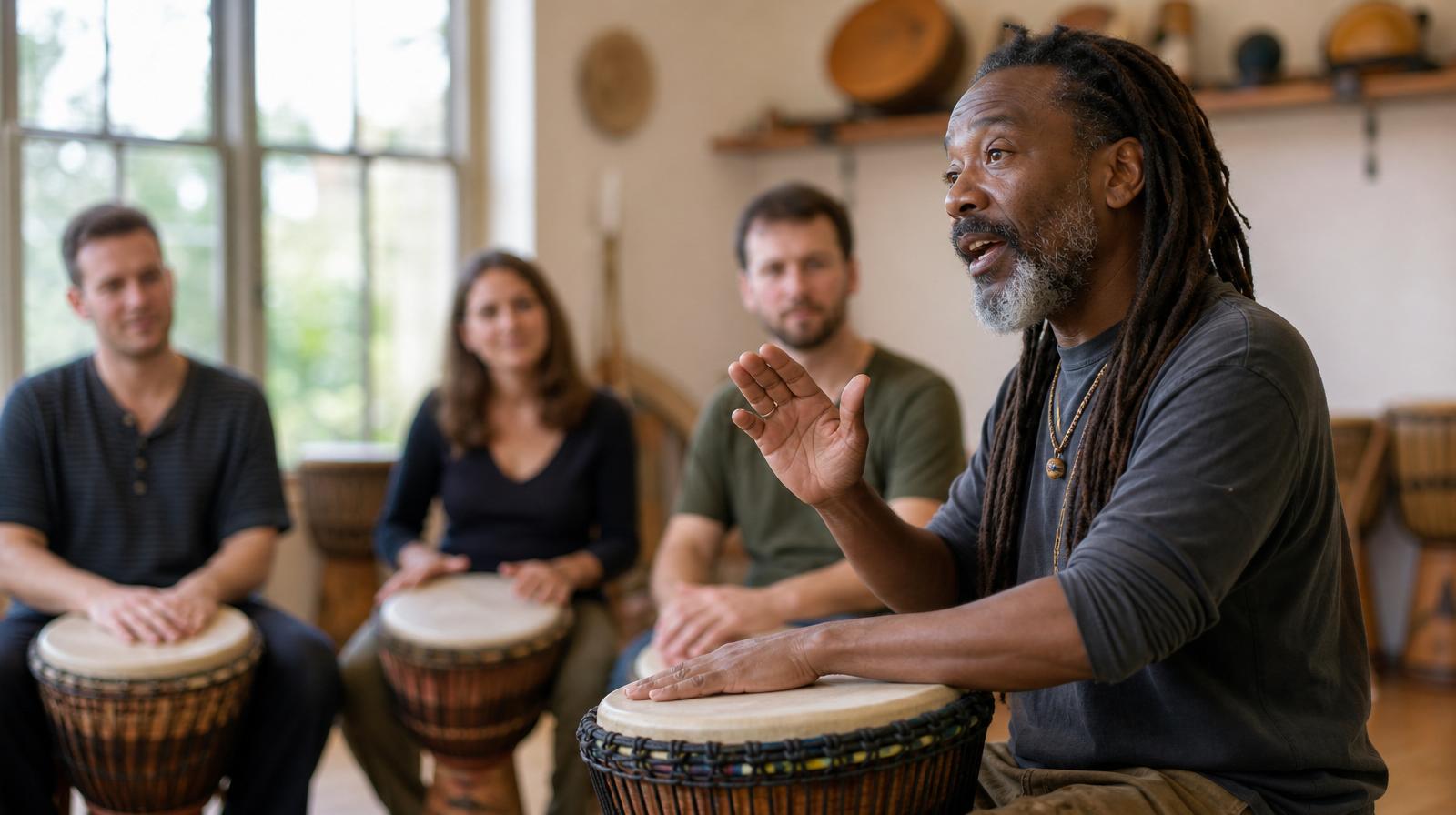
There has never been a better time to start your drumming journey. While the traditional image of learning to drum involves sitting in a circle under a baobab tree or in a community center, the digital age has brought world-class master drummers directly into our living rooms. Whether you are picking up a djembe for the first time or looking to refine your Tumbao on the congas, online hand drum lessons offer a flexible, high-quality path to musical expression.
In this guide, we will explore how to navigate the world of virtual percussion, the different styles available, and how to bridge the gap between solo practice and community play.
Why Choose Online Hand Drum Lessons?
The most significant advantage of online learning is accessibility. In the past, if you wanted to learn traditional West African rhythms or Middle Eastern Doumbek techniques, you had to live in a major metropolitan area or travel to a drumming retreat. Now, you can access the pedagogical secrets of masters from Guinea, Cuba, and Turkey with a simple click.
Key benefits include:
- Pace Control: You can pause, rewind, and slow down complex patterns until your muscle memory catches up.
- Variety: You aren't limited to the teachers in your zip code. You can study different traditions simultaneously.
- Cost-Effectiveness: Many online platforms offer subscription models that are significantly cheaper than weekly private in-person sessions.
Choosing Your Instrument: Where to Start?
Before you dive into a curriculum, you need to decide which voice resonates with you. Most online hand drum lessons focus on one of these core instruments:
The Djembe
Perhaps the most popular hand drum globally, the djembe is known for its wide range of tones—the deep bass, the rich tone, and the sharp slap. Online courses often focus on the traditional rhythms of the Mandue empire, teaching you how to lock in with the dununs (bass drums).
Congas and Bongos
If you love Afro-Cuban jazz, salsa, or rumba, the congas are your calling. Lessons here focus heavily on hand technique, specifically the "heel-toe" movement and the muffled slap, which are essential for maintaining the drive of the ensemble.
Frame Drums and Doumbeks
For those drawn to ancient, earthy, or Middle Eastern sounds, the frame drum or Doumbek (Darbuka) offers a different tactile experience. Lessons often emphasize finger-style techniques and intricate odd-time signatures like 7/8 or 9/8.
What to Look for in a Quality Online Course
Not all online hand drum lessons are created equal. When browsing for a teacher or a school, look for these quality markers:
- Multiple Camera Angles: You need to see both the top-down view of the drum head and a front-on view of the drummer’s posture.
- Cultural Context: A great teacher doesn't just teach "hits"; they teach the history, the name of the rhythm, and the culture it comes from.
- Sheet Music or Notation: Even if you don't read standard Western notation, having a visual "box notation" or PDF guide helps reinforce what you hear.
- Feedback Loops: Does the program offer a way to upload a video of yourself for critique? This is vital to ensure you aren't developing bad habits that could lead to wrist strain.
Transitioning from Video to Real-Life Rhythm
One common pitfall of learning via online hand drum lessons is becoming a "bedroom drummer." Drumming is, at its heart, a social language. While you build your chops online, it is essential to find opportunities to play with others.
Practicing along to high-quality backing tracks is a start, but nothing replaces the feeling of a live drum circle. In a circle, you learn the art of listening, the nuance of call-and-response, and how to hold a steady pulse when twenty other people are playing different parts. Use your online lessons to build your vocabulary, then take that vocabulary to a local gathering to "speak" with other drummers.
Essential Gear for the Virtual Student
To get the most out of your digital lessons, you don't need a professional studio, but a few items will make a difference:
- A Solid Chair: Use a stool or a chair without arms so your elbows have full range of motion.
- Good Headphones: Laptop speakers often lose the deep bass frequencies of a djembe or conga. Use over-ear headphones to hear the nuances of the teacher's strokes.
- A Metronome: Whether it’s an app or a physical device, practicing with a click is the fastest way to develop professional-level timing.
- A Mirror: Placing a full-length mirror in front of you allows you to compare your hand positions to the teacher's in real-time.
Finding the Right Instructor
If you prefer a more personalized touch than a pre-recorded course, many experts offer one-on-one sessions via Zoom or Skype. You can find many of these professional educators in our directory of drum teachers and drum schools. Private lessons allow for real-time correction of your technique, which is especially important for beginners to avoid repetitive strain injuries.
Conclusion: Your Rhythmic Path Awaits
Online hand drum lessons are a gateway to a lifetime of musical enjoyment. They provide the foundation, the technique, and the repertoire you need to feel confident. However, remember that the goal of drumming is connection. Once you’ve mastered your basic tones and a few traditional rhythms, the next step is to step out of the digital world and into the community.
Ready to take your new skills to the public? Find a drum circle near you and join the rhythm community today.
Frequently asked
- Can I really learn to drum through a screen?
- Yes! Modern online hand drum lessons use high-definition video and multiple angles to show exactly how to strike the drum. Many students find they progress faster because they can re-watch difficult sections as many times as needed.
- Do I need a drum before I start online lessons?
- While it is ideal to have your own instrument, many beginner courses start with 'table-top' drumming or using a practice pad to learn basic rhythms and coordination before you invest in a professional djembe or conga.
- How long does it take to see results from online lessons?
- If you practice for 20 minutes a day, most students can play basic foundational rhythms and distinguish between bass, tone, and slap sounds within 4 to 6 weeks. Consistency is more important than the length of individual practice sessions.
- Are online lessons better than in-person classes?
- Neither is 'better,' as they serve different purposes. Online lessons offer convenience and access to world-class masters, while in-person classes provide the physical energy and immediate social feedback of a group setting.
Find a drum circle near you
Browse hundreds of circles, teachers and rhythm community gatherings.
Explore drum circles