
Open Drum Circle Guide: Join the Rhythm Near You
Discover the magic of an open drum circle, where beginners and masters alike gather to create spontaneous music and community connection.
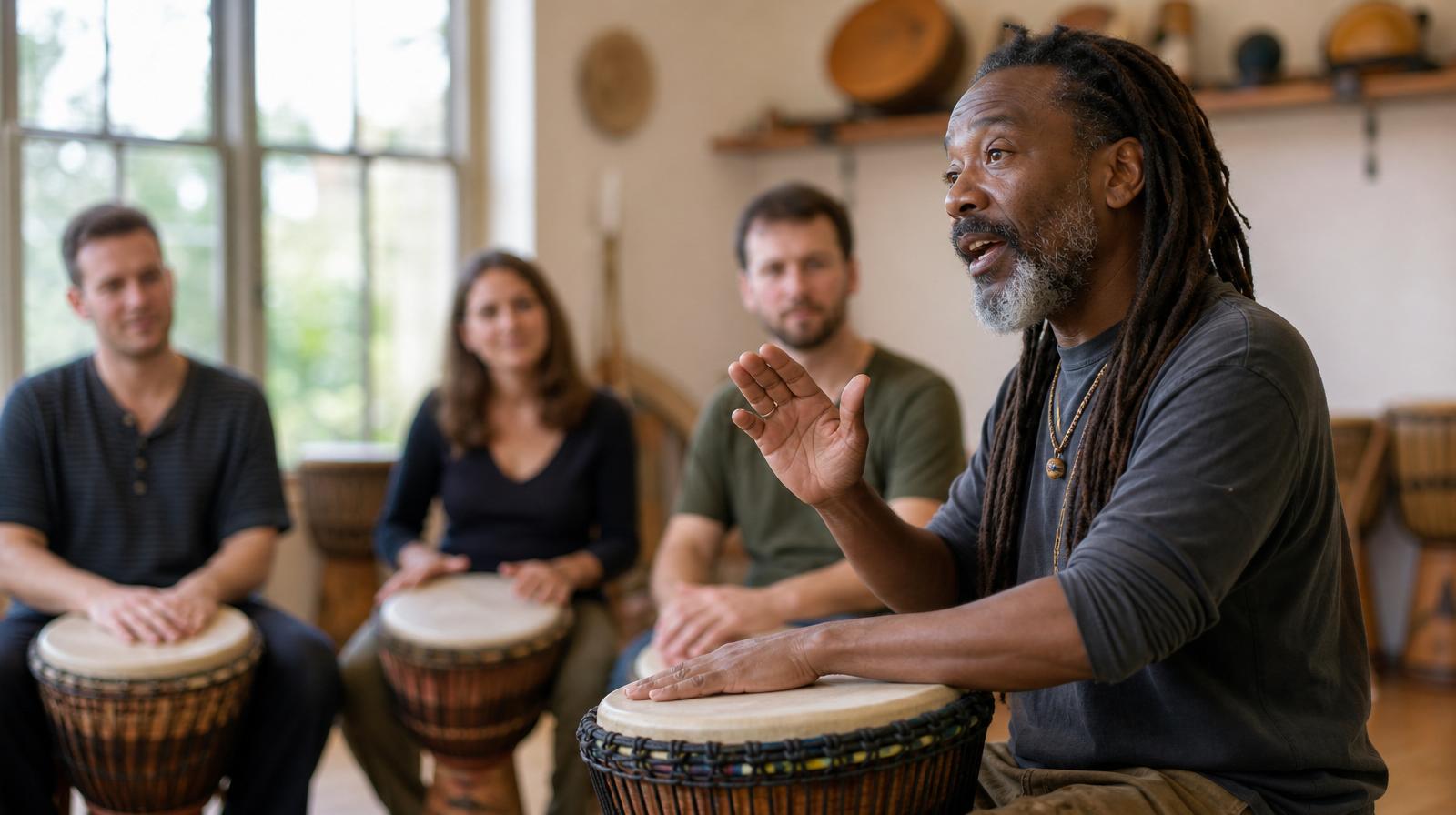
There is a specific kind of magic that occurs when a group of people, many of whom are strangers, sit in a circle with nothing but percussion instruments and a shared heartbeat. This is the open drum circle. Unlike a formal concert or a rehearsed performance, an open circle is a democratic musical space where the barrier to entry is non-existent and the focus is on connection rather than perfection.
Whether you have been playing the congas for decades or you have never touched a drum in your life, the open drum circle offers a unique opportunity to express yourself, relieve stress, and find your tribe. In this guide, we will explore what makes these gatherings special, what to expect at your first event, and how to participate with confidence.
What Exactly is an Open Drum Circle?
An "open" drum circle is a community gathering where anyone is welcome to join. Unlike closed groups or professional ensembles, there is no audition, no sheet music, and no set repertoire. The music is improvised in the moment, often led by a facilitator who helps guide the energy of the group.
These events typically take place in public parks, community centers, or beach settings—often coinciding with full moons or seasonal shifts. The primary goal is not to perform for an audience, but to create a "rhythmic soup" where every participant contributes a unique ingredient. Because it is an open environment, you will see a diverse range of skill levels, from professional drum teachers to children hitting their first cowbell.
Common Instruments You Will Encounter
The sonic landscape of a drum circle is incredibly diverse. While you can bring almost anything that makes a sound, certain instruments are staples of the community:
- Djembe: The most popular drum in circles worldwide. This goblet-shaped West African drum offers a wide range of tones, from deep bass to sharp slaps.
- Congas: Tall, narrow Afro-Cuban drums played in pairs or trios, providing a warm, melodic foundation.
- Doumbek: A goblet drum from the Middle East, known for its crisp, metallic "teks" and deep "doums."
- Frame Drums: Large, shallow drums like the tar or bodhrán that offer a primal, earthy resonance.
- Dunun: The heartbeat of West African ensembles, these large cylindrical drums are typically played with sticks.
- Auxiliary Percussion: Shakers, tambourines, woodblocks, and cowbells are essential for adding texture and keeping the pulse steady.
If you don't own an instrument yet, don't worry. Many facilitators provide a "community basket" of extra percussion for newcomers to use.
The Role of the Facilitator
In many open drum circles, you will notice one person standing in the center or sitting at the edge, gesturing to the group. This is the facilitator. Their job is not to be a "conductor" in the classical sense, but to act as a rhythmic traffic controller.
Facilitators help start and stop rhythms, encourage the group to listen to one another, and manage the volume levels. They might use a "call-and-response" technique—playing a short phrase and asking the circle to mimic it—to bring everyone into sync. A good facilitator ensures that the circle remains inclusive and that the music doesn't become a chaotic wall of noise.
Essential Etiquette for Newcomers
While open circles are informal, there are unwritten rules that keep the experience enjoyable for everyone. Following these simple tips will help you blend in seamlessly:
- Listen More Than You Play: When you first sit down, don't immediately start your loudest solo. Listen to the existing groove for a minute. Find the "pulse" and try to support it.
- Support the Bass: The heartbeat of the circle is the low-end bass notes. If you aren't sure what to play, just match the steady bass beat of the djembe or dunun players.
- Leave Space for Others: Rhythm is as much about the silence between notes as the notes themselves. Avoid playing "on top" of everyone else; look for the gaps where your sound fits.
- Ask Before Playing Someone Else’s Drum: Many drummers have a deep personal connection to their instruments. Always ask permission before trying out a drum that isn't yours.
- Follow the Facilitator: If the facilitator signals for a crescendo (getting louder) or a cut-off (stopping), follow their lead to keep the group cohesive.
The Benefits of Community Drumming
Beyond the fun of making music, participating in an open drum circle has documented health and wellness benefits. Research has shown that group drumming can reduce cortisol levels (the stress hormone), boost the immune system, and even help manage chronic pain.
For many, the biggest draw is the sense of belonging. In an increasingly digital world, sitting in a physical circle with others creates a powerful sense of community. It is a form of active meditation; when you are locked into a rhythm, it is difficult to worry about your grocery list or your job. You are fully present in the "now."
Finding Your Local Rhythm
Ready to take the plunge? Finding an open drum circle is easier than you might think. Many local groups list their recurring gatherings on community boards or social media. If you are looking for a more structured environment to hone your skills before joining a public circle, you might consider looking into local drum schools or attending specialized rhythm retreats to deepen your practice.
Whether it’s a family-friendly afternoon in the park or a high-energy full-moon gathering on the beach, there is a seat in the circle waiting for you. You don't need to be a "musician" to be a drummer; you just need to be willing to listen and contribute your heartbeat to the whole.
Find an open drum circle near you today.
Frequently asked
- Do I need to bring my own drum to an open drum circle?
- Not necessarily! While many regulars bring their own djembes or congas, many open circles provide 'loaner' instruments or a basket of shakers and bells for newcomers. It is always a good idea to check the event description or arrive a few minutes early to see if extras are available.
- What if I have no musical experience or rhythm?
- Open drum circles are the perfect place for beginners because there is no 'wrong' way to play. The collective sound of the group supports you, so even if you miss a beat, the rhythm carries on. Most people find that their natural sense of rhythm emerges quickly once they stop overthinking and start listening.
- Are children allowed to participate in open drum circles?
- Most community drum circles are family-friendly and welcome children of all ages. Drumming is a fantastic way for kids to develop coordination and social skills. Just be sure to bring ear protection for very young children, as the volume can sometimes get quite loud.
- How long do these gatherings usually last?
- A typical open drum circle lasts anywhere from 90 minutes to three hours. Participants often come and go as they please, though it is respectful to enter and exit the circle during a transition between rhythms rather than in the middle of a high-energy peak.
Find a drum circle near you
Browse hundreds of circles, teachers and rhythm community gatherings.
Explore drum circles