
Outdoor Drum Circle Guide: Rhythm Under the Open Sky
Discover the magic of drumming in nature, from finding the perfect beach gathering to understanding outdoor etiquette and choosing the right weather-resistant instruments.
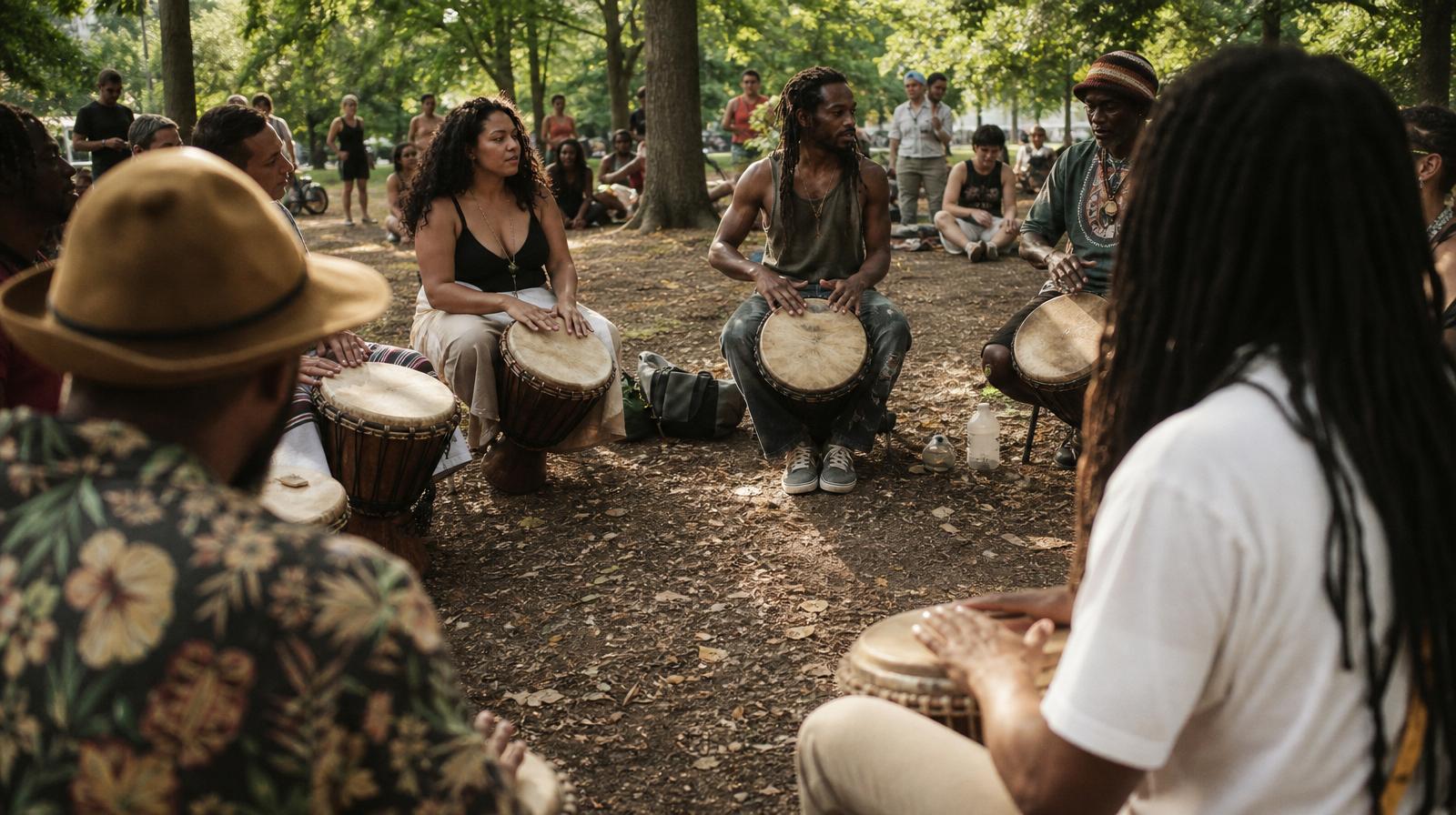
There is something primal and deeply restorative about the sound of a drum carrying across an open field or echoing off a canyon wall. While indoor circles offer intimacy and controlled acoustics, an outdoor drum circle connects the player to the elements. Whether it’s a full-moon gathering on a sandy beach, a community park jam, or a rhythm bonfire in the woods, drumming outside is the purest expression of the community drum circle movement.
In this guide, we will explore everything you need to know about participating in and organizing outdoor rhythm events, from the gear that survives the humidity to the unwritten rules of the park.
The Magic of Drumming in Nature
When we take our instruments outside, the acoustic environment changes entirely. Without walls to reflect the sound, the frequencies of a djembe or a pair of dununs travel differently. You’ll find that the bass notes feel more grounded, while the high-pitched 'slaps' seem to dissipate into the air, requiring a different kind of listening.
Outdoor circles often attract a diverse crowd. You might find seasoned professionals playing complex West African polyrhythms alongside families with children shaking maracas for the first time. This blend of nature and human connection is what makes the outdoor drum circle experience so unique.
Choosing the Right Instrument for the Elements
Not all drums are created equal when it comes to the great outdoors. Temperature shifts, direct sunlight, and humidity can wreak havoc on traditional instruments.
- Synthetic vs. Animal Skin: Traditional goatskin heads on djembes are sensitive to moisture. If it’s a humid night, your drum might lose its tension and sound 'tubby.' Synthetic heads (like those from Remo or Meinl) stay in tune regardless of the weather.
- The Versatile Djembe: The go-to for most outdoor gatherings due to its volume and range of tones.
- Frame Drums and Tambourines: These are lightweight and perfect for hiking into a remote drumming spot.
- Dununs: These large bass drums provide the heartbeat of an outdoor circle, especially in larger spaces where small drums might get lost.
- Hand Percussion: Never underestimate the power of a shekere, cowbell, or woodblock to cut through the sound of fifty drums.
Finding Your Local Rhythm Community
Finding a gathering is the first step toward joining the rhythm. Many outdoor circles are seasonal, popping up in city parks during the summer months or coinciding with the lunar cycle.
If you are looking for a more structured environment, you might search for drumming retreats that take place in forest preserves or coastal areas. These often provide a deeper immersion into the craft, away from the distractions of the city. For those just starting, connecting with drum teachers who host park sessions is a great way to learn the basics in a low-pressure environment.
Essential Etiquette for Public Spaces
Outdoor circles are often held in public spaces, which means we are ambassadors for the drumming community. Following a few simple rules ensures that these events remain welcome in our parks:
- Respect the 'Center': The middle of the circle is often reserved for dancers or a shared altar. Avoid walking directly through the center if a groove is in progress.
- Listen More Than You Play: In an open space, it’s easy to play louder than necessary. Listen to the person to your left and right to ensure you are supporting the collective pulse.
- Ask Before Joining: If a group looks established, a quick nod or a 'May I join?' goes a long way. Most circles are inclusive, but some may be closed rehearsals.
- Leave No Trace: Especially in natural settings, ensure all trash is packed out. Respect the local wildlife and park hours.
Health and Wellness Benefits of Open-Air Rhythm
Drumming has long been recognized for its therapeutic qualities, but moving the practice outdoors amplifies these effects. The combination of 'forest bathing' (Shinrin-yoku) and rhythmic entrainment lowers cortisol levels and boosts the immune system.
Participating in a community circle provides a sense of belonging that is vital for mental health. The fresh air, sunlight, and physical act of striking a drum create a holistic workout for both the body and the mind. Many drum schools now incorporate outdoor mindfulness sessions into their curriculum for this very reason.
Hosting Your Own Outdoor Gathering
Ready to start your own circle? Here’s a quick checklist for a successful outdoor event:
- Permits: Check with your local parks department. Small, informal jams usually don't need a permit, but large events with amplification or 20+ people often do.
- Seating: Remind participants to bring camp chairs or blankets. Natural seating like logs or rocks is great but not always available.
- Lighting: If your circle goes into the evening, solar lanterns or safe fire pits (where allowed) create a beautiful ambiance.
- Inclusivity: Keep a few extra shakers or 'loaner' drums for passersby who want to join in.
Find a drum circle near you by visiting our global directory at /drum-circles.
Frequently asked
- What should I bring to an outdoor drum circle?
- Beyond your drum or percussion instrument, bring a comfortable camp chair, water, and sun protection. If the circle is in a park or beach, a small rug or mat can help protect the base of your drum from moisture or sand.
- Can I join an outdoor drum circle if I've never played before?
- Absolutely! Most outdoor community circles are beginner-friendly and welcome all skill levels. Start with a simple shaker or a steady pulse on a drum, and focus on listening to the heartbeat of the group.
- How do I protect my wooden drum from the sun?
- Avoid leaving wooden drums in direct sunlight for extended periods, as this can dry out the wood and cause cracking. When not playing, keep your drum in a bag or under the shade of a tree or umbrella.
Find a drum circle near you
Browse hundreds of circles, teachers and rhythm community gatherings.
Explore drum circles