
Park Drum Circle Guide: Join the Rhythm in Your Community
Discover the magic of outdoor drumming, from finding the right park drum circle to learning the essential etiquette for a great experience.
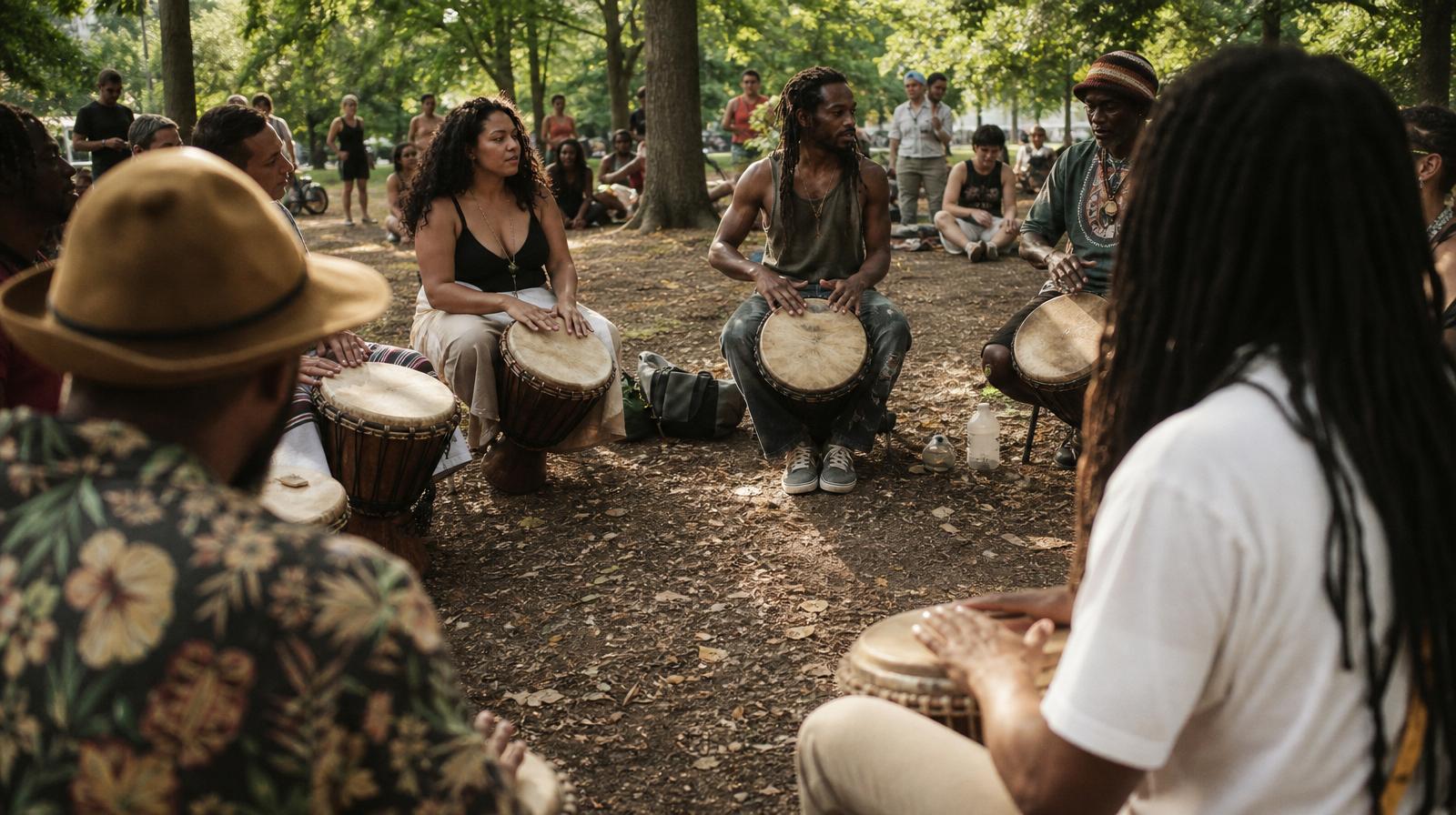
There is a unique magic that happens when the resonance of a goatskin djembe meets the open air of a public park. A park drum circle is more than just a musical gathering; it is a living, breathing pulse of the community. Whether it is a spontaneous sunset jam or a structured monthly event, these outdoor circles offer a space where strangers become friends through the universal language of rhythm.
For many, stumbling upon a park drum circle is their first introduction to the world of hand drumming. You might hear the distant thrum of the bass notes while walking your dog or see the shimmer of a tambourine under the shade of an oak tree. If you've ever felt the urge to join in but weren't sure how, this guide will walk you through everything you need to know about the vibrant world of outdoor drumming.
The Unique Appeal of Outdoor Drumming
Unlike indoor studio sessions or formal drum schools, a park drum circle is defined by its environment. The lack of walls allows the sound to travel, inviting passersby to stop and listen. The natural setting—grass underfoot, the breeze in the air, and the shifting light of the sun—adds a layer of organic beauty to the music.
Outdoor circles are often the most inclusive types of rhythm gatherings. They are typically family-friendly, allowing children to experiment with shakers while seasoned pros hold down the groove on their dununs. The open space also provides room for dancers, flow artists, and spectators, making it a multi-sensory community festival.
Essential Instruments for the Park
While any percussive instrument is welcome, some are better suited for the outdoors than others. When preparing for a park drum circle, consider the volume and portability of your gear.
- The Djembe: The king of the outdoor circle. Its loud, sharp slaps and deep bass can be heard across wide distances, making it perfect for cutting through the open air.
- Congas and Bongos: These provide a warm, melodic texture that complements the sharper tones of the djembe.
- Doumbeks and Darbukas: While slightly quieter, these Middle Eastern drums offer intricate finger-snapping sounds that add high-end detail to the rhythm.
- Frame Drums: Lightweight and portable, frame drums are excellent for those who want a spiritual, resonant sound without the heavy lifting.
- Dunun (Doundoun): These large cylindrical drums, played with sticks, provide the melodic heartbeat of West African rhythms. They are essential for keeping the circle grounded.
- Supportive Percussion: Don't underestimate the power of a cowbell, shekere, or a simple pair of claves. These instruments help define the "clave" or the timeline that keeps everyone in sync.
Understanding Park Drum Circle Etiquette
To ensure a positive experience for everyone, it is important to follow a few unwritten rules of the circle. While most park gatherings are informal, a little etiquette goes a long way.
- Listen First: Before you strike your drum, listen to the existing groove for at least a minute. Try to find the "pulse" and the "pocket" where your sound fits without clashing.
- Respect the Center: The center of the circle is often reserved for dancers or a communal altar. Avoid walking directly through the middle of the rhythm.
- Support the Groove: It can be tempting to play as fast and loud as possible, but the best participants focus on supporting the collective sound. If you can't hear the person next to you, you might be playing too loud.
- Ask Before Borrowing: Never play someone else's drum without asking. Many hand drums are delicate and hold personal significance to their owners.
- Follow the Facilitator: If the circle has a designated leader or facilitator, watch for their signals. They may use hand gestures to indicate a volume change (crescendo/decrescendo) or a "stop" signal (a cut).
Finding the Right Circle for You
Every park drum circle has its own "vibe." Some are deeply traditional, focusing on specific West African or Afro-Cuban rhythms. Others are "freestyle," where the music evolves organically without a specific cultural framework.
If you are looking for a place to start, checking a directory of drum circles is the most efficient way to find active groups in your area. You can often find listings that specify if a circle is beginner-friendly, family-oriented, or focused on a specific healing intention.
What to Bring Besides Your Drum
Attending a park drum circle requires a bit of preparation to stay comfortable for several hours. Beyond your instrument, consider packing these essentials:
- A Folding Chair: Unless you prefer sitting on the grass or have a drum strap for standing, a comfortable, armless chair is vital for proper drumming posture.
- Water and Snacks: Drumming is a physical workout. Stay hydrated, especially during summer afternoon sessions.
- Sun Protection: Parks often have limited shade. Bring a hat and sunscreen.
- Ear Protection: Even outdoors, the decibel levels can get high. High-fidelity earplugs are a great investment to protect your hearing while still allowing you to hear the nuances of the music.
The Benefits of Public Rhythm Gatherings
Participating in a park drum circle offers significant health and wellness benefits. Research has shown that group drumming can reduce stress, boost the immune system, and create a sense of social belonging. In a world that is increasingly digital, the physical act of drumming with others provides a much-needed "analog" connection.
For those looking to deepen their skills, many circle regulars are also drum teachers who offer private lessons or workshops. Transitioning from a casual park attendee to a dedicated student can open up a whole new world of musical expression.
Organizing Your Own Park Jam
If there isn't a circle in your local area, why not start one? Most public parks allow small musical gatherings, though you should always check local noise ordinances and permit requirements for larger groups. Start by inviting a few friends to a specific spot at a specific time, and let the rhythm grow naturally. You can list your new gathering on our events page to help others find you.
Find a drum circle near you and start your rhythmic journey today.
Frequently asked
- Do I need to own a drum to join a park drum circle?
- Not necessarily! Many community circles have 'extra' instruments or communal baskets of shakers and bells for newcomers to use. However, it is always a good idea to check the event description or bring a small percussion instrument just in case.
- Are park drum circles free to attend?
- Most park drum circles are free and open to the public as they are community-funded or volunteer-led. Some facilitated circles may ask for a small 'love offering' or donation to help cover the costs of permits and instrument maintenance.
- Can children participate in these drumming events?
- Yes, the majority of park drum circles are family-friendly environments. Children are usually encouraged to join in with shakers or small drums, provided they are supervised and respectful of the instruments and other participants.
Find a drum circle near you
Browse hundreds of circles, teachers and rhythm community gatherings.
Explore drum circles