
Rhythm Games for Adults: Building Community and Musicality
Discover how rhythm games for adults can transform your next drum circle into a high-energy, collaborative experience that builds musical confidence and community bonds.
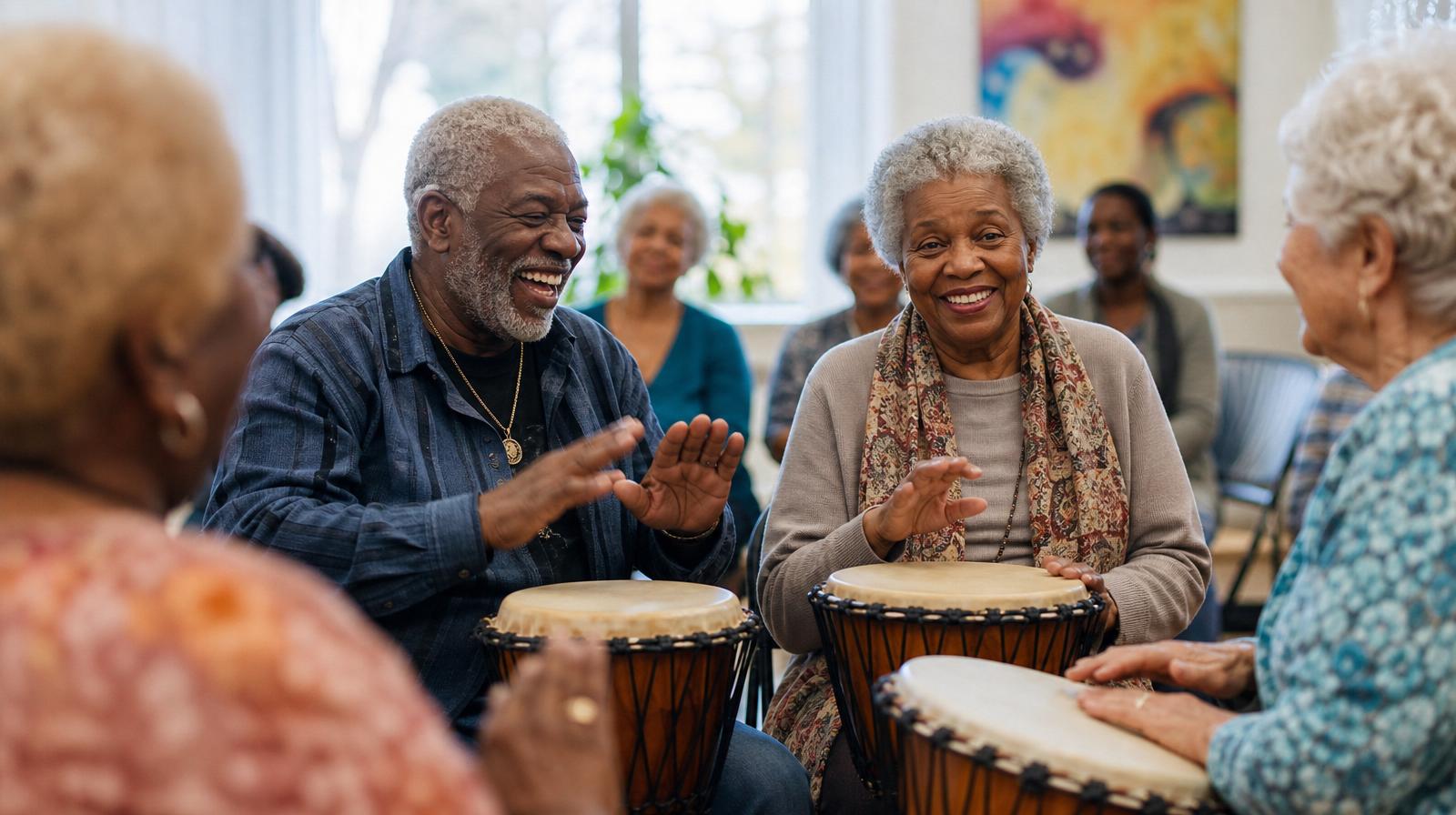
When we think of games, our minds often drift to childhood playgrounds. However, in the world of hand drumming and percussion, play is a serious tool for creative growth and social bonding. Rhythm games for adults are not just about entertainment; they are sophisticated exercises designed to sharpen listening skills, improve timing, and break down the social barriers that often keep us from expressing ourselves fully.
Whether you are a seasoned facilitator leading a corporate retreat or a group of friends gathered around a fire with your djembes and frame drums, incorporating structured play can elevate the energy and musicality of the session. In this guide, we explore how rhythm-based activities can transform a simple gathering into a truly resonant community experience.
The Power of Play in Adult Learning
Adults often carry a "fear of the wrong note." Unlike children, who dive into instruments with reckless abandon, adults may feel self-conscious when handed a conga or a set of dununs. Rhythm games act as a bridge, shifting the focus from individual performance to collective participation.
By framing musical exploration as a game, we lower the stakes. This allows participants to enter a "flow state" where the analytical brain turns off and the rhythmic body takes over. Through these exercises, players learn the fundamentals of syncopation, volume control, and call-and-response without the pressure of a formal lesson.
Essential Rhythm Games for Beginners and Pros
Here are several tried-and-true rhythm games for adults that work across various skill levels:
- The Rhythmic Name Game: A classic icebreaker. Each person says their name while playing its natural rhythm on their drum. The entire group then mimics the rhythm back. This validates every individual and establishes a shared language immediately.
- Rhythmic Telephone: A player taps a short 4-beat pattern on the shoulder of the person next to them (or plays it softly). The pattern travels around the circle. The goal isn't just to get it right, but to see how the rhythm evolves—much like a musical mutation.
- The Volume Slider: One person acts as the fader. As they raise their hands, the circle gets louder (fortissimo); as they lower them, the group drops to a whisper (pianissimo). This teaches dynamic control and collective listening.
- Pass the Pulse: A simple steady beat is passed around the circle. Each person plays one hit on the beat. The challenge is to keep the tempo from dragging or rushing as the pulse moves from a djembe to a doumbek to a shaker.
Using Call-and-Response to Build Connection
Call-and-response is the heartbeat of many traditional drumming cultures, particularly in West African and Afro-Cuban lineages. In the context of rhythm games for adults, it serves as a powerful tool for leadership and mimicry.
A leader (or a rotating leader) plays a short, improvised phrase. The group responds with a specific, pre-determined "answer" or by echoing the phrase exactly. This game sharpens auditory memory and encourages players to look at one another, fostering eye contact and non-verbal communication. If you are looking to deepen these skills, connecting with drum teachers can provide you with a deeper repertoire of traditional patterns to use in your games.
Improvisation Games: Finding Your Unique Voice
Once a group feels comfortable, improvisation games can push the boundaries of creativity. One popular method is the "Solo Spotlight." While the group maintains a steady, low-volume "heartbeat" rhythm, one person is invited to play whatever they feel for 8 or 16 beats.
Another variation is the "Conversational Duo." Two players are chosen to have a "conversation" using only their drums. They might argue, whisper, or laugh through their rhythms. This emphasizes that drumming is a form of speech, and every stroke—be it a slap, tone, or bass—is a word.
Integrating Games into Professional Facilitation
For those leading professional circles, rhythm games are essential for group cohesion. In corporate settings, these games can mirror workplace dynamics, highlighting the importance of listening and supporting one's teammates.
When facilitating, it is important to observe the energy of the room. If the energy is too scattered, a grounding game like "Pass the Pulse" can bring everyone back to center. If the energy is low, a high-intensity game like "Rhythmic Stop-and-Go" (where everyone must freeze instantly when the music stops) can inject a sense of fun and alertness. Many facilitators find new inspiration by attending drumming retreats, where they can experience these games from a participant's perspective.
The Health and Wellness Benefits of Rhythmic Play
Beyond the musical benefits, rhythm games for adults offer significant health advantages. Studies have shown that group drumming can reduce stress, lower cortisol levels, and boost the immune system. The focused attention required for these games acts as a form of active meditation.
For older adults, these games are excellent for cognitive health, requiring the brain to process complex patterns and coordinate physical movements. The social aspect also combats feelings of isolation, providing a sense of belonging to a "rhythmic tribe."
Finding Your Rhythm Community
If you are ready to take these games out of your living room and into a larger setting, the best way is to join a local gathering. Whether it's a community center meet-up or a full-moon drum circle, the opportunities for rhythmic play are endless.
If you aren't sure where to start, you can search for drum schools that offer group classes, which often use these games as part of their curriculum. The joy of rhythm is that it is meant to be shared.
Find a drum circle near you by visiting our directory at /drum-circles.
Frequently asked
- Do I need to be a musician to play rhythm games?
- Absolutely not. Rhythm games for adults are designed to be inclusive, regardless of musical background. Most games focus on simple concepts like keeping a steady beat or echoing a sound, making them accessible to total beginners while still being engaging for pros.
- What instruments are best for group rhythm games?
- While djembes are the most common, any percussion instrument works well. You can use frame drums, congas, bongos, or even simple handheld instruments like shakers, cowbells, and woodblocks. The variety of sounds actually adds to the texture of the games.
- How do rhythm games help with team building?
- These games require participants to listen as much as they play. They highlight the importance of individual contribution to a collective goal, improve non-verbal communication, and create a shared sense of accomplishment when the group locks into a groove together.
Find a drum circle near you
Browse hundreds of circles, teachers and rhythm community gatherings.
Explore drum circles