Roda de Percussão: The Soul of Community Rhythm and
Discover the magic of the Roda de Percussão, where tradition meets community through the power of the drum. Learn how to participate in these inclusive rhythmic gatherings.
In the heart of many vibrant communities, there is a pulse that transcends language and background. It is the Roda de Percussão—a rhythmic circle where the barrier between performer and audience disappears. Rooted deeply in Afro-Brazilian traditions and expanded into a global movement of community drumming, the roda is more than just a musical performance; it is a space for healing, expression, and collective joy.
Whether you are a seasoned percussionist or someone who has never touched a drum, the roda welcomes you. In this guide, we will explore the history, the instruments, and the etiquette that make these gatherings a cornerstone of the drumming world.
What is a Roda de Percussão?
A Roda de Percussão (literally "Percussion Circle") is a gathering where people sit or stand in a circle to create spontaneous or traditional rhythms together. Unlike a formal concert, the energy flows inward toward the center of the circle, creating a shared experience rather than a one-way presentation.
In many cultures, specifically in Brazil, these rodas are the lifeblood of social interaction. They can be found in public squares, on beaches during full-moon gatherings, or in dedicated community centers. The goal is rarely perfection; instead, it is about "finding the groove"—that magical moment when every individual heartbeat aligns with the collective pulse of the group.
The Instruments of the Roda
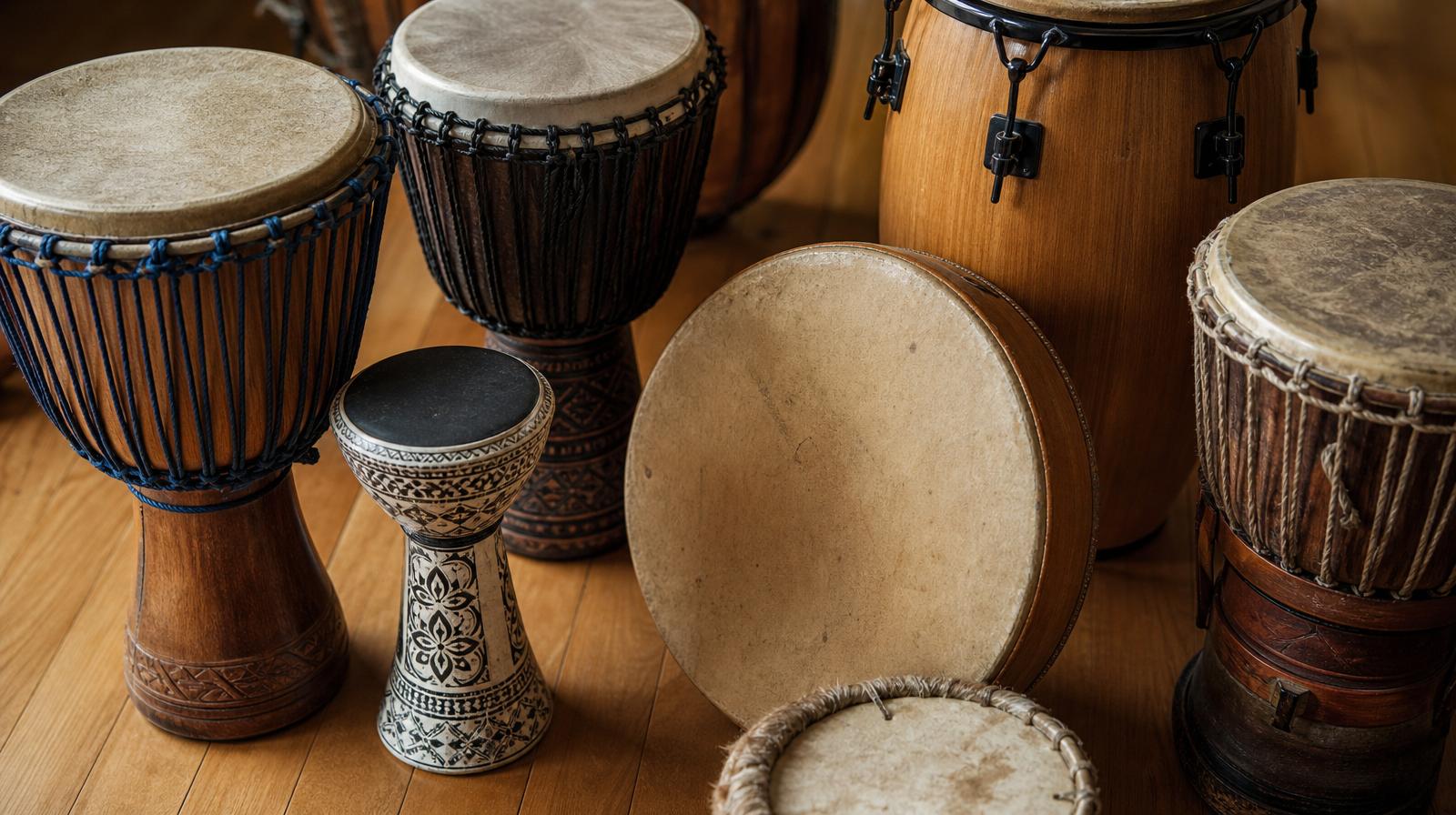
While a Roda de Percussão can accommodate almost any percussive instrument, certain drums and shakers form the backbone of the sound. If you are preparing to join one, you might encounter these staples:
- Atabaque and Congas: These tall, hand-tuned drums provide the deep, resonant bass and the sharp "slap" sounds that drive the tempo.
- Pandeiro: The iconic Brazilian tambourine. A skilled pandeiro player can provide an entire drum kit's worth of sound, from deep thuds to crisp jingles.
- Djembe: Though originally from West Africa, the djembe is a favorite in modern rodas for its versatility and volume.
- Surdo: The heartbeat of the samba. This large bass drum provides the steady foundation that keeps the circle grounded.
- Agogô and Cowbells: These metallic instruments cut through the mix, providing the "high-end" syncopation that defines many Latin and African rhythms.
- Shakers and Shekeres: Essential for maintaining the "sizzle" and filling the gaps between the louder drum hits.
If you are looking to master these specific instruments before joining a group, connecting with drum teachers can help you build a solid technical foundation.
The Philosophy of the Circle: Why We Drum
The Roda de Percussão is built on the principle of inclusivity. In a world that often feels fragmented, the circle offers a return to tribal connection. There are several reasons why these gatherings have become a global phenomenon:
- Stress Relief: The repetitive nature of drumming has been scientifically shown to reduce cortisol levels and induce a meditative state.
- Social Bonding: Drumming together releases oxytocin, the "bonding hormone," helping strangers feel like a family within minutes.
- Cultural Preservation: Many rodas focus on specific traditions, such as Samba de Roda or Maracatu, keeping ancient rhythms alive for new generations.
- Self-Expression: For those who find it hard to speak their truth, the drum provides a voice that is both powerful and safe.
Etiquette for Your First Roda de Percussão
If you’ve found a local gathering through our directory of drum circles, you might feel a bit nervous about your first visit. Don't worry—most circles are incredibly welcoming. Here are a few tips to ensure you harmonize with the group naturally:
- Listen First: Before you start playing, take a minute to listen to the established rhythm. Find the "one" (the first beat of the measure) and feel the pulse.
- Support the Groove: You don't need to play a complex solo. Often, the most valuable contribution is a simple, steady heartbeat that supports the lead players.
- Respect the Facilitator: Many rodas have a leader or facilitator who uses hand signals to change the tempo, call for a "break," or signal a volume change. Keep one eye on them.
- Leave Space: Music is made of sound and silence. You don't have to play every single beat. Leaving space allows the rhythm to breathe.
- Ask Before Borrowing: If you see an instrument sitting in the center, always ask before picking it up. Many drums are personal and have spiritual significance to their owners.
From Local Squares to Global Retreats
For many, the Roda de Percussão becomes a lifelong passion. What starts as a weekly local meetup can lead to deeper exploration. Enthusiasts often seek out drumming retreats where they can immerse themselves in rhythm for days at a time, often in beautiful natural settings that enhance the spiritual aspect of the music.
These retreats and specialized drum schools offer the chance to study the intricate polyrhythms that make the roda so hypnotic. You’ll learn about call-and-response patterns, where a lead drummer "asks" a question with their rhythm and the circle "answers" in unison.
Finding Your Rhythm Community
The beauty of the Roda de Percussão is that it is everywhere. From the bustling streets of Salvador, Bahia, to community parks in London, New York, and Sydney, the circle is waiting for you. It is a place where you can drop your worries at the edge of the rug and lose yourself in the collective sound.
Are you ready to find your beat? Whether you want to learn a traditional Brazilian rhythm or just want to bang a drum with some new friends, there is a space for you.
Find a drum circle near you by visiting our drum circles directory today.
Frequently asked
- Do I need to be a musician to join a Roda de Percussão?
- Absolutely not! Most community rodas are designed for all skill levels. The beauty of these circles is that beginners can provide a simple steady beat while more experienced players add complex layers on top.
- What should I bring to my first drum circle?
- If you have a drum like a djembe, pandeiro, or even a simple shaker, bring it along. However, many organizers provide extra instruments for newcomers. It is also a good idea to bring water and a comfortable chair if the event is outdoors.
- Is there a difference between a Roda de Percussão and a Drum Circle?
- While the terms are often used interchangeably, a 'Roda' often implies a connection to Brazilian or Afro-Latin traditions and may follow specific rhythmic structures like Samba, whereas a general 'Drum Circle' might be more free-form or improvisational.
Find a drum circle near you
Browse hundreds of circles, teachers and rhythm community gatherings.
Explore drum circles