
Siesta Beach Sunset Drum Circle: The Ultimate Visitor Guide
Experience the magic of the Siesta Beach sunset drum circle, a legendary weekly gathering where rhythm meets the Gulf of Mexico's white sands.
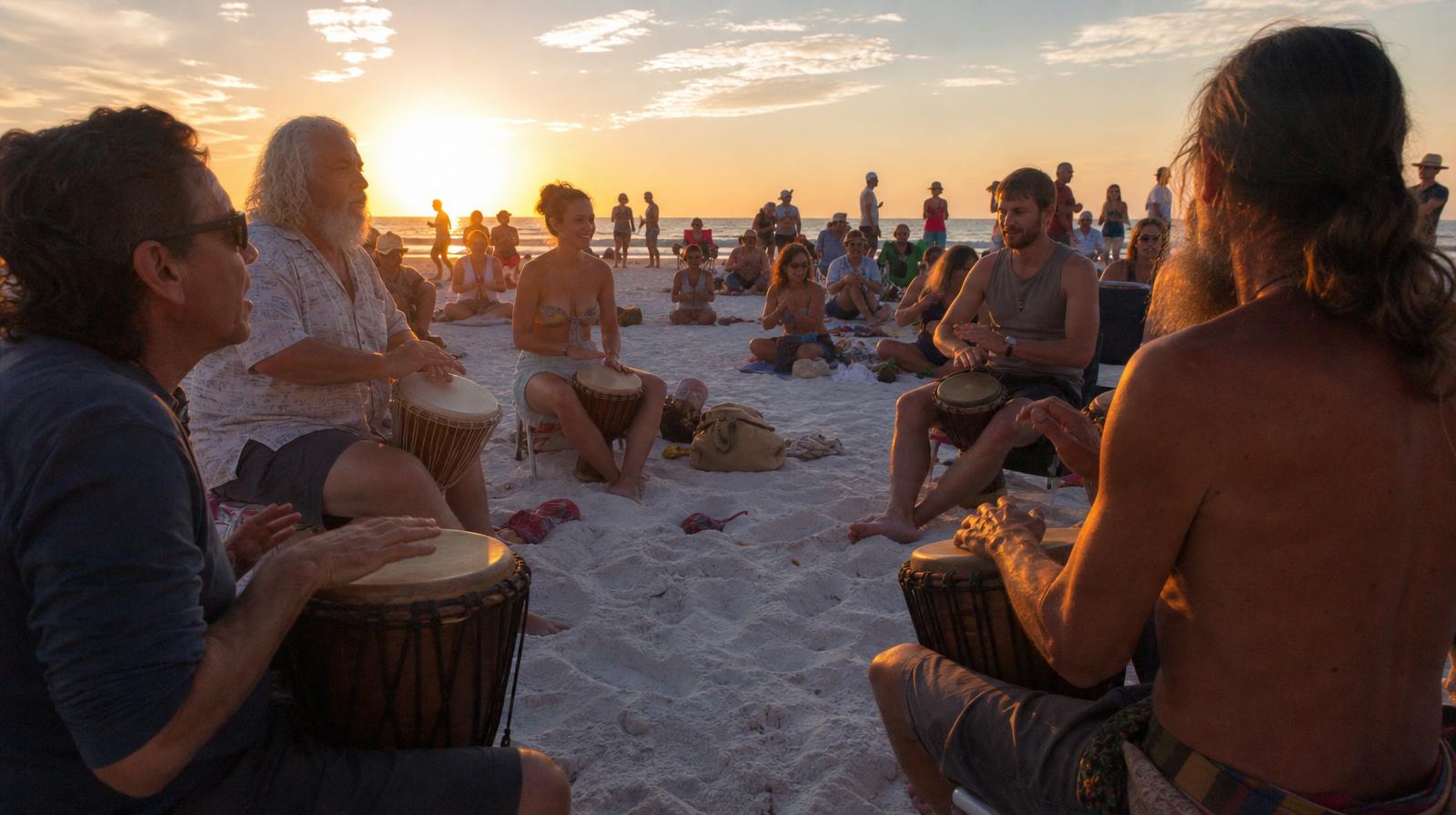
Every Sunday evening, as the Florida sun begins its slow descent toward the Gulf of Mexico, a rhythmic pulse begins to echo across the quartz-white sands of Siesta Key. This isn't a scheduled concert or a paid performance; it is the Siesta Beach sunset drum circle, a grassroots community tradition that has become one of the most iconic drumming gatherings in the United States.
Whether you are a seasoned percussionist carrying a professional djembe or a curious traveler hoping to soak in the atmosphere, the circle offers a unique blend of spiritual connection and high-energy celebration. In this guide, we will walk you through everything you need to know to enjoy this legendary Sarasota event.
The History and Spirit of the Circle
The Siesta Beach sunset drum circle began decades ago as a small gathering of local musicians and free spirits. Over the years, it has grown into a massive weekly event that attracts hundreds, and sometimes thousands, of participants and onlookers. Despite its size, the core philosophy remains the same: radical inclusion and the celebration of rhythm.
Unlike formal drumming retreats where the focus might be on technical mastery, the Siesta Key circle is about the collective vibe. You will see a diverse cross-section of humanity here—families with young children, retirees, professional musicians, and spiritual seekers—all united by the heartbeat of the drums.
When and Where to Find the Rhythm
The drum circle takes place every Sunday evening, year-round. Because it is tied to the sunset, the start time shifts depending on the season.
- Arrival Time: Most drummers start setting up about an hour before sunset. If you want a good spot to sit or dance, arrive early.
- Location: The circle forms on the main beach area of Siesta Key, usually between the lifeguard stands near the public beach pavilion. Look for the crowd and follow the sound of the bass notes.
- Parking: This is the biggest challenge. The Siesta Key parking lot is large but fills up quickly on Sunday afternoons. Aim to arrive at least two hours before sunset if you want a spot in the main lot, or consider taking the free Siesta Key Breeze trolley.
What to Expect: The Experience
As you approach the circle, you’ll hear a layer of sounds. The deep, grounding thud of the congas and dununs provides the foundation, while the sharper, higher-pitched cracks of the djembe and doumbek add texture. You might even hear the metallic ring of a cowbell or the shiver of a shekere.
The Layers of the Circle
- The Inner Core: This is where the primary drummers sit. They hold the tempo and drive the energy of the night.
- The Dancers: Surrounding the drummers is a space for movement. You’ll see everything from flow arts (like hula hooping and LED poi) to ecstatic dance.
- The Outer Ring: This is for the spectators. People bring beach chairs, blankets, and coolers to enjoy the show from a comfortable distance.
As the sun hits the horizon, the energy typically reaches a crescendo. The drumming becomes more intense, the dancing more fluid, and a collective cheer often rises from the crowd as the last sliver of the sun disappears.
Etiquette for Newcomers and Drummers
To keep the community spirit alive and respectful, there are a few unwritten rules to follow. If you are new to this environment, checking out our beginner guide can help you feel more confident.
- Ask Before You Play: If you see a group of drummers locked into a complex groove, listen for a moment before jumping in. Try to find the "one" (the downbeat) and support the rhythm rather than playing over it.
- Respect the Dancers: Give the dancers enough space to move safely. Avoid walking directly through the center of the circle while the energy is high.
- Leave No Trace: Siesta Key is famous for its pristine sand. Ensure you pack out everything you bring in, including water bottles and snack wrappers.
- No Flash Photography: While taking photos is generally allowed, avoid using bright flashes that can distract the drummers and break the trance-like atmosphere of the sunset moment.
Instruments You’ll See (and Can Bring)
You don't need a high-end instrument to participate. Many people start with simple hand percussion. However, if you are looking to invest in your first drum, many drum teachers recommend starting with a djembe due to its versatility.
- Djembe: The most popular choice for beach circles due to its loud volume and range of tones.
- Frame Drums: Portability makes these a favorite for those walking from distant parking spots.
- Shakers and Tambourines: Perfect for those who want to contribute to the rhythm without the physical demand of a large drum.
- Dunun: These large, cylindrical drums played with sticks provide the deep "heartbeat" that keeps the whole circle on beat.
Beyond the Beach: Drumming in Sarasota
The Siesta Beach sunset drum circle is just the beginning. The Gulf Coast of Florida has a thriving percussion scene. If the Sunday circle inspires you to take your playing to the next level, there are several local drum schools and private instructors in the Sarasota and Bradenton area who specialize in West African, Afro-Cuban, and Middle Eastern rhythms.
Attending a local workshop can help you learn the specific "calls" used to start and stop rhythms, allowing you to become a leader within the circle rather than just a participant.
Tips for a Perfect Visit
- Hydrate: Even after the sun goes down, the Florida humidity is real. Bring plenty of water.
- Bring a Chair: If you aren't planning on dancing, a low-profile beach chair is essential for comfort.
- Check the Weather: While the circle happens year-round, heavy rain or lightning will cancel the gathering. Check local Sarasota weather apps before heading out.
- Stay for the Afterglow: The music often continues for 30–60 minutes after the sun sets. This is often the most magical time as the sky turns purple and pink.
The Siesta Beach sunset drum circle is a testament to the power of rhythm to bring people together. It is a place where titles and backgrounds don't matter—only the beat does. Whether you come to play, dance, or simply watch, it is an experience that stays with you long after the last drum beat fades.
Find a drum circle near you by visiting our global directory at /drum-circles.
Frequently asked
- What day and time is the Siesta Key drum circle?
- The drum circle takes place every Sunday evening. It usually begins about one hour before sunset and continues for a short time after the sun has gone down.
- Is the Siesta Beach drum circle family-friendly?
- Yes, it is a very family-friendly event. Children are welcome to dance, play small percussion instruments, and enjoy the beach atmosphere, though parents should stay close as it can get very crowded.
- Do I need to bring my own drum to participate?
- While many people bring their own djembes or congas, you don't need a drum to participate. You can dance, clap along, or bring small hand percussion like shakers. Some regulars even bring extra instruments to share with friendly strangers.
Find a drum circle near you
Browse hundreds of circles, teachers and rhythm community gatherings.
Explore drum circles