
Sunday Drums Siesta Key: Your Guide to the Sunset Drum Circle
Experience the magic of the Siesta Key Drum Circle, a legendary community gathering where the rhythm of the djembe meets the Gulf Coast sunset.
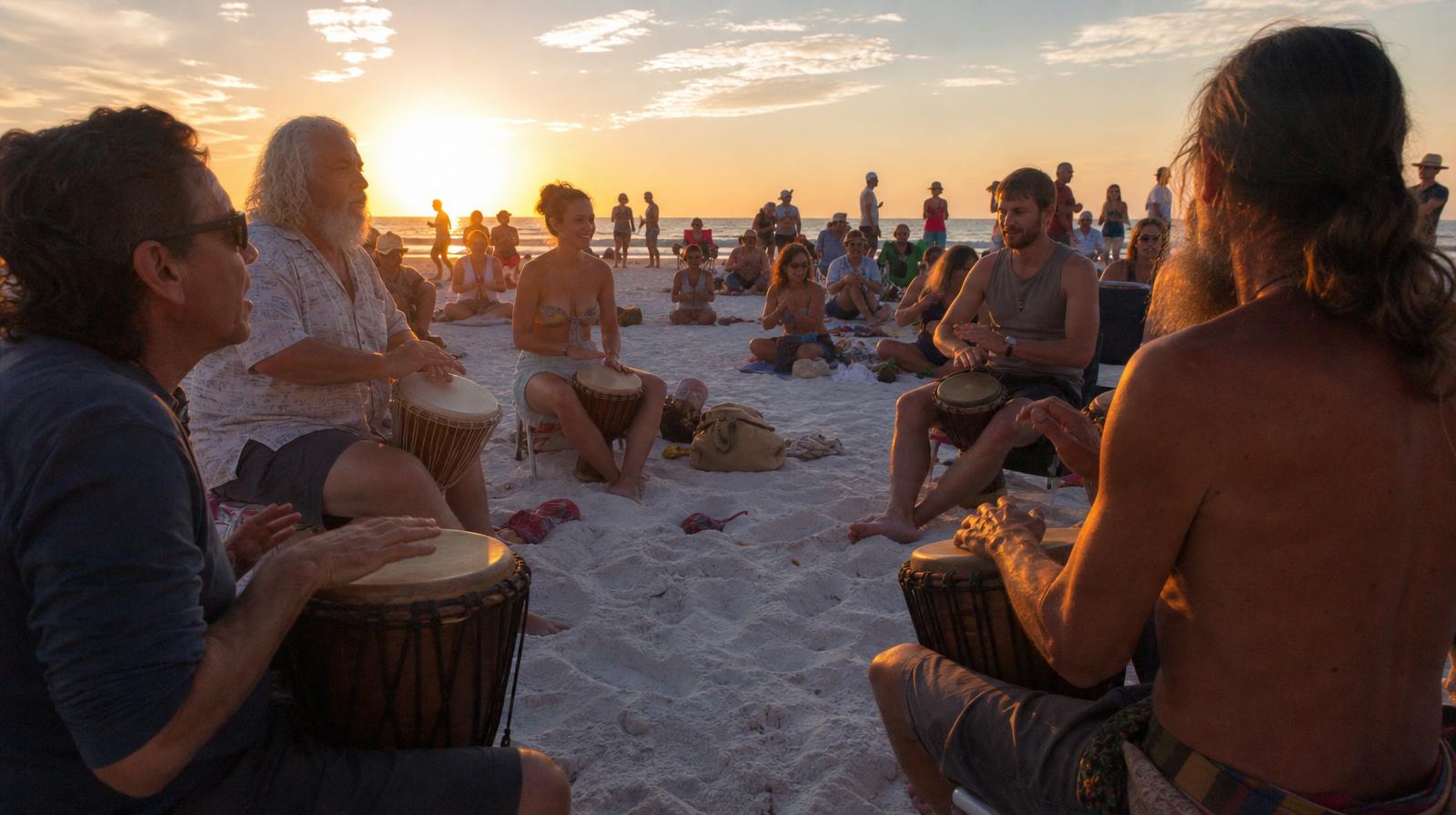
If you find yourself on the white quartz sands of Sarasota as the sun begins its descent toward the Gulf of Mexico, you will hear it before you see it. A low, resonant thrumming begins to vibrate through the air, growing louder as the sky turns to shades of apricot and violet. This is the sound of the Sunday drums Siesta Key locals and travelers have cherished for decades.
The Siesta Key Drum Circle is more than just a musical performance; it is a spontaneous, community-driven celebration of life, rhythm, and the natural beauty of the Florida coast. Whether you are a seasoned percussionist with a professional conga set or a curious traveler looking to soak up the atmosphere, this gathering offers a unique glimpse into the heart of the drumming community.
The History of the Siesta Key Rhythm
While many drum circles are formal events led by a single facilitator, the Sunday drums on Siesta Key grew organically. Starting small in the late 1990s, it has evolved into one of the most famous beach drum circles in the United States. It isn't organized by a city department or a paid production company; it is kept alive by the passion of local drummers and the energy of the crowd.
The gathering serves as a weekly reset for many. In a world that often feels disconnected, the circle provides a space where age, background, and skill level disappear behind the shared pulse of the beat. It’s a place where the djembe, the doumbek, and the frame drum speak a universal language.
What to Expect: The Atmosphere and Flow
The circle usually forms about an hour before sunset. You’ll see a core group of drummers take their places in the sand, often near the main public beach pavilion. As the rhythm establishes itself, the circle expands. Dancers move into the center, hula hoopers spin glowing rings, and children play in the sand at the periphery.
The music is improvisational. It often starts with a steady, grounding beat—the heartbeat of the circle. From there, it may evolve into complex polyrhythms as players engage in subtle call-and-response patterns. You might hear the sharp slap of a djembe cutting through the mix, followed by the deep, earthy tone of a dunun providing the foundation.
Essential Tips for First-Timers
If you are planning to join the Sunday drums Siesta Key experience, a little preparation goes a long way. This is a popular event, and the beach can get quite crowded, especially during the peak winter transit season.
- Arrive Early: Parking at Siesta Key Public Beach can be a challenge. Aim to arrive at least two hours before sunset if you want a spot in the main lot.
- Bring a Seat: Unless you plan on dancing the whole time, bring a low-profile beach chair or a sturdy Mexican blanket.
- Hydrate: The Florida humidity can be intense, even at dusk. Bring plenty of water, but remember that alcohol is generally discouraged or restricted on public beaches.
- Respect the Inner Circle: The center of the circle is for dancers and movement. If you are there to watch, stay on the outer rim to allow the energy to flow freely.
Drum Circle Etiquette: Playing with the Group
For those bringing an instrument, understanding basic drum circle etiquette ensures a positive experience for everyone. The Siesta Key circle is welcoming, but it thrives on listening.
- Listen First: Before you strike your drum, listen to the established rhythm for a few minutes. Try to find the "one" (the downbeat) and lock in with it.
- Support, Don't Overpower: If there are twenty drummers, you don't need to play at maximum volume. Focus on contributing to the collective sound rather than soloing over it.
- Ask Before Playing Someone Else's Drum: Many drummers bring expensive, hand-crafted instruments. Always ask permission before trying out a drum that isn't yours.
- Follow the Pulse: If the rhythm speeds up or slows down, go with the flow of the group. The magic happens when the entire circle breathes together.
If you find yourself inspired by the talent on the beach and want to sharpen your skills, you can often find local drum teachers in the Sarasota area who specialize in West African or Afro-Cuban techniques.
Instruments You’ll See and Hear
The diversity of instruments at Siesta Key is part of its charm. While the djembe is the most common, you will likely encounter a wide array of percussion:
- Djembe: The classic West African rope-tuned skin-covered drum. Its range of tones—from deep bass to sharp cracks—makes it perfect for beach circles.
- Congas: These tall, narrow, single-headed drums from Cuba provide a melodic, warm quality to the rhythm.
- Bongos: Smaller drums that allow for fast, intricate finger-work.
- Shakers and Tambourines: Essential for maintaining the high-frequency pulse that keeps the energy lifted.
- Steel Tongue Drums: Occasionally, you'll hear the ethereal, melodic sounds of a tongue drum or a handpan during the quieter moments of the evening.
Beyond the Beach: Growing Your Practice
Participating in the Sunday drums Siesta Key event often sparks a lifelong interest in rhythm. For many, it is the gateway to exploring more structured environments, such as drum schools or specialized workshops. While the beach is about freedom and spontaneity, taking a class can help you understand the traditional rhythms that form the backbone of these gatherings.
For those looking to dive even deeper, attending drumming retreats can provide an immersive experience where you can study with master drummers in a focused setting, often in beautiful natural locations similar to the Gulf Coast.
Why We Drum: The Health and Community Benefits
There is a reason why hundreds of people gather every week for this ritual. Drumming has been shown to reduce stress, boost the immune system, and create a sense of belonging. In the context of Siesta Key, the combination of the rhythmic vibration, the salt air, and the visual beauty of the sunset creates a meditative state that many find healing.
It is a rare space where the digital world is set aside. People aren't looking at their phones; they are looking at each other, moving their bodies, and contributing to a collective moment that will never be repeated in exactly the same way again.
Find a drum circle near you by visiting our global map at /drum-circles.
Frequently asked
- What time does the Siesta Key Drum Circle start?
- The circle generally begins about an hour before sunset every Sunday. While there is no official start time, drummers usually begin to gather and warm up as the sun starts its descent.
- Is the Siesta Key Drum Circle family-friendly?
- Yes, it is a very family-friendly event. Children are welcome to dance, play in the sand, and even participate with small shakers or drums, provided they are supervised by an adult.
- Where exactly on Siesta Key Beach is the drum circle located?
- The drum circle takes place on the main Siesta Key Public Beach, usually located between the sand volleyball courts and the Gulf, south of the main pavilion and concession stand.
- Can I join in if I don't know how to drum?
- Absolutely. The circle is open to all skill levels. If you don't have a drum, you can still participate by dancing, clapping, or simply enjoying the rhythmic energy of the community.
Find a drum circle near you
Browse hundreds of circles, teachers and rhythm community gatherings.
Explore drum circles