Team Bonding Drum Circle: Rhythm for Corporate Success
Discover how a team bonding drum circle transforms workplace dynamics through the power of rhythm, active listening, and collective harmony.
In the modern corporate world, the search for authentic connection often leads teams into sterile conference rooms or awkward icebreaker games. However, a growing number of organizations are turning to an ancient human practice to solve contemporary workplace challenges: the drum circle. A team bonding drum circle is more than just a musical activity; it is a powerful metaphor for organizational health and collaborative success.
When a group of colleagues sits in a circle, each holding a djembe, conga, or a simple shaker, the traditional office hierarchy dissolves. In this space, every voice—or rather, every beat—matters. Whether you are a CEO or a new intern, the rhythm requires everyone to be present, focused, and in sync.
The Science of Rhythm and Teamwork
Why does drumming work so well for professional teams? It boils down to a phenomenon called "entrainment." This is the process where individual biological rhythms, such as heart rate and brain waves, begin to synchronize with an external beat. When a group drunms together, they literally begin to pulse as one unit.
From a psychological perspective, drumming reduces cortisol (the stress hormone) and increases the release of endorphins. For a team coming off a high-stress quarter or navigating a difficult transition, this physiological shift creates a safe environment for open communication and creative problem-solving.
Breaking Down Silos with Call-and-Response
One of the most effective techniques used in a team bonding drum circle is "call-and-response." A facilitator might play a complex pattern on a dunun, and the team must listen intently to repeat it back on their own instruments.
This exercise highlights several key workplace skills:
- Active Listening: You cannot respond correctly if you aren't fully tuned in to your teammates.
- Adaptability: If the rhythm shifts, the team must adjust their pace without losing the groove.
- Supportive Leadership: Different members may take turns leading the beat, allowing others to practice following and supporting the collective vision.
Choosing the Right Instruments for Your Team
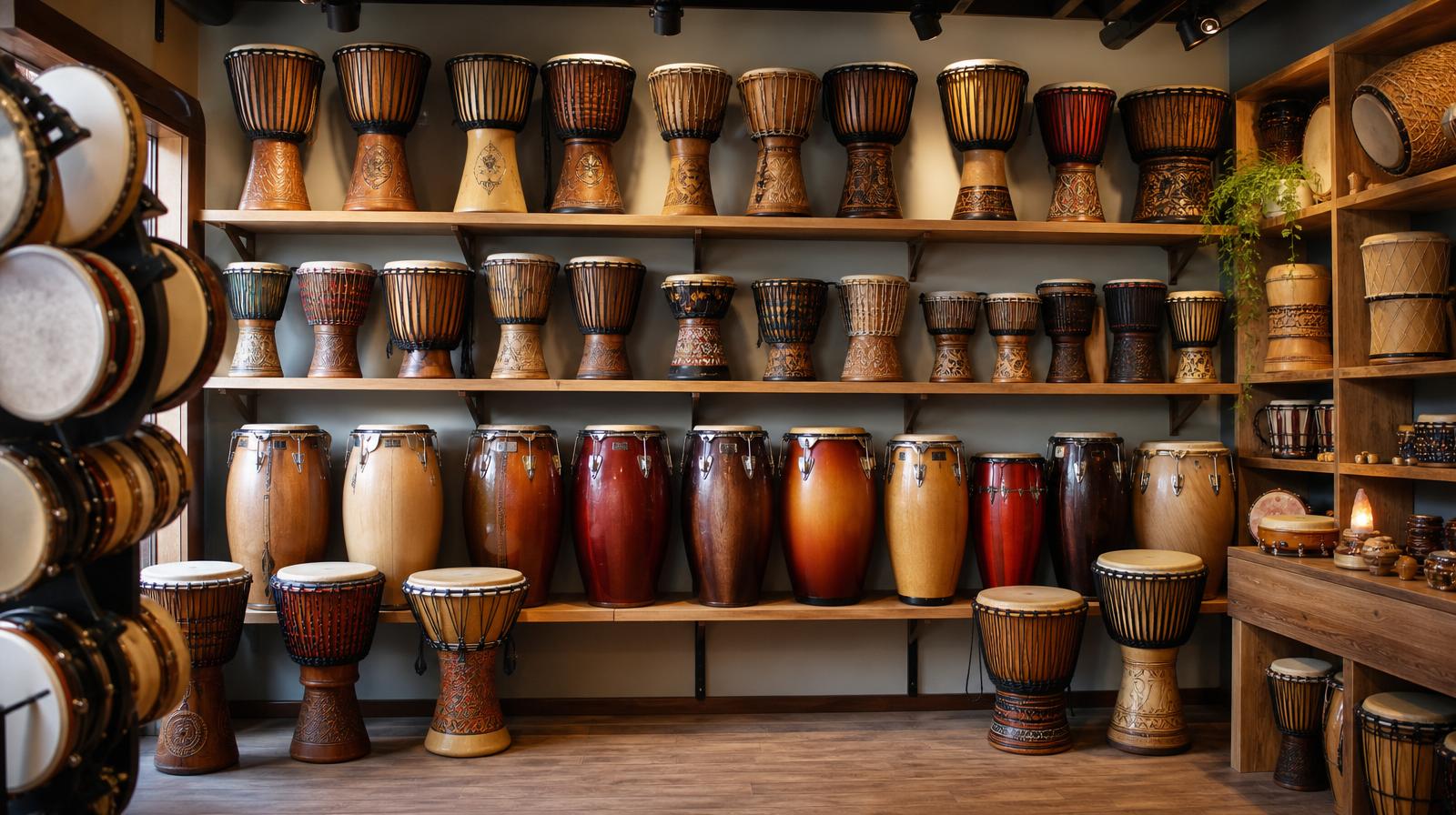
In a professional drum circle, the variety of instruments reflects the diversity of a successful team. Not everyone needs to play the loudest drum to be an essential part of the sound.
- Djembes and Congas: These provide the "heartbeat" and the foundational bass notes that keep the group grounded.
- Doumbeks and Frame Drums: These offer higher-pitched, intricate tones that add texture and detail.
- Auxiliary Percussion: Shakers, cowbells, and woodblocks represent the specialized roles in a company—the small but vital elements that complete the project.
By experimenting with different instruments, team members can explore different roles. A naturally quiet employee might find their voice on a powerful djembe, while a dominant leader might learn the value of holding a steady, supportive pulse on a small shaker.
Facilitation: The Key to a Productive Workshop
While a local drum circle is often organic and free-form, a corporate team bonding drum circle usually requires a skilled facilitator. These professionals are trained to observe group dynamics and translate musical metaphors into workplace applications.
Facilitators guide the group through various stages: from the initial "chaos" of everyone finding their seat, to the emergence of a steady beat, and finally to a state of "rhythmic flow" where the music feels effortless. If your organization is looking to develop internal leaders who can manage these dynamics, connecting with professional drum teachers can provide the foundational skills needed to lead rhythm-based activities.
Enhancing Communication Without Words
One of the greatest barriers to effective teamwork is the weight of corporate jargon and misunderstood emails. In a drum circle, communication is non-verbal and immediate. If a team member speeds up, the whole group feels the tension. If someone stops playing, the "hole" in the sound is instantly recognizable.
This immediate feedback loop teaches teams to:
- Self-Correct: Instead of waiting for a manager to point out an error, the team feels the rhythmic discord and adjusts naturally.
- Celebrate Success: The feeling of a group hitting a perfect, synchronized "big finish" creates a shared sense of accomplishment that lasts long after the drums are packed away.
- Value Silence: Just as in music, the pauses in business are where reflection and strategy happen. Drumming teaches teams to respect the space between the notes.
Planning Your Corporate Rhythm Event
When organizing a team bonding drum circle, consider the environment. While many events take place in office common areas, taking the team off-site to drumming retreats can further break down barriers by removing the group from their daily stressors.
Ensure the session is inclusive. Professional facilitators can adapt drumming for all physical abilities, ensuring that everyone—regardless of musical experience—can contribute to the circle. The goal is not to create a band of professional musicians, but to create a more harmonious and resilient professional team.
Integrating Rhythm into Company Culture
To make the benefits of a drum circle stick, consider making rhythm a recurring theme. You might look for local events where your team can participate in community jams, or even establish a small "rhythm corner" in the office with frame drums and shakers for quick stress-relief breaks.
By valuing the pulse of the collective over the ego of the individual, your organization can foster a culture of empathy, synchronization, and shared joy.
Find a drum circle near you to start your team's rhythmic journey.
Frequently asked
- Do employees need musical experience to participate in a team bonding drum circle?
- Absolutely not. Team bonding drum circles are designed for all skill levels. A professional facilitator ensures that even those who believe they have 'no rhythm' can contribute meaningfully using simple instruments like shakers or low-stress hand drums.
- How long does a typical corporate drumming session last?
- Most sessions last between 60 and 90 minutes. This provides enough time for the group to move past initial self-consciousness, learn basic techniques, and experience the 'flow state' of playing together in total synchronization.
- What is the ideal group size for a team building drum circle?
- Drum circles are incredibly scalable. They work beautifully for small teams of 10-15 people but can be facilitated for large conferences of 500 or more, provided there are enough instruments and a powerful sound system for the facilitator.
Find a drum circle near you
Browse hundreds of circles, teachers and rhythm community gatherings.
Explore drum circles