Mastering Connection: A Guide to Village Music Circles
Discover how Village Music Circles training empowers facilitators to build community through the universal language of rhythm and hand drumming.
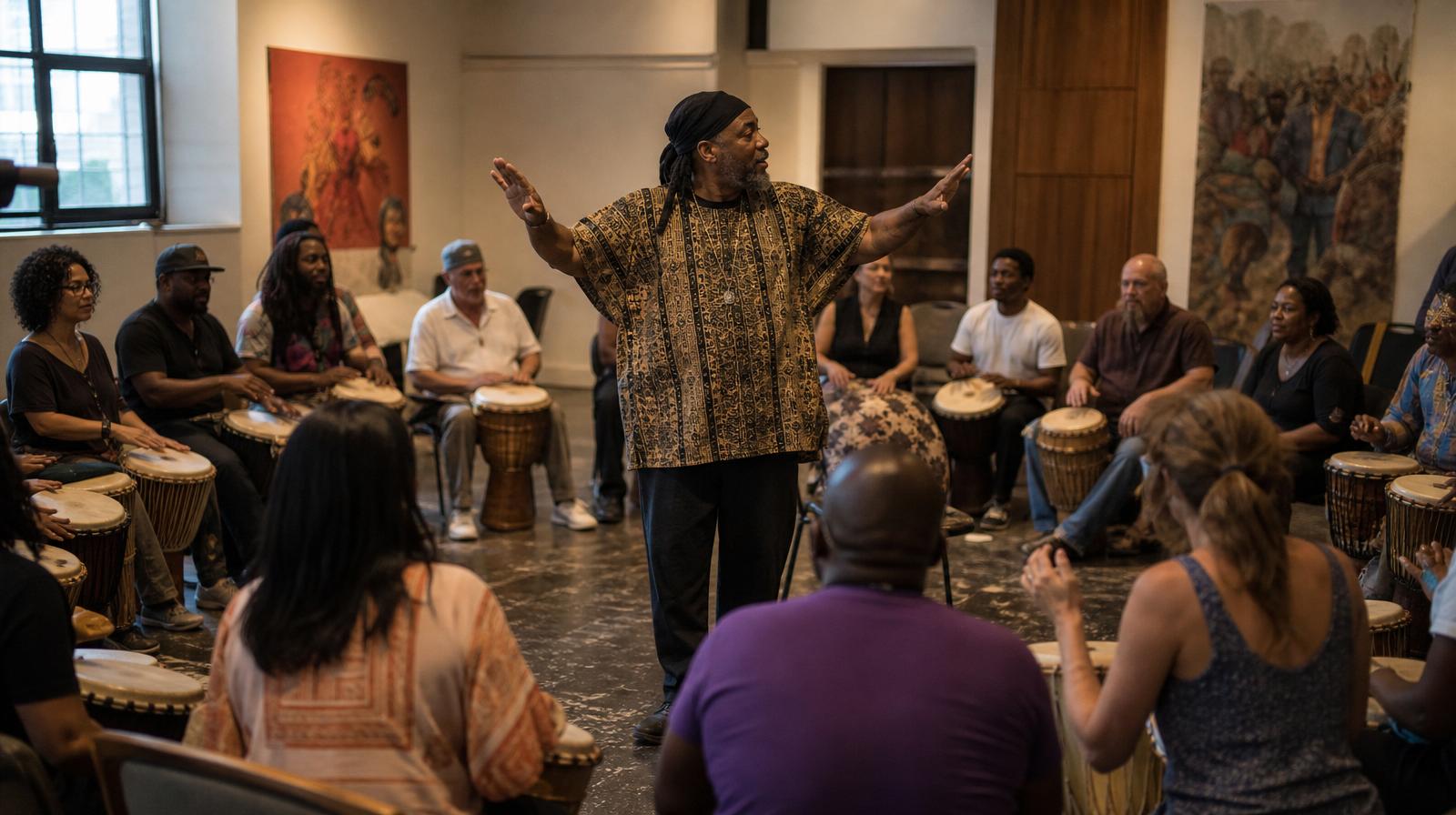
In the world of hand drumming, there is a distinct line between being a great musician and being a great facilitator. While a master djembe player can dazzle an audience with speed and technique, a facilitator’s job is different: they create a space where everyone—regardless of skill level—can contribute to a collective groove. This is the heart of Village Music Circles (VMC) training.
Founded by Arthur Hull, often called the father of the modern drum circle movement, Village Music Circles has spent decades refining the art of rhythm facilitation. Whether you are working with corporate teams, school children, or wellness retreats, VMC training provides the psychological and musical tools needed to turn a room full of strangers into a cohesive rhythmic community.
What is Village Music Circles (VMC) Training?
Village Music Circles training is a global educational program designed to teach the art of drum circle facilitation. It isn't just about learning how to play the congas or the dununs; it is about learning how to read the energy of a room and use specific body language, signals, and games to guide a group's musical journey.
The philosophy is rooted in the idea that rhythm is a birthright. In a VMC-style circle, there are no mistakes, only opportunities for evolution. Facilitators are taught to be "servant leaders," stepping into the center of the circle to empower the players and then stepping back to let the music breathe on its own.
The Core Pillars of the VMC Facilitation Method
Arthur Hull’s methodology is structured around several core concepts that make facilitation feel like a dance rather than a lecture. Participants in these trainings often start by learning these foundational elements:
- The Facilitator's Body Language: Learning how to use your hands, feet, and torso to signal starts, stops, volume changes (crescendos and decrescendos), and accents.
- The Three-Step Process: VMC emphasizes a sequence of "Listen, Contribute, and Facilitate." You must first hear what the group is playing before you can help them improve it.
- Rhythm Church: A concept of creating a safe, inclusive environment where the djembe, doumbek, and frame drum all have a voice, and no one feels judged for their rhythmic contribution.
- Sculpting the Sound: Techniques for highlighting specific sections of the circle—such as the woodblocks or the bass drums—to create dynamic variety in the music.
Who Should Attend VMC Training?
One of the most beautiful aspects of VMC training is the diversity of its students. You do not need to be a professional percussionist to become an effective facilitator. This training is ideal for:
- Music Educators: Teachers looking for new ways to engage students through drum schools and classroom rhythm programs.
- Therapists and Healthcare Workers: Using rhythm as a tool for healing, stress reduction, and motor skill development.
- Corporate Trainers: Utilizing drum circles for team building, leadership development, and communication workshops.
- Community Leaders: Those wanting to start local drum circles in their neighborhoods, churches, or community centers.
The Levels of Training: From Weekend Intensive to Certification
Village Music Circles offers a tiered approach to learning, ensuring that facilitators can grow at their own pace. Most people begin with a 3-Day Basic Facilitation Intensive. This is a deep dive into the "VMC Toolkit," where you get hands-on experience facilitating your peers in a supportive environment.
For those looking to go deeper, the 6-Day Combined Intensive or the VMC Certification Program offers a more rigorous curriculum. These advanced sessions often take place at beautiful drumming retreats around the world, allowing participants to immerse themselves in rhythm away from the distractions of daily life. Here, you learn the nuances of group dynamics, conflict resolution within a circle, and advanced rhythmic orchestrations.
Essential Instruments in a VMC-Style Circle
While VMC training focuses on facilitation, understanding the instruments is key to guiding the sound. A typical VMC-influenced circle features a "Global Orchestra" of sounds:
- The Heartbeat (Bass): Large dununs or low-tuned surdos that provide the foundational pulse.
- The Support (Mid-range): Djembes and congas that fill in the syncopated patterns.
- The Sparkle (High-range): Frame drums, tambourines, and woodblocks that add texture and brightness.
- The Foundational Pulse: Often a cowbell or a shekere that keeps the "one" for the entire group.
During training, you will learn how to balance these voices so the djembes don't overpower the delicate frame drums, ensuring a balanced and professional sound.
Why Facilitation Matters for Community Building
In our modern, digital-heavy world, many people feel a sense of isolation. A drum circle is one of the few places where people can connect non-verbally and feel part of something larger than themselves. Village Music Circles training teaches you how to bridge the gap between people of different cultures, ages, and backgrounds.
By learning to facilitate, you aren't just teaching people how to hit a drum; you are teaching them how to listen to one another. You are helping them find their rhythm in the "village." This is why many graduates of VMC programs go on to become highly sought-after drum teachers who specialize in group dynamics.
Finding VMC Workshops and Events
Village Music Circles trainings are held globally, from the United States and Europe to Asia and South America. These events are often listed on official VMC platforms and community directories. If you are serious about bringing the joy of rhythm to your community, participating in a VMC training is the gold standard for professional development in this field.
Once you have completed your training, the next step is to get out there and start a circle. Whether it's a small family-friendly gathering in a park or a massive full-moon drum circle, the skills you gain from VMC will give you the confidence to lead with heart and clarity.
Find a drum circle near you by visiting our directory at /drum-circles.
Frequently asked
- Do I need to be a professional drummer to take Village Music Circles training?
- No, you do not need to be a professional. VMC training is designed for people of all musical backgrounds, focusing more on leadership, communication, and facilitation skills than on technical percussion mastery.
- What is the difference between a drum circle and a facilitated drum circle?
- A standard drum circle is often an improvisational jam session with no clear leader. A facilitated drum circle uses a trained leader (like those taught by VMC) to guide the group, help them listen to each other, and create a more musical and inclusive experience.
- How long does it take to become a certified VMC facilitator?
- Certification timelines vary, but it typically involves completing both basic and advanced intensives, followed by a period of practical application and a final evaluation by VMC trainers.
Find a drum circle near you
Browse hundreds of circles, teachers and rhythm community gatherings.
Explore drum circles