
West African Drumming Lessons: A Guide to Rhythm and Culture
Discover the transformative power of West African drumming through expert lessons that bridge ancient tradition with modern community rhythm.
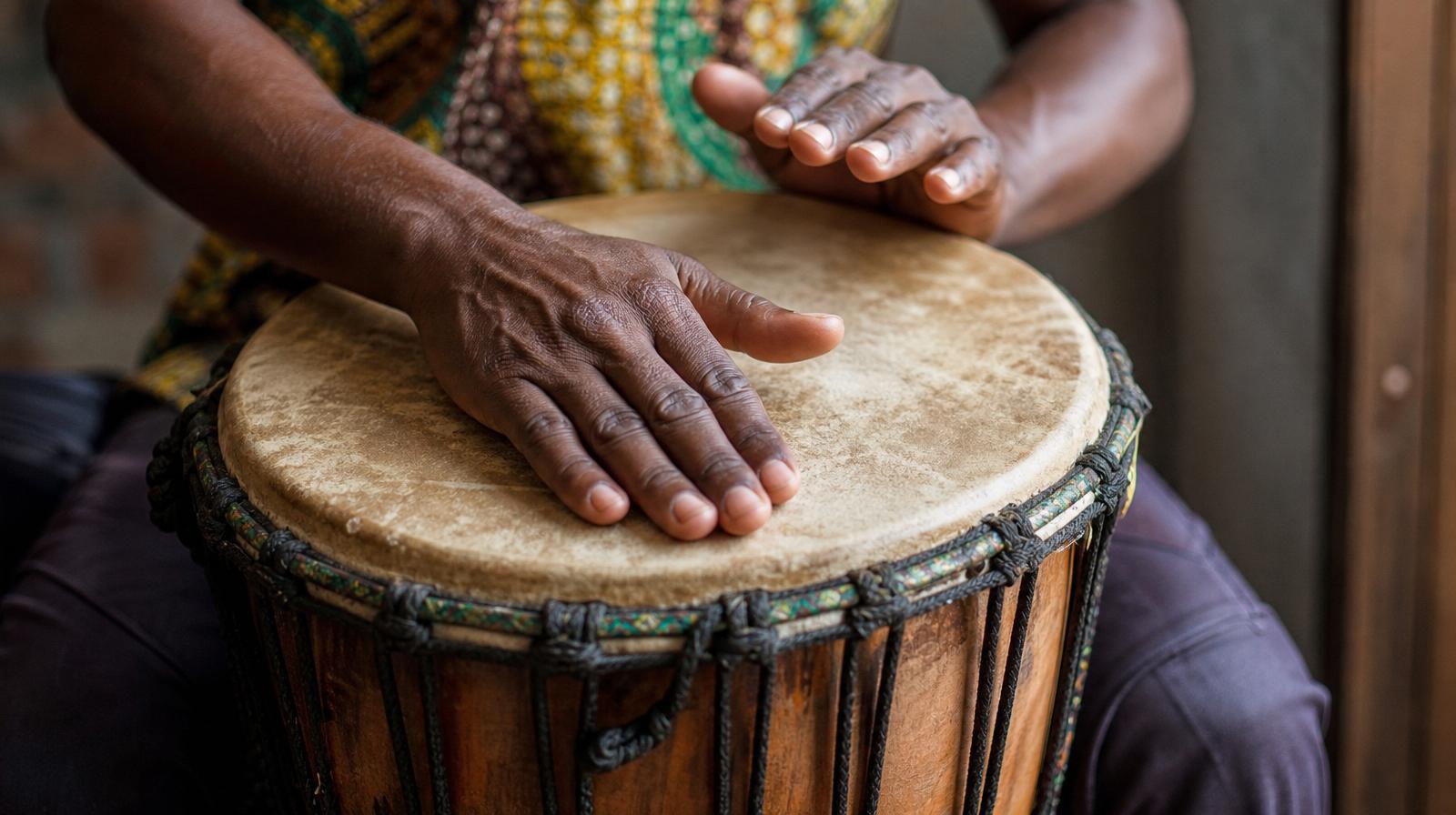
West African drumming is far more than just a musical hobby; it is a profound language of communication, a physical workout, and a spiritual gateway. Most people are first drawn to the djembe because of its iconic shape and the incredible range of sounds it can produce—from deep, earth-shaking basses to crisp, glass-shattering slaps.
Starting your journey with West African drumming lessons can feel intimidating, but the Mandingue tradition is built on community and inclusivity. Whether you are looking to join a local drum circle or find professional drum teachers to hone your craft, understanding the foundation of these rhythms is the first step toward a lifelong passion.
The Core Instruments: Djembe and Dunun
In a traditional West African ensemble, specifically from the Mandingue regions of Guinea, Mali, Senegal, and Ivory Coast, the music is built on a conversation between two primary types of drums.
The Djembe
The djembe is a goblet-shaped drum carved from a single piece of hardwood and headed with goatskin. It is played with bare hands. In your first few lessons, you will focus on the three primary notes:
- Bass: A low, resonant sound played by striking the center of the drum with a flat palm.
- Tone: A full, round sound played at the edge of the drum with fingers together.
- Slap: A sharp, high-pitched crack played at the edge, allowing the fingertips to whip against the skin.
The Dununs
If the djembe is the voice, the dununs are the heartbeat. These are cylindrical, double-headed drums played with sticks. An ensemble typically includes three sizes:
- Dundunba: The largest drum with the deepest pitch, representing the father.
- Sangban: The middle-sized drum, often considered the soul or the lead of the melody.
- Kenkeni: The smallest drum with the highest pitch, providing the steady time-keeping pulse.
What to Expect in Your First Lesson
When you walk into a studio for West African drumming lessons, you won’t just be handed a drum and told to hit it. You will likely be introduced to the concept of the "polyrhythm."
Most lessons begin with a warm-up to loosen the wrists and shoulders. You will then learn a specific rhythm—perhaps a harvest rhythm like Kuku or a celebration rhythm like Soli. The teacher will break the rhythm down into parts. Beginners usually start with the dunun parts or a simple djembe accompaniment (called a ksiman) before moving on to more complex patterns.
Expect a lot of repetition. In West African music, the groove is found in the "feel" of the repetition. It’s about locking in with the person next to you until the group sounds like a single organism.
The Importance of Oral Tradition and Culture
You cannot separate the drum from the culture. Authentic West African drumming lessons often include stories about the origins of the rhythms. For example, some rhythms are played specifically for weddings, others for the return of fishermen, and some for rites of passage.
Respecting the lineage of the music is a key part of drumming etiquette. Many students find that after a few months of study, they want to go deeper by attending drumming retreats where they can immerse themselves in the history and dance that accompanies these beats. Understanding that the drum is a tool for storytelling will change the way you strike the skin.
Physical Benefits and Mental Clarity
There is a reason many people describe drumming as a "moving meditation." The physical act of drumming requires bilateral coordination—using both sides of your body independently. This has been shown to sync the left and right hemispheres of the brain.
- Stress Relief: The vibration of the drum has a grounding effect on the nervous system.
- Cardio: A high-energy djembe session can be as physically demanding as a light jog.
- Focus: Tracking polyrhythms requires a high level of mental presence, effectively clearing the mind of daily anxieties.
Finding the Right Teacher or School
Finding quality instruction is vital to avoid injury. Improper technique can lead to wrist strain or "djembe finger." When looking for drum schools, look for instructors who emphasize ergonomics—how to sit, how to angle the drum between your knees, and how to strike without tension.
Many teachers offer group classes which are excellent for beginners because they provide a low-pressure environment to learn the basic pulse. For those looking to advance quickly, private lessons can help refine your "slap" technique and speed.
How to Practice at Home
You don't need a professional studio to get better. Consistency is more important than duration. Even 15 minutes a day of practicing your bass-tone-slap transitions will build the necessary muscle memory.
- Use a Metronome: West African rhythms have a specific "swing" that can be hard to catch. Practicing with a metronome at slow speeds helps you find the spaces between the notes.
- Watch the Masters: Study videos of grandmasters like Mamady Keïta or Famoudou Konaté to see their hand positioning.
- Sing the Parts: If you can say it, you can play it. Use vocalizations (like "pa-ti-pa") to internalize the melody of the drum before you try to play it.
Joining the Global Rhythm Community
Once you have the basics down, the real magic happens in a group setting. Taking lessons prepares you to participate in community events where the barrier between "performer" and "audience" disappears.
Whether you are playing under a full moon or in a community center, the djembe is a bridge to others. Many students find their closest friends through the rhythmic bond formed in a classroom.
Find a drum circle near you to start your rhythmic journey today.
Frequently asked
- Do I need to own a drum to start lessons?
- Most instructors and drum schools provide instruments for beginners to use during their first few classes. It is actually better to wait until you've had a few lessons before buying a drum so your teacher can help you select a high-quality, ethically sourced djembe.
- Is West African drumming hard to learn for beginners?
- The basics are very accessible. Most people can learn to produce the three main notes and play a simple accompaniment pattern in their very first lesson. However, mastering the speed, clarity, and complex solo phrasing can take a lifetime of dedicated study.
- What is the difference between a drum circle and a drum lesson?
- A drum lesson is a structured environment where a teacher focuses on specific techniques, traditional rhythms, and cultural context. A drum circle is usually a more informal, improvisational gathering where the focus is on community connection and free-form expression.
Find a drum circle near you
Browse hundreds of circles, teachers and rhythm community gatherings.
Explore drum circles