
Master the Rhythm: Guide to Your First West African
Discover the transformative power of the djembe and dununs. Learn what to expect, how to prepare, and where to find the best West African drumming workshops near you.
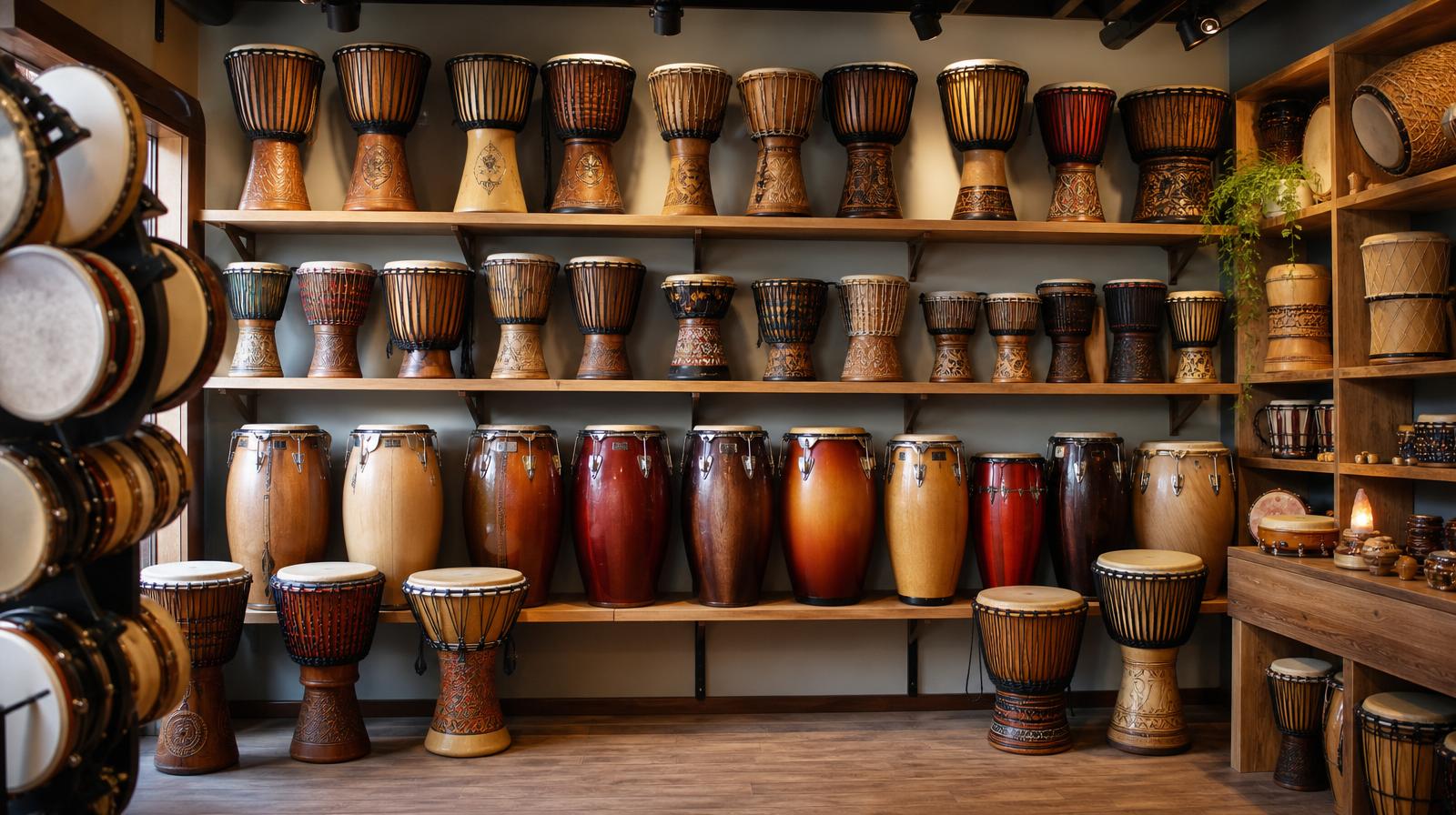
There is something primal and profoundly moving about the sound of a djembe echoing through a room. For centuries, the traditions of West Africa—spanning from Guinea and Mali to Senegal and the Ivory Coast—have used the drum as the heartbeat of the community. Today, the West African drumming workshop has become a global phenomenon, offering a gateway for people of all backgrounds to connect, heal, and celebrate through rhythm.
Whether you are a seasoned percussionist or someone who has never touched a drum skin in your life, stepping into a workshop environment can be both exhilarating and intimidating. This guide will walk you through the nuances of West African percussion, from the instruments you’ll encounter to the cultural etiquette that keeps the circle harmonious.
The Heartbeat of the Workshop: Djembe and Dunun
At the center of almost every West African drumming workshop is the djembe. Shaped like a goblet and carved from a single piece of hardwood, the djembe is known for its wide range of tones—from deep, resonant basses to sharp, cracking slaps. It is traditionally played with bare hands and is capable of expressing an incredible emotional range.
Supporting the djembe are the dununs (also known as dunduns). These are the cylindrical, double-headed bass drums often played with sticks. In a traditional ensemble, you will find three sizes:
- The Kenkeni: The smallest drum with the highest pitch, often providing the steady pulse of the rhythm.
- The Sangban: The middle-sized drum that typically carries the specific melody or 'hook' of the rhythm.
- The Dununba: The largest drum with the deepest voice, providing power and grounding to the arrangement.
In many drum schools, you will learn how these instruments weave together to create a complex, polyrhythmic tapestry.
What to Expect in a Professional Workshop
A typical West African drumming workshop is more than just a music lesson; it is an immersion into a communal oral tradition. Most facilitators follow a structured flow to help students internalize the rhythm:
- The Opening Circle: A moment to ground the group, often including a brief history of the specific rhythm being taught.
- Technique Drills: Focusing on the three basic notes of the djembe: the Bass, the Tone, and the Slap.
- The Pattern: Breaking down the accompaniment parts. You’ll likely start with a simple repetitive phrase that supports the lead drummer.
- Call and Response: This is a vital element where the lead drummer plays a 'call' (a specific musical phrase), and the group responds with a unified sequence to change sections or end the piece.
- The Song: Many rhythms are accompanied by traditional songs. Learning the lyrics helps drummers understand the 'swing' and phrasing of the music.
Cultural Etiquette and Respecting the Tradition
West African drumming is a living heritage. When you attend a workshop, you are stepping into a lineage of Mande culture. Respect is the primary currency of the drum circle.
First, always listen more than you play. It is tempting to start 'jamming' as soon as you sit down, but in a workshop setting, silence between instructions is crucial for the teacher to be heard. Second, be mindful of your instrument. If you are borrowing a drum, treat it with care—avoid wearing rings or heavy jewelry that can scar the wood or tear the goatskin head.
Lastly, acknowledge the origins. Many rhythms are tied to specific events like harvests, weddings, or rites of passage. A great facilitator will share these stories, and as a student, honoring that context enriches your playing experience.
Health and Wellness Benefits of Group Drumming
Beyond the musical skill, joining a West African drumming workshop offers significant physical and mental health benefits. The repetitive nature of the rhythms induces a meditative state, often referred to as 'alpha' brainwave activity, which reduces stress and anxiety.
Physically, drumming is a workout. It improves circulation, builds upper body strength, and enhances hand-eye coordination. More importantly, the social connection found in community gatherings combats isolation. There is a unique biological high that comes from 'entrainment'—when a group’s heartbeats and movements sync up to a single, powerful beat.
Finding the Right Workshop for Your Level
Not all workshops are created equal. If you are a total beginner, look for 'Intro to Djembe' sessions that focus heavily on hand technique to prevent injury. Intermediate and advanced players might seek out 'Masterclasses' led by visiting artists from West Africa who focus on complex solo phrasing and dunun variations.
If you want to dive deeper than a two-hour weekend session, consider looking into drumming retreats. These immersive experiences allow you to live and breathe the rhythm for several days, often in beautiful nature settings that complement the grounding energy of the drums.
Preparing for Your First Session
To get the most out of your experience, come prepared:
- Hydration: Drumming is physical. Bring a water bottle.
- Comfortable Clothing: Wear loose pants or skirts that allow you to sit with a drum between your legs.
- Ear Protection: In small rooms, the volume of multiple djembes can be intense. High-fidelity earplugs are a great investment.
- Open Mind: Don't worry about 'getting it right' immediately. West African rhythm is felt in the body as much as it is understood in the mind.
If you find yourself falling in love with the art form, you may eventually want to seek out private drum teachers to refine your personal style and speed up your progress.
Conclusion
A West African drumming workshop is a journey into the heart of human connection. It challenges your brain, strengthens your body, and feeds your soul. Whether you are playing a simple kenkeni part or a complex djembe solo, you are contributing to a vibration that has sustained communities for generations.
Ready to find your beat? Find a drum circle near you on our global map: /drum-circles
Frequently asked
- Do I need to own a drum to attend a West African drumming workshop?
- Most beginner-friendly workshops provide drums for participants or offer them for a small rental fee. It is always best to check the event description or contact the facilitator beforehand to ensure a djembe will be reserved for you.
- Is West African drumming difficult for beginners?
- While the polyrhythms can be complex, the basics are very accessible. Most teachers break rhythms down into simple, manageable parts, making it easy for anyone to join in and feel the collective groove within the first hour.
- What is the difference between a drum circle and a drumming workshop?
- A drum circle is typically an improvisational community gathering where everyone contributes freely. A West African drumming workshop is an instructional environment where a teacher leads the group in learning specific, traditional rhythms and techniques.
Find a drum circle near you
Browse hundreds of circles, teachers and rhythm community gatherings.
Explore drum circles