What Drums Are Used in Drum Circles? A Guide to Rhythm
Discover the most popular hand drums and percussion instruments used in community drum circles, from the powerful djembe to melodic frame drums.
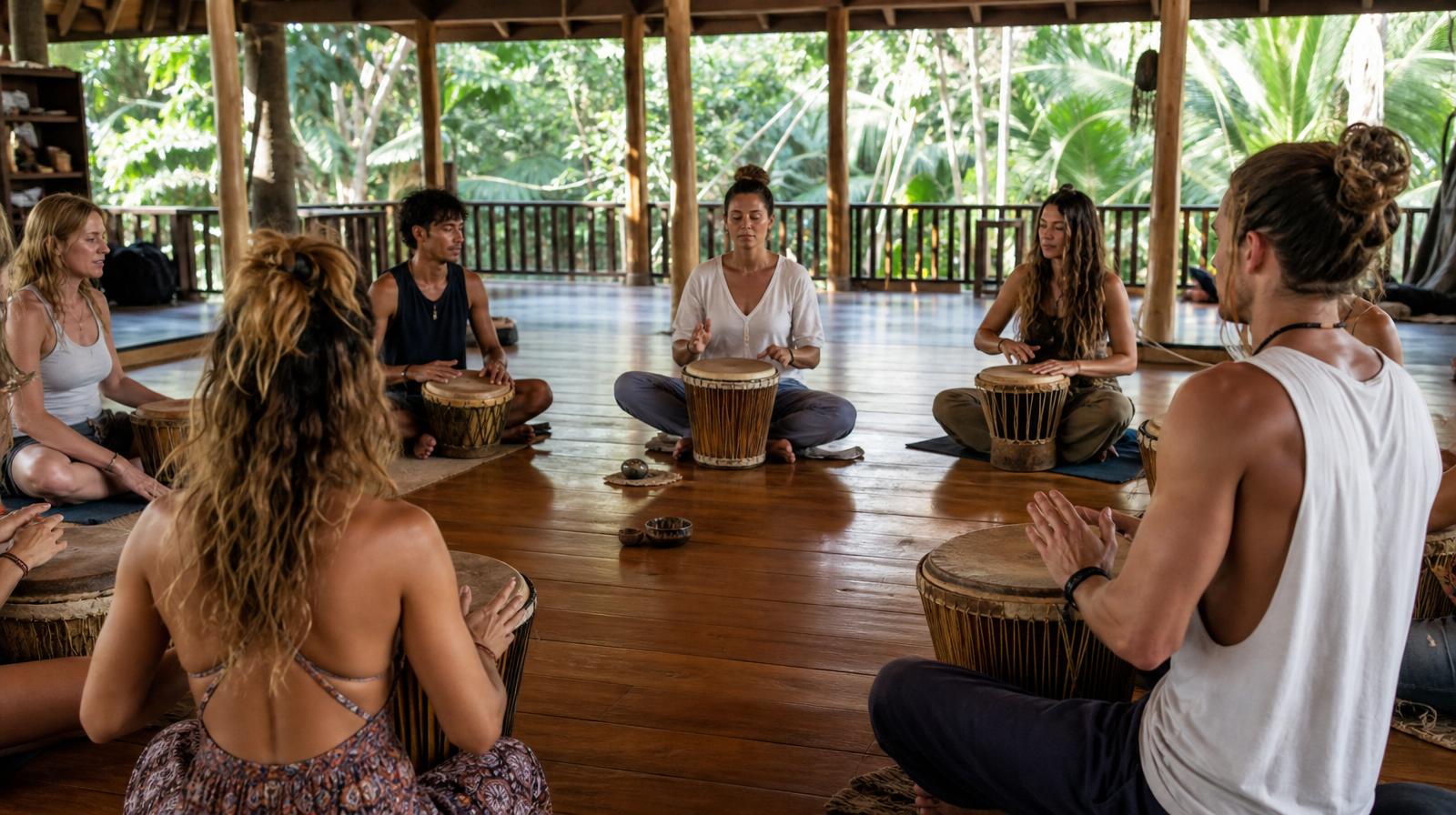
Stepping into your first drum circle is a transformative experience. The air vibrates with a collective pulse, and the rhythmic layering creates a language beyond words. But for many beginners, the first question is practical: what drums are used in drum circles, and which one should I bring?
While the beauty of a community circle is its inclusivity, certain instruments have become staples due to their versatility, volume, and ease of play. Whether you are attending a high-energy beach jam or a meditative full-moon gathering, understanding the tools of the trade will help you find your voice in the groove.
The Heartbeat of the Circle: The Djembe
If you see a drum in a circle, chances are it is a djembe. Originating from West Africa, the djembe is the undisputed king of the modern drum circle. Its goblet shape and goatskin head allow for a wide range of tones: a deep, resonant bass in the center and sharp, cracking slaps on the rim.
Djembes are popular because they are loud enough to be heard outdoors and offer a "complete" sound. You can hold down the low-end pulse or play intricate lead patterns. If you are just starting, many drum teachers recommend the djembe as a first instrument because the basic techniques are intuitive.
The Versatile Congas and Bongos
Afro-Cuban instruments bring a melodic, wooden warmth to the rhythm. Congas (tall, narrow drums) are often played in pairs, though in a crowded circle, bringing a single 'tumba' or 'conga' is common. They offer a softer, more rounded tone than the djembe.
Bongos, the smaller cousins, are held between the knees. They provide high-pitched accents that cut through the lower frequencies. These are excellent for players who prefer finger-style techniques over full-palm strikes. They are also highly portable, making them a favorite for those traveling to drumming retreats.
Middle Eastern Flavors: The Doumbek and Darbuka
For those who love intricate, rapid-fire rhythms, the doumbek (or darbuka) is the instrument of choice. These goblet-shaped drums from the Middle East are traditionally made of ceramic or metal with synthetic heads.
Unlike the djembe, which is played with the whole hand, the doumbek relies heavily on finger-snaps and light taps. It produces a crisp 'teck' sound and a focused 'doum' bass. In a circle, the doumbek often provides the "lace"—the fine, decorative details that sit on top of the heavier beats.
The Soulful Frame Drum
One of the world's oldest instruments, the frame drum consists of a shallow wooden hoop with a skin stretched over one side. Varieties include the Irish bodhrán, the Brazilian pandeiro, and the Middle Eastern tar.
Frame drums are often used in more intentional or spiritual gatherings. They have a long, haunting sustain and can be played with a mallet or fingers. Because they are lightweight, they are perfect for long sessions where you might want to move or dance while you play.
The Power of the Dunun
In many West African-style circles, you will see large, cylindrical drums played with sticks. These are the dunun (consisting of the dundunba, sangban, and kenkeni). These drums usually lay horizontally on stands and provide the foundational polyrhythms of the piece.
While the hand drummers provide the flair, the dunun players are the "engine room" of the circle. If you enjoy a physical, stick-based drumming style, seeking out drum schools that teach traditional Mande rhythms is a great way to master these instruments.
Beyond Drums: Foundational Percussion
A drum circle isn't just made of drums. Auxillary percussion adds the texture and "shimmer" that glues the rhythm together. Even if you don't own a drum, you can contribute significantly with:
- Shakers and Maracas: These provide a constant subdivision of the beat, helping everyone stay in time.
- Cowbells and Woodblocks: These "timekeepers" offer a piercing sound that can be heard across a large field.
- Tambourines: Perfect for adding a jingle and a bright backbeat.
- Claves: Two wooden sticks that, when struck together, provide the structural "key" to many Latin rhythms.
Choosing the Right Drum for You
When deciding which instrument to bring, consider the environment. If it is a small, indoor family-friendly circle, a massive djembe might be overpowering; a frame drum or soft-toned cajon might be better. For large events in parks or beaches, you’ll need something with enough projection to be heard.
Most importantly, choose an instrument that speaks to you. Do you like the deep bass of the djembe, the melodic tones of the conga, or the portable convenience of a shaker? There is no wrong answer as long as you play with an ear toward the collective sound.
Find a drum circle near you and start your rhythmic journey today.
Frequently asked
- Do I need to bring my own drum to a drum circle?
- It depends on the event. Many community circles provide 'loaner' instruments or have a communal pile of percussion, but it is always best to check the event description. If you plan on attending regularly, investing in your own djembe or shaker is highly recommended.
- What is the best drum for a beginner?
- The djembe is widely considered the best beginner drum because it is easy to produce a good sound quickly. It offers three distinct tones (bass, tone, and slap) that are the foundation of most hand drumming techniques.
- Can I bring a drum set or snare drum to a circle?
- Generally, no. Traditional drum sets and snare drums are often too loud and can drown out the subtle nuances of hand drums. Most circles prefer acoustic hand percussion to maintain a balanced, communal volume.
Find a drum circle near you
Browse hundreds of circles, teachers and rhythm community gatherings.
Explore drum circles