World Drum Circle Guide: Rhythm, Culture, and Community
Discover the transformative power of the world drum circle, where global rhythms meet community connection and ancient traditions find new life.
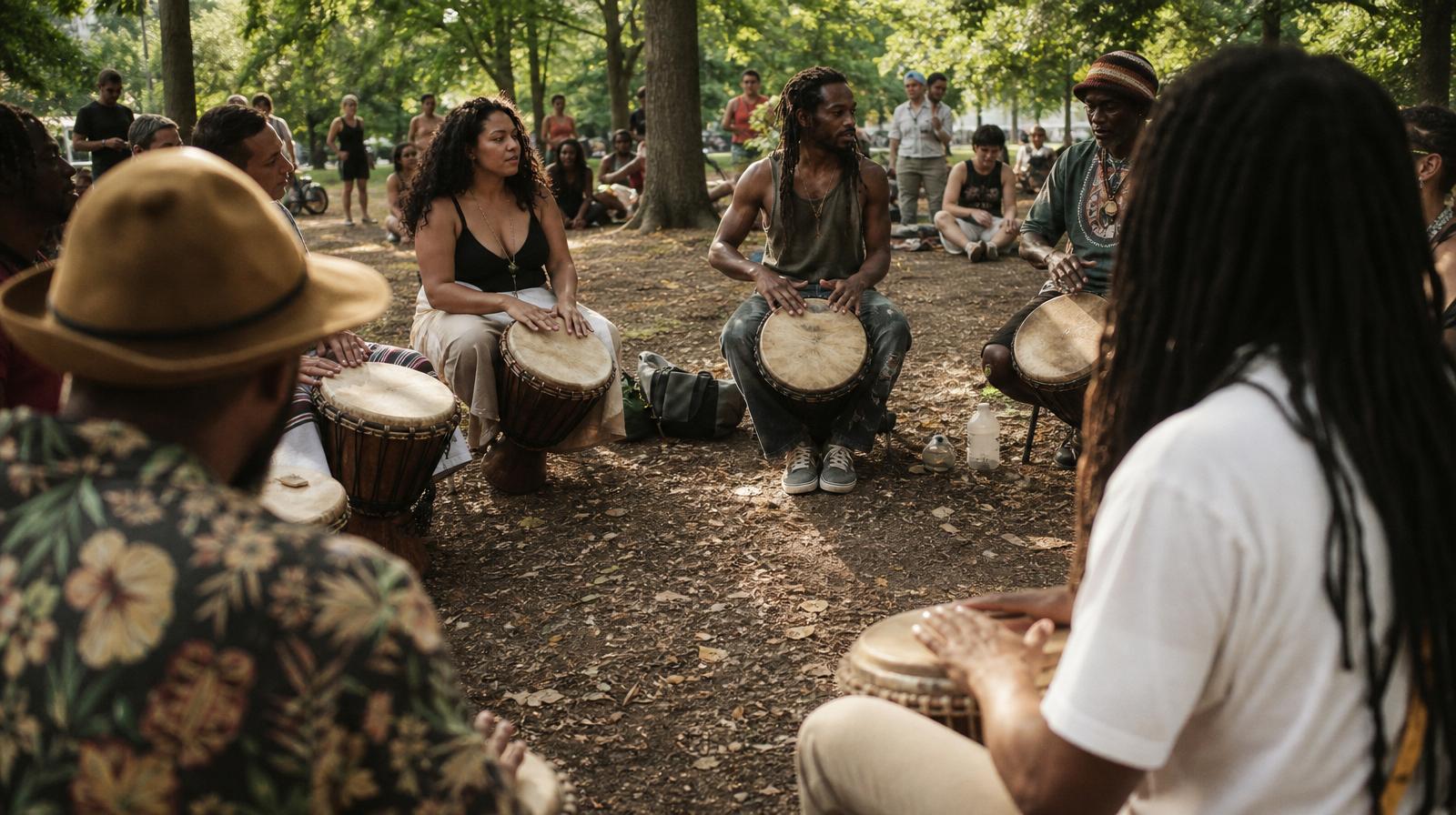
There is a universal language that transcends borders, languages, and backgrounds. It doesn't require a passport or a dictionary; it only requires a heartbeat and a willing pair of hands. This is the world of the world drum circle, a vibrant, percussive gathering where individuals come together to create a spontaneous, collective groove.
Whether you are standing on a beach at sunset with a frame drum or sitting in a community center surrounded by djembes, the essence of the drum circle remains the same: unity through rhythm. In this guide, we will explore the roots of these gatherings, the instruments that define them, and how you can find your place in the circle.
The Spirit of the World Drum Circle
At its core, a world drum circle is more than just a musical performance—in fact, it is rarely a performance at all. It is a participatory event. Unlike a traditional concert where there is a clear divide between the stage and the audience, a drum circle is democratic. Everyone is a contributor.
These gatherings draw inspiration from indigenous traditions across Africa, the Middle East, and the Americas, where drumming has historically been used for storytelling, healing, and community bonding. Today, modern circles blend these ancient practices with contemporary improvisation, creating a space where a professional percussionist and a complete novice can play side-by-side in harmony.
Essential Instruments of the Global Rhythm Scene
Part of the magic of a world drum circle is the diversity of sounds. When you step into a circle, you will likely encounter a fascinating array of percussion instruments from every corner of the globe:
- Djembe: The iconic goblet-shaped drum from West Africa. Known for its versatile range, it can produce deep bass notes, rich tones, and sharp, cracking slaps.
- Congas and Bongos: Afro-Cuban staples that provide a melodic, driving pulse to any rhythm.
- Doumbek (or Darbuka): A goblet drum from the Middle East and North Africa, known for its intricate finger-tapping techniques and rapid-fire rolls.
- Dunun: The large, cylindrical bass drums that often provide the rhythmic foundation (the "heartbeat") for West African ensembles.
- Frame Drums: One of the world's oldest instruments, found in various forms from the Irish bodhrán to the Middle Eastern tar.
- Auxiliary Percussion: Shakers, shekeres, cowbells, and woodblocks add the "seasoning" to the rhythmic soup.
If you are looking to master a specific instrument before joining a large gathering, connecting with drum teachers can help you build the foundational technique needed to play for hours without fatigue.
Understanding Drum Circle Etiquette
While drum circles are inclusive and welcoming, they do have an unwritten "code of the road" to ensure the experience is enjoyable for everyone. If you are new to the scene, keep these tips in mind:
- Listen More Than You Play: When you first join, listen to the established groove for a few minutes. Find the pulse before you start contributing.
- Support the Beat: You don't need to play a complex solo. Often, the most valuable thing you can do is maintain a steady, simple rhythm that supports the group.
- Leave Space: Music is made of sound and silence. Don't feel the need to fill every millisecond with noise. Leave "holes" in your rhythm for others to play through.
- Ask Before Playing Someone Else's Drum: Many drummers have a deep personal connection to their instruments. Always ask permission before trying out a drum that isn't yours.
- Follow the Facilitator: In many organized circles, a facilitator will use hand signals to change the tempo, volume, or to start a call-and-response sequence. Pay attention to their cues.
The Health and Wellness Benefits of Group Drumming
Beyond the joy of making music, participating in a world drum circle offers profound physical and mental health benefits. Science has shown that group drumming can reduce stress, lower blood pressure, and boost the immune system.
There is a phenomenon known as "entrainment," where the brainwaves of participants begin to synchronize with the external rhythm. This leads to a state of heightened focus and relaxation, often described as a "natural high." For many, the drum circle is a form of active meditation—a way to quiet the mind and be fully present in the moment.
Finding Your Tribe: Local Circles and Global Events
No matter where you are in the world, there is likely a rhythm community nearby. From casual full-moon gatherings on the beach to structured workshops in urban studios, the opportunities to play are endless.
For those who want to dive deeper, drumming retreats offer an immersive way to study with master drummers in beautiful locations. These retreats often combine intensive study of traditional rhythms with community building and cultural exchange.
If you prefer a more academic setting, drum schools provide structured curricula for those who want to understand the complex polyrhythms of the Mandingue tradition or the intricate patterns of Afro-Cuban jazz.
Why We Drum: The Power of Connection
In an increasingly digital and isolated world, the world drum circle offers a rare opportunity for authentic human connection. It reminds us that we are part of something larger than ourselves. When fifty people strike their drums at the exact same time, the vibration is felt not just in the ears, but in the chest and the soul. It is a reminder of our shared humanity.
Whether you are a seasoned pro or have never touched a drum in your life, there is a seat waiting for you. The rhythm is already inside you—all you have to do is let it out.
Find a drum circle near you and start your rhythmic journey today.
Frequently asked
- Do I need to bring my own drum to a world drum circle?
- Not necessarily. Many community drum circles provide extra instruments or 'loaner' drums for beginners. However, it is always a good idea to check the event description or contact the facilitator beforehand to see if you should bring your own percussion.
- What is the difference between a drum circle and a drum class?
- A drum class is focused on instruction, technique, and learning specific traditional rhythms under a teacher's guidance. A drum circle is generally more improvisational and focused on community connection and spontaneous music-making.
- Are drum circles kid-friendly?
- Most community drum circles are very family-friendly and welcome children of all ages. Drumming is a wonderful way for kids to develop motor skills and a sense of rhythm in a supportive, non-judgmental environment.
Find a drum circle near you
Browse hundreds of circles, teachers and rhythm community gatherings.
Explore drum circles