Yoga Drum Circle: Rhythmic Union of Movement and Sound
Discover how the primal pulse of the djembe meets the stillness of the mat in a yoga drum circle, creating a unique space for healing and community.
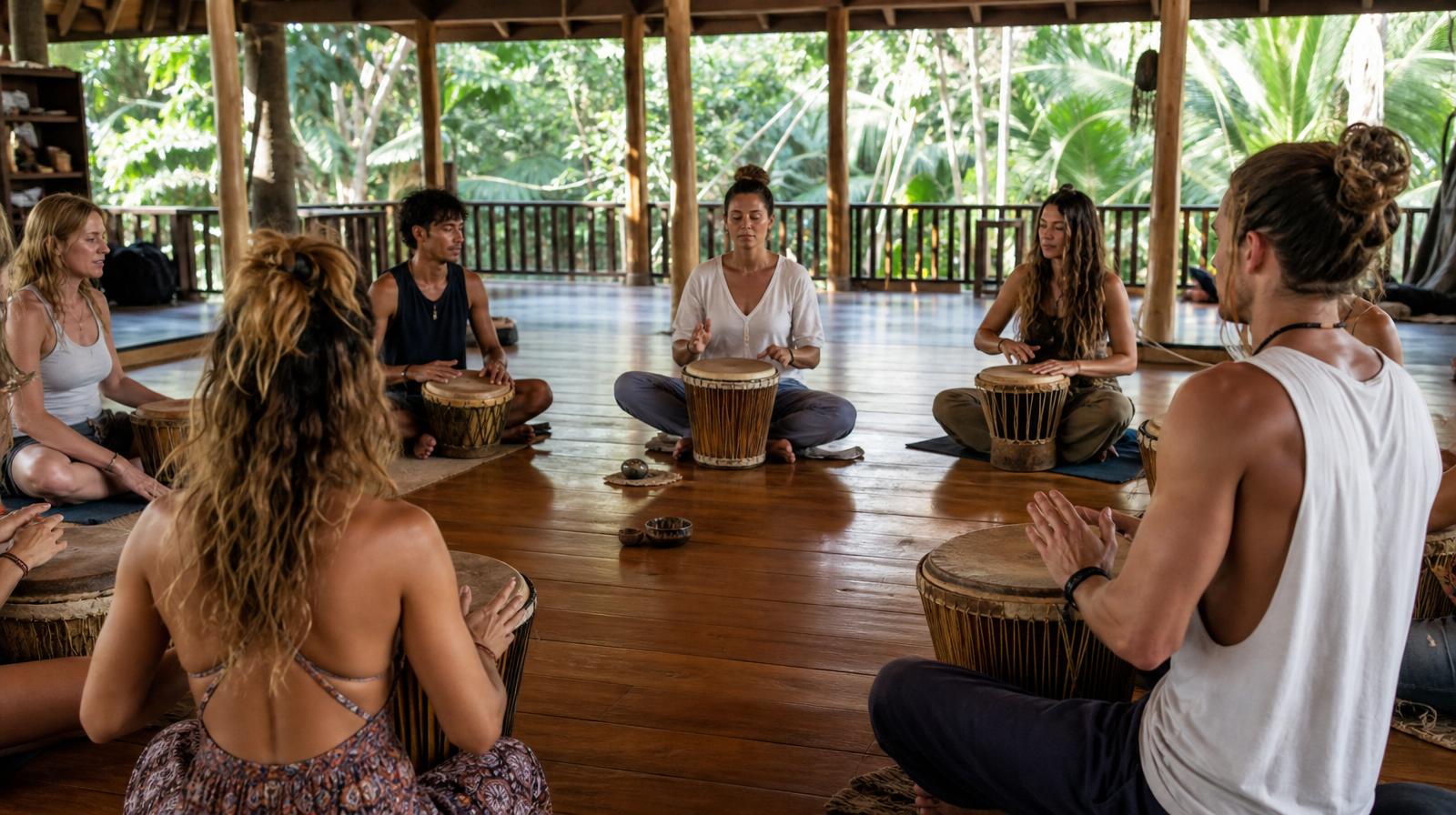
There is a profound synergy that occurs when the ancient practice of yoga meets the primal heartbeat of the drum. While yoga focuses on the internal landscape of breath and alignment, a drum circle provides an external pulse that grounds the practitioner in the present moment. Together, a yoga drum circle creates a multisensory experience that transcends a typical studio class.
In these gatherings, the rhythm isn't just background music; it is a collaborative partner. Whether it is the deep, earthy bass of a djembe or the intricate, shimmering patterns of a frame drum, the vibration of the skin-on-wood instruments resonates within the body, helping practitioners find a deeper flow in their asanas.
The Philosophy of Rhythm and Flow
At its core, yoga means "union." A yoga drum circle embodies this by uniting the individual's breath with the collective rhythm of the group. In many traditions, the drum is seen as the heartbeat of Mother Earth. When we practice yoga to a live beat, we are synchronizing our personal energy with the universal pulse.
This practice often follows a specific arc. It may begin with slow, meditative beats during Pranayama (breathing exercises), build into a high-energy polyrhythmic sequence during Sun Salutations, and settle into a soft, steady hum during Savasana. This journey allows for a release of stagnant energy and an infusion of new, vibrant prana.
Essential Instruments in a Yoga Drum Circle
Not every drum is suited for the delicate balance of a yoga session. Facilitators usually choose instruments that offer a wide range of tonal qualities:
- Djembe: The versatile "king" of the drum circle, providing deep bass notes for grounding and sharp slaps for energy.
- Frame Drum: Known for its ancient connection to feminine spirituality, its soft, overtone-rich sound is perfect for meditative flow.
- Dunun: These West African bass drums provide the steady "heartbeat" that keeps the group anchored.
- Udu or Ceramic Drums: These provide watery, earthy tones that complement the cooling phases of a yoga practice.
- Shakers and Bells: Smaller percussion instruments are often used to add texture and mimic the sounds of nature.
Benefits of Combining Yoga and Drumming
Why bring drums into the yoga space? The benefits are both physiological and psychological. The rhythmic vibrations can help lower cortisol levels and trigger the release of endorphins. For those who find it difficult to "quiet the mind" during traditional meditation, the external focus on a steady beat can act as an anchor, making it easier to enter a state of flow.
Furthermore, the community aspect of a drum circle fosters a sense of belonging. In a world that is increasingly digital and isolated, the physical proximity and shared acoustic experience of a yoga drum circle remind us of our interconnectedness.
What to Expect at Your First Event
If you are transitioning from a standard yoga class to a yoga drum circle, the atmosphere will feel significantly more vibrant. You might find several drummers positioned at the front or center of the room, while a yoga teacher leads the movement.
Some events are participatory, where yogis might take turns drumming while others move, or the session might conclude with a free-form jam. Many of these gatherings are family-friendly circles, welcoming all ages to experience the joy of rhythm. It is common to see a mix of seasoned percussionists and beginners who have never held a mallet before.
Incorporating Live Rhythm into Your Practice
For yoga teachers looking to integrate rhythm, collaboration is key. Working with drum teachers can help you understand how to cue movements to specific time signatures. A simple 4/4 beat is excellent for steady Vinyasa, while a more complex 6/8 rhythm can encourage fluid, circular movements.
If you are a drummer, learning the pace of a yoga flow is essential. You aren't playing a solo; you are holding space. The goal is to support the breath of the practitioners, creating a sonic landscape that allows them to explore their physical limits safely.
Finding Your Rhythm Community
Yoga drum circles are popping up in city parks, wellness centers, and at drumming retreats worldwide. They are often held during significant lunar events, such as full-moon gatherings, where the energy is naturally higher.
Whether you are looking for a high-intensity rhythmic workout or a deep, restorative sound bath, there is likely a community waiting for you. These events are excellent places to meet like-minded individuals who value both physical wellness and the expressive power of music.
Find a drum circle near you and experience the power of the pulse.
Frequently asked
- Do I need to know how to drum to attend a yoga drum circle?
- No, most yoga drum circles are designed for all skill levels. If the event is participatory, there is usually a brief orientation on basic techniques for instruments like the djembe or ashiko. If you are there primarily for the yoga, you can simply enjoy the live music provided by experienced facilitators.
- What should I bring to a yoga drum circle?
- You should bring your standard yoga gear, including a mat, water bottle, and comfortable clothing. If you own a drum, feel free to bring it, but many organizers provide a selection of percussion instruments for participants to share.
- How does drumming affect the yoga experience?
- Drumming acts as a metronome for the breath and movement, helping practitioners stay present. The physical vibrations of the drums can also help release muscle tension and create a deeper sense of relaxation during the final resting poses.
Find a drum circle near you
Browse hundreds of circles, teachers and rhythm community gatherings.
Explore drum circles